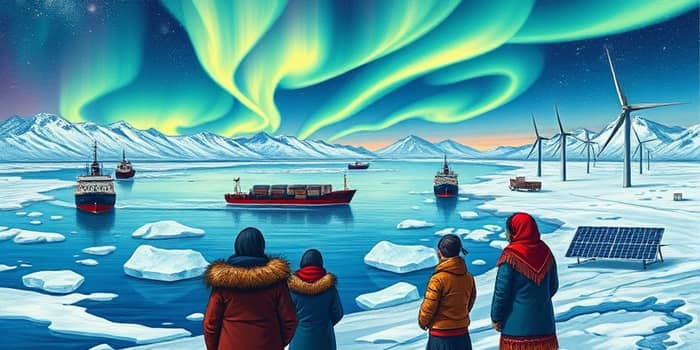
The Arctic stands at a crossroads, where ice melts into opportunity under a warming sky. Climate change is warming the Arctic at three to four times the global average, a pace that reshapes landscapes and lives.
Sea ice retreats, unveiling new pathways for commerce and connection. From shipping routes to renewable energy, this thaw unlocks potential but tests our resolve to protect fragile ecosystems.
Indigenous communities watch as their world shifts, balancing tradition with transformation. The future of the Arctic depends on wise stewardship and inclusive innovation.
Rising temperatures are not merely a threat; they are a catalyst for profound change.
Sea ice decline has increased wave heights and extended open-water seasons significantly.
Satellite data from 2009 to 2018 shows maritime traffic growing through key straits like the Bering Strait.
Infrastructure vulnerabilities become assets, driving investments in resilient systems across the region.
For example, Greenland expands runways, and electric airplanes are envisioned for remote settlements.
Extended operational windows for shipping improve access to resources like mining and fisheries.
The Arctic economy is diversifying, with several sectors set to expand dramatically.
Opportunities span from the depths of the sea to the heights of innovation.
Each sector offers unique prospects that must be managed with care and foresight.
Approximately 350 ports dot the Arctic, with about 200 ice-free year-round, mostly in Russia.
Ninety percent of traded goods travel by sea, connecting 80% of the global economy.
New routes like the Northern Sea Route become viable, aided by hydrogen-powered ships.
However, risks such as invasive species and oil spills loom large in these fragile waters.
Tourism cruises, often called "last-chance tourism," attract visitors eager to witness a changing Arctic.
The Arctic holds abundant renewable energy potential, with hydro power leading in Nordic areas.
Wind energy can reduce diesel use in remote settlements, cutting carbon footprints.
Geothermal sources in Iceland support industries like aquaculture and greenhouses sustainably.
There is an energy surplus in some regions, about one-third more than local needs.
Green hydrogen plants, powered by renewables, could fuel global transport networks.
Key renewable sources include:
Data centers and battery manufacturing emerge as green industries, driving economic diversification.
Vast mineral deposits in Russia and Alaska are crucial for green technologies worldwide.
Demand surges for nickel, iron, and rare earths used in batteries and electronics.
Extended seasons due to warming improve access and efficiency in mining operations.
Innovations like Sweden's LKAB Kiruna mine cut CO2 emissions through advanced technology.
Community consultations and job creation ensure responsible development pathways.
Critical minerals in focus include:
The Arctic could become a strategic hub, displacing reliance on other regions.
Fisheries form the economic backbone of Greenland and the Faroe Islands.
Arctic Norway leads in aquaculture, with global algae production reaching 34.7 billion tonnes in 2019.
This biomass is 24 times that of Norway's salmon, valued at $15 billion.
Arctic kelp and seaweed potential offers sustainable food sources and environmental benefits.
Expansion meets global demand but can conflict with indigenous practices like Sámi herding.
Infrastructure gains, such as ports and roads, support growth while posing integration challenges.
Nature and winter tourism grow as accessibility improves with warmer seas.
Places like Inari and Kittilä in Finland attract new residents and adventurous visitors.
Cruise ships benefit from extended seasons, but the industry faces seasonal vulnerabilities.
Shorter snow seasons challenge tourism but spur "last-chance" visits to vanishing landscapes.
Balancing tourism with preservation requires innovative policies and community engagement.
Tourism activities include:
COVID-19 halved visitors, highlighting the need for resilience in this sector.
Critical investments are essential for business growth, job creation, and climate security.
Grid limitations can hinder renewable energy expansion, necessitating smart upgrades.
Attracting people is vital, as the Arctic's most valuable resource is its people.
Examples include road and port upgrades in Sweden for mining and aquaculture.
Sustainable funds support power, water, and transport projects across remote areas.
Challenges like an awareness gap and anti-development policies require collaborative solutions.
Socio-economic benefits include jobs in remote areas, stabilizing populations and boosting tax revenues.
For instance, mining projects can lead to new recreation facilities and apartments.
Diversification is urged to avoid boom-bust cycles and ensure long-term stability.
Risks and conflicts are numerous, demanding careful management and inclusive policies.
Key challenges include:
Addressing these requires a commitment to sustainability and equity.
The Arctic is not monolithic; regional contexts vary widely in economic focus.
Understanding these differences is crucial for tailored development strategies.
Each region contributes uniquely to the Arctic's economic mosaic.
The Arctic can become a green transformation hub, supplying raw materials and clean energy globally.
Plans for 2025-2026 focus on sustainable economic pathways and research on transitions.
Warnings highlight that unchecked growth is unsustainable without diversification and benefit-sharing.
Diversification and benefit-sharing are essential for long-term infrastructure and community well-being.
Globally, the Arctic's melting ice contributes to sea-level rise, reminding us of interconnected challenges.
To summarize key opportunities, here is a table outlining the main sectors:
This table highlights the diverse economic potential across sectors, each with unique drivers and examples.
In conclusion, the Arctic's awakening invites us to embrace innovation while honoring the past.
By fostering sustainable practices and inclusive growth, we can turn climate challenges into opportunities.
Let us act with wisdom and compassion, ensuring that progress benefits all and preserves this majestic region for future generations.
References