The Arctic is undergoing an unprecedented transformation. As sea ice retreats, new economic horizons emerge—but so do serious threats to ecosystems, communities, and global climate stability. This article unpacks the scale of change, the promise of prosperity, and the imperative to manage risk wisely.
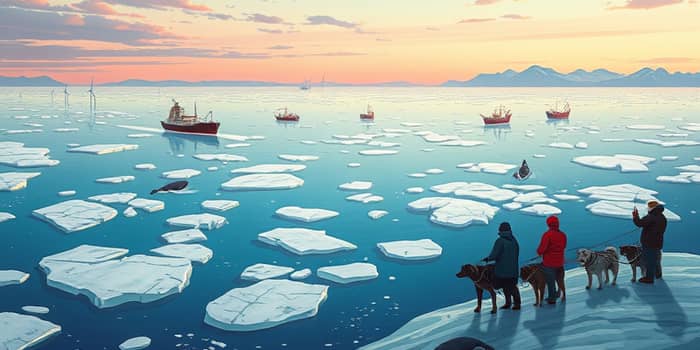
In March 2025, Arctic sea ice reached its lowest winter maximum in 47-year record, peaking at just 14.33 million km² on 22 March. That is 1.31 million km² below the 1981–2010 average and 80,000 km² below the previous low in 2017. Across the spring, March’s average extent—14.14 million km²—also set a new record low.
All ten lowest winter maxima have occurred since 2007, and virtually ice-free conditions have extended into regions like the Gulf of St. Lawrence. The Arctic’s accelerated warming—known as Arctic amplification—has profound impacts on weather patterns, ecosystems, and human activities far beyond the Polar Circle.
Despite the environmental alarm bells, melting ice is opening the Arctic for business. Investors anticipate more than over USD $1 trillion in infrastructure outlays—roads, ports, airports, housing, and energy facilities—while existing plans already top USD $500 billion. The baseline Arctic economy builds on a handful of pillars:
As accessibility grows, so does the scale and diversity of commercial ventures. Yet the paradox remains: access fueled by climate destabilization.
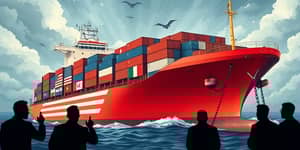
With sea ice thinning, new shipping lanes promise dramatically shorter voyages between Asia, Europe, and North America—cutting fuel costs and transit times compared to Suez or Panama routes. By 2025, the U.S. Navy anticipated three major Arctic corridors, and icebreaker fleets are expanding via deals like the $6.1 billion Finland–U.S. pact.
Economic gains include burgeoning port logistics, bunkering services, and maritime support industries, all under a vision of a data-driven "blue economy."
However, these prospects come with significant collision and spill risks. Remote waters lack reliable charts, response capacity is limited, and pollution—from black carbon to noise—threatens marine life and traditional subsistence hunting.
The Arctic hosts vast hydrocarbon reserves, particularly in Russian and Alaskan territories. Retreating ice makes offshore and onshore exploration more feasible, extending drilling seasons and reducing ice hazards. Proponents forecast new fields on former ice-covered shelves, plus pipelines, LNG terminals, and service bases.
Yet these developments risk extreme spills in harsh conditions, potential regulatory clashes, and opposition from Indigenous and environmental groups. Long-lived carbon infrastructure may become stranded as global climate goals tighten.
On the renewable front, Nordic Arctic regions leverage hydro, geothermal, and wind power to support energy-intensive data centers and manufacturing in cold climates—showing a path to low-carbon Arctic development.
Northern Canada, Russia, and Alaska harbor rich deposits of nickel, cobalt, copper, and rare earth elements vital for clean technologies. As ice retreats, previously inaccessible geology becomes open for prospecting, presenting an opportunity to supply global renewable-energy supply chains.
Investment in mines, processing plants, and transport corridors could position Arctic states as key mineral suppliers. Yet mining threatens pristine tundra, caribou migrations, and water quality through acid drainage and heavy-metal pollution. Overlapping land claims and Indigenous rights add layers of social risk.
Arctic fisheries and aquaculture drive local economies from Greenland to Norway. Salmon farming in Arctic Norway grew 500% between 1997 and 2016, with 31% growth year-over-year from 2015 to 2016—40% of that in northern waters. Climate-driven shifts in fish stocks are opening new grounds as species migrate northward.
While revenues rise, unchecked expansion can lead to overfishing, ecosystem imbalance, disease outbreaks, and genetic impacts from farm escapes. The warming, acidifying Arctic Ocean further stresses marine food webs.
The Arctic’s dramatic landscapes attract adventurers and sightseers seeking unique wildlife and cultural experiences. Tourism infrastructure—cruise ships, lodges, guided expeditions—has surged, offering jobs and revenue in remote communities.
However, increased vessel traffic risks spills and wildlife disturbance, while new roads and hotels can fragment habitats and undermine Indigenous ways of life.
Effective governance is critical. Arctic Council frameworks, national shipping corridors, and Indigenous land agreements offer starting points. Community-led monitoring and inclusive decision-making must guide sustainable development.
Looking forward, three scenarios emerge:
Practical steps for stakeholders include investing in local capacity, adopting rigorous environmental assessments, fostering multilateral cooperation, and scaling renewable technologies. By pairing innovative policy mechanisms with community stewardship, the Arctic can chart a course toward prosperity that honors its fragile environment and rich cultural heritage.
References