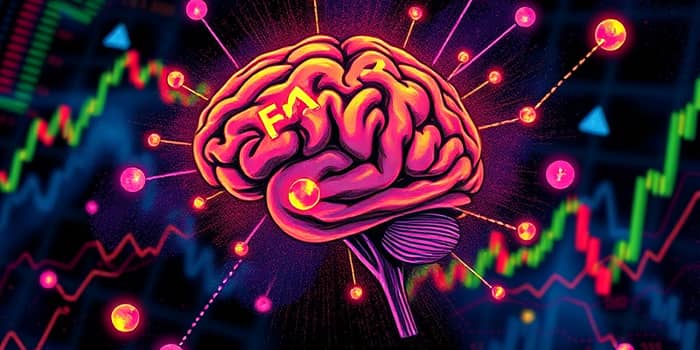
Imagine watching stock prices plummet during the COVID-19 pandemic, driven not by economic data but by sheer panic.
This scenario highlights the core of behavioral finance, where human psychology dictates market movements beyond rational analysis.
Traditional theories often fail to explain such anomalies, making behavioral finance essential for today's investors.
By exploring how biases and emotions shape decisions, we can navigate financial landscapes more effectively.
Behavioral finance merges psychology with economics to explain irrational investor behaviors.
It challenges the assumption that markets are always efficient and investors perfectly rational.
Key psychological phenomena include biases, heuristics, and emotional responses like fear or greed.
These elements lead to suboptimal choices, such as holding losing stocks too long due to loss aversion.
Understanding these concepts starts with four main categories.
These categories underpin the emotional undercurrents of financial markets, making them unpredictable.
A clear comparison reveals why behavioral insights are crucial for modern investing.
This table shows how behavioral finance adds a human layer to economic theories.
It emphasizes that market outcomes often defy logic, driven by collective psychology.
Specific biases frequently disrupt investor decisions and market stability.
Recognizing them can help mitigate their effects and improve financial outcomes.
These biases contribute to persistent market inefficiencies and volatility, as seen in historical events.
For instance, loss aversion explains why people panic-sell during downturns, exacerbating crashes.
Investor emotions directly drive market phenomena like bubbles, crashes, and anomalies.
This emotional influence often overrides fundamental analysis, creating unpredictable cycles.
During bull markets, optimism and herding push prices upward beyond reasonable levels.
In bear markets, fear and panic selling can lead to swift declines, as witnessed in COVID-19.
Bubbles, such as the dot-com bubble, arise from overconfidence and collective euphoria.
Market anomalies further illustrate these psychological effects in action.
Framing effects also play a role, where the same outcome is perceived differently based on presentation.
Emotions like greed and fear dominate financial markets most of the time, shaping long-term trends.
The foundation of behavioral finance was laid by pioneers Daniel Kahneman and Amos Tversky in the 1970s.
Their Prospect Theory demonstrated how people make decisions under risk, highlighting biases and emotional influences.
This research challenged the Efficient Market Hypothesis by showing that psychological factors cause persistent market inefficiencies.
It proved that anxiety and other emotions lower risk tolerance, affecting investment behaviors.
Their work emphasized that human cognition is imperfect, leading to deviations from rational models.
This historical insight underscores why behavioral finance remains relevant today, especially in volatile times.
Historical events vividly showcase behavioral finance in action, offering lessons for investors.
The dot-com bubble of the late 1990s was fueled by overconfidence and herding into tech stocks.
The 2008 financial crisis involved loss aversion and panic selling, exacerbated by complex financial instruments.
More recently, the COVID-19 market crash saw fear-driven sell-offs unrelated to long-term fundamentals.
Calendar effects, like the January Effect, demonstrate how seasonal psychology influences prices.
These examples highlight the need for strategies to counteract irrational behaviors in investing.
Practical applications include using rules-based approaches to minimize emotional interference.
Mitigating biases requires deliberate effort and structured approaches to investing.
By adopting specific strategies, investors can enhance their financial resilience and success.
These strategies empower investors to navigate the complex interplay of psychology and finance with confidence.
For instance, SIPs automate contributions, removing the temptation to time the market based on emotions.
Behavioral finance reminds us that markets are inherently human, shaped by emotions and cognitive flaws.
While traditional models provide a framework, they often overlook the psychological realities driving decisions.
By understanding and addressing biases, investors can achieve better outcomes and contribute to market stability.
The human element is permanent, making behavioral finance an indispensable tool for anyone involved in finance.
Embrace this knowledge to transform challenges into opportunities for growth and learning.
Ultimately, awareness of our psychological tendencies can lead to more informed and prosperous financial journeys.
References