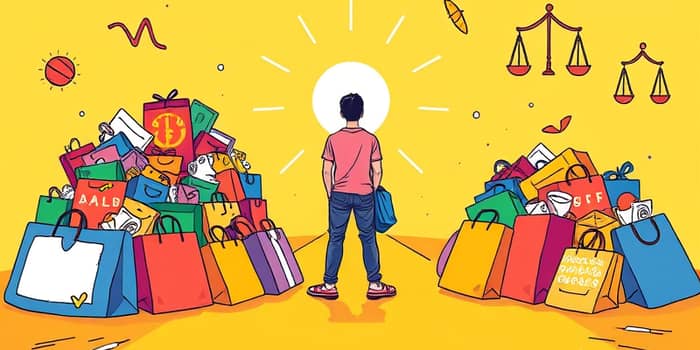
As 2026 unfolds, American households face a record $18.8 trillion in collective debt, a silent weight on everyday life. Against this backdrop, compulsive buying—fueled by easy credit and instant gratification—has become a normalized pattern. This article illuminates the path from sustainable, purpose-driven approach to spending, guiding readers toward mindful decision-making and genuine freedom.
Consider Jenna, a mid-career professional who once found solace in late-night online shopping sprees to combat stress. Her routine—a click, a purchase, a fleeting sense of relief—quickly morphed into a burden of unmanageable debt. Stories like hers underscore how deeply embedded these habits have become in modern life.
Household debt in the U.S. has surged to unprecedented levels, with credit card balances alone exceeding $1.3 trillion. Soaring interest rates near 20% trap consumers in long-term repayment cycles, where a single $3,000 purchase can linger for years on minimum payments. Meanwhile, Buy Now, Pay Later services fragment costs into bite-sized installments, obscuring the true price of even modest purchases.
Late payments on BNPL plans have tripled since 2024, with nearly 30% of users missing at least one installment. During last season’s gift-giving period, overspending added billions to revolving balances, as consumers tapped high-interest cards to fund celebrations. These trends span urban and rural communities alike, revealing how easy finance and widespread marketing blur the line between desire and genuine need.
At the heart of compulsive shopping lies a biochemical feedback loop. A simple scroll through an online store can trigger a cascade:
From $10 trinkets to $1,000 luxury items, this pattern hijacks self-control. Behavioral psychologists describe this pattern as a form of continuous partial attention to consumption, where the mind flits between options without reflecting on true priorities. Over time, the emotional downswing following each purchase can drive even more aggressive shopping, creating a feedback loop that is hard to break without intentional intervention.
Despite mounting pressures, the tide is shifting. Take Marcus, a freelance graphic designer, who built a simple budget and canceled underused subscriptions—freeing up $200 a month for savings. His experience mirrors that of millions who have adopted frameworks to regain control.
Survey data reveals that 53% of U.S. adults have crafted a 2026 budget, up from 46% in 2025. Of these, 49% aim to boost savings, 38% to curb overspending, and 35% to manage debt. However, concerns about the economy persist: 49% of respondents foresee worsening conditions, prompting widespread cuts in discretionary categories.
Common areas for reduction include:
Meanwhile, the average consumer visits 3.1 grocery stores, 2.6 gas stations, 3.2 convenience shops, and 4.0 restaurants per month—a testament to how spending has become fragmented across multiple venues.
Breaking free from compulsive habits requires more than willpower; it demands a system aligned with your financial goals. Consider these core strategies:
Together, these steps can cultivate a practice of mindful resource allocation, turning each purchase into a reflection of personal values rather than a fleeting whim.
The current landscape is defined by a K-shaped recovery: lower-income households cutting back on essentials like groceries and fuel, while higher-income earners maintain or even increase spending on experiences and upgrades. Inflation has driven imported goods up by 6.6% and domestic products by 3.8%, further squeezing budgets as pandemic-era savings dwindle.
Retailers are responding with AI-driven recommendations and personalized offers that anticipate consumer behavior. While loyalty incentives hold appeal, less than half of interested shoppers use them consistently—a gap that intentional buyers exploit by cherry-picking only the best deals. At the policy level, calls for clearer credit disclosures and stricter BNPL regulations are growing, hinting at a future where structural reforms support rather than hinder financial wellness.
Ultimately, intentional purchasing is more than a set of tactics; it’s a mindset that transcends economic cycles and cultural pressures. By anchoring spending habits in clear values and disciplined processes, we reclaim autonomy and build financial resilience that lasts far beyond any single purchase.