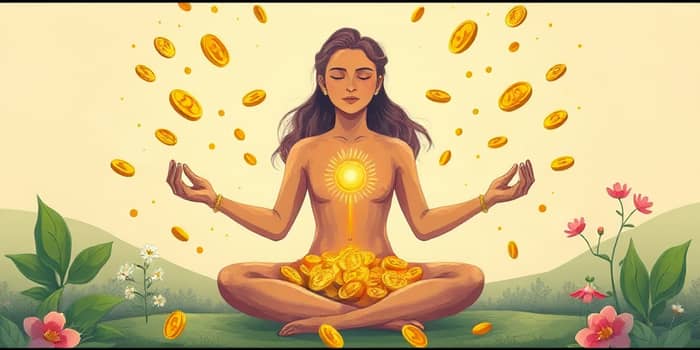
In a world where money is often reduced to numbers in a bank, its deeper essence remains overlooked. Money is divine energy materialized for constructive use, bridging our daily needs with spiritual aspirations.
This shift in perspective moves us from scarcity and hoarding towards a mindset of abundance and flow. Where your treasure is, as ancient wisdom reminds us, there your heart will be also, highlighting that our focus defines money's true value.
By reconciling spirituality with materiality, we can harness money to express integrity and foster human connection. Spirit without matter is expressionless, and matter without spirit is motionless, underscoring their inseparable nature in a balanced life.
This article delves into the spiritual dimensions of money, offering insights and practices to transform your relationship with finances. It explores how money can become a tool for personal growth and collective harmony.
Embracing this view requires courage to rethink wealth beliefs and align spending with higher purposes. Let's journey beyond the tangible to uncover money's transformative power.
Money transcends its role as a mere medium of exchange to symbolize prosperity and human values. It draws good to us when used in alignment with divine order, reflecting our deepest intentions and commitments.
At its core, money represents energy that must flow freely to serve its purpose. Stagnation often arises from myths of scarcity and fear, blocking the natural expression of our aspirations.
Shifting from a possession-focused mindset to one of service can unleash soul energy. This vision fosters harmony and redirects financial energy towards meaningful causes.
Understanding this essence helps us see money as a reflection of our hopes. It becomes a catalyst for personal and societal transformation.
The evolution of money traces a journey from barter systems to spiritual applications. Originating from earth's surface resources, it has evolved to support education over pure materialism.
Metaphysical definitions highlight money as a symbol of divine expression. It materializes spiritual substance for practical use in daily life.
For instance, a Japanese proverb notes that immortals may eat mist, but mortals need money alongside spirituality. This acknowledges its necessary role in human existence.
Money's spiritual purpose is to establish right human relations. It redirects focus from material gains to foundations of goodwill and purpose.
This context enriches our understanding, showing money as a social construct with profound implications.
Cultivating a spiritual relationship with money demands courage and selflessness. Rethink it as energy for intention and purpose, freeing yourself from personal gain.
Money and spirituality are inseparable; mastery leads to an inspired and grateful state. It frees energy for fulfillment and aligned actions.
By seeing money as a force meant to circulate, we can overcome blocks. This shift aligns financial decisions with causes that reflect our highest ideals.
This transformation involves letting go of fear and embracing trust. It paves the way for a more centered and joyful financial life.
Numerous practices can rewire your brain for a healthier money mindset, emphasizing consistency over duration. These micro-moments foster neural changes that support abundance.
Integration tips make these habits sustainable and effective. Habit-stacking with daily activities ensures they become second nature.
Benefits include reduced stress, fewer impulse buys, and better alignment with values. These practices transform money management into a mindful and uplifting experience.
Adopting a spiritual approach to money yields profound personal and collective benefits. It fosters a healthier relationship with finances, reducing anxiety and promoting fulfillment.
On a personal level, this mindset cultivates an abundance mindset. It aligns spending with core values, leading to greater satisfaction and purpose.
Research links money meaning to management, spirituality, and religion. Mindfulness practices aid both financial and mental wellness, creating a ripple effect in society.
Ultimately, money reflects our inner state and aspirations. It is not inherently selfish or saintly but a tool we shape with intention.
By embracing its spiritual side, we can use money to build a more connected and compassionate world. This journey enriches not just our bank accounts, but our souls.
References