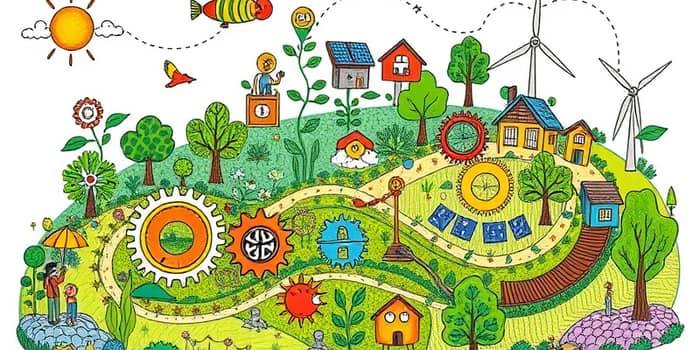
Imagine a world where waste is a relic of the past, and every resource is cherished and reused in an endless cycle of renewal. This is the vision of the circular economy, a transformative model that is redefining how we produce, consume, and invest for a sustainable future.
Globally, embracing this approach could slash emissions by an astonishing 22.8 billion tons, nearly 39% of 2019 levels, offering a powerful solution to climate change. The shift from linear to circular systems is not just an environmental imperative but an economic opportunity, promising prosperity without plundering our planet.
In contrast to the old take-make-waste model, the circular economy mimics nature's regenerative processes, where nothing is discarded. It prioritizes sharing, leasing, and reusing to extend product lifecycles and eliminate pollution, creating a resilient foundation for growth.
This article explores how circular capital—investing in these regenerative practices—can drive sustainable consumption, unlocking benefits for businesses, communities, and the environment alike.
At its core, the circular economy is guided by three key principles that challenge traditional thinking. First, design out waste and pollution from the outset, ensuring products are created with longevity and recyclability in mind.
Second, keep products and materials in use for as long as possible through innovative loops. Third, actively regenerate natural systems, such as by using renewable energy and fostering biodiversity.
To achieve this, the R-ladders hierarchy provides a practical framework for action.
Business models play a crucial role in enabling these strategies. For example, product-as-a-service models, like leasing or subscription, shift focus from ownership to utility.
Sustainable consumption is the heart of the circular economy, moving society away from throwaway habits. It optimizes resource use and decouples economic growth from raw material extraction, much like natural cycles where waste equals food.
Consumers benefit from higher-quality, durable products that save money over time and enhance quality of life. This shift is not about sacrifice but about smarter, more meaningful engagement with the things we use.
By embracing regenerative practices, we can reduce our environmental footprint while fostering innovation. The potential for positive change is immense, as over 80% of a product's impact is determined at the design stage.
The circular economy delivers tangible benefits across multiple domains, from cutting emissions to creating jobs. In the EU alone, it could generate 700,000 new jobs by 2030, boosting competitiveness and reducing dependency on volatile imports.
Here is a summary of key benefits:
These benefits underscore why policies like the EU's goal for a circular, climate-neutral economy by 2050 are gaining traction. Initiatives such as ecodesign and right-to-repair laws are paving the way for broader adoption.
Circular capital refers to investments that support sustainable consumption by shifting from linear asset ownership to service-based models. This approach emphasizes closed-loop systems where byproducts are reused, renewable energy is prioritized, and recycled inputs are standard.
Tighter loops yield significant cost savings in labor and energy, making them attractive for investors. Key strategies include focusing on design to minimize waste and developing new competencies for competitive advantage.
Financial institutions like J.P. Morgan highlight the transition to service models in industries like automotive for resource efficiency. This shift not only cuts pollution but also opens up lucrative markets aligned with green consumer trends.
Despite its promise, the circular economy faces barriers such as planned obsolescence and upfront investment costs. Governments play a critical role in overcoming these through supportive policies and regulations.
The EU's ambitious targets, including waste reduction laws and packaging standards, set a benchmark for global action. Consumer awareness and education are also vital to drive demand for circular products and services.
Addressing these challenges requires collaboration across sectors. By fostering innovation and incentives, we can accelerate the transition to a more sustainable economic model.
Real-world examples demonstrate the circular economy in action, from industrial symbiosis to urban initiatives. In Kalundborg, Denmark, companies share resources like steam and water, turning waste into valuable inputs and reducing environmental impact.
Circular cities, such as those in the Netherlands, integrate sharing platforms and renewable energy to create resilient communities. Companies like Repsol focus on reduce, reuse, and recycle strategies to optimize resources and cut emissions.
These case studies highlight the practical viability of circular principles. They inspire confidence that scalable solutions are within reach, driving further investment and innovation.
The future of the circular economy is one of macro growth without the burden of resource depletion. It envisions a regenerative society where economic prosperity aligns with environmental stewardship.
By decoupling welfare from raw material extraction, we can tackle climate change and biodiversity loss simultaneously. This path offers resilience and opportunity, creating jobs, cutting waste, and fostering a healthier planet for generations to come.
As more investors embrace circular capital, the momentum will build towards a sustainable global economy. The journey is just beginning, but with collective action, we can turn this vision into reality, ensuring a brighter, more equitable future for all.
References