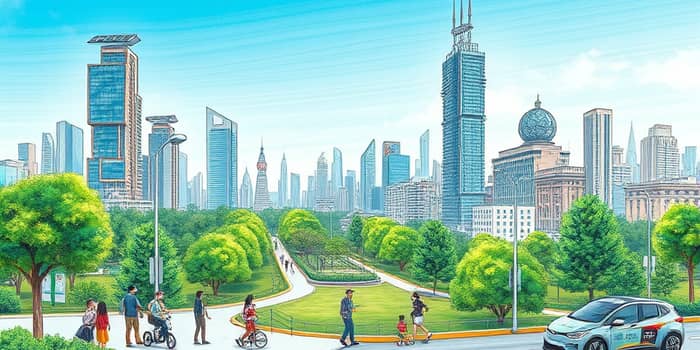
Imagine a world where cities breathe with intelligence, adapting to our needs while healing the planet. This vision is becoming reality through the rise of smart cities.
As urban populations surge, with 70% expected to live in cities by 2050, the urgency for innovation has never been greater.
Smart cities blend technology and humanity to create environments that are efficient, sustainable, and welcoming for everyone.
They are not mere fantasies but tangible transformations happening across the globe today.
From reducing traffic jams to cutting carbon emissions, these urban hubs offer a blueprint for a better tomorrow.
At the foundation of smart cities lie cutting-edge technologies that collect and analyze data in real-time.
These tools enable cities to respond dynamically to challenges, optimizing resources and enhancing daily life.
Key components include IoT sensors, AI systems, and connected infrastructure that work in harmony.
By integrating these elements, cities become more resilient and responsive to citizen needs.
Cities worldwide are leading the charge, implementing initiatives that set new standards for urban living.
Their successes offer valuable lessons and inspiration for others to follow.
These examples show how strategic investments in technology yield tangible benefits for communities.
They pave the way for a future where cities are not just smart but also compassionate and forward-thinking.
Sustainability is no longer an option but a necessity in urban development.
Smart cities are embedding green practices into their core to combat climate change and resource scarcity.
Initiatives focus on energy efficiency, waste reduction, and ecosystem protection to create healthier environments.
With projections of rising temperatures and water scarcity, these efforts are critical for survival.
They demonstrate that economic growth and environmental stewardship can go hand in hand.
True smart cities prioritize inclusivity, ensuring that advancements benefit all residents, not just a privileged few.
This means addressing digital divides, housing crises, and participation gaps that can exacerbate inequality.
Efforts include expanding internet access and fostering community-driven solutions.
By focusing on equity, cities can build trust and cohesion, making urban life richer for everyone.
Despite progress, smart cities face significant hurdles in funding, governance, and scaling innovations.
Investment gaps and bureaucratic barriers often slow down implementation and limit reach.
However, with global spending projected to reach $2.6 trillion by 2026, momentum is building.
Overcoming these challenges requires collaboration between governments, businesses, and citizens.
It calls for a shared vision where technology serves humanity, not the other way around.
As individuals, we all have a part to play in making cities smarter, greener, and more inclusive.
By advocating for change and adopting sustainable habits, we can contribute to urban transformation.
Practical steps include supporting local initiatives and staying informed about technological advancements.
Together, we can turn the dream of vibrant, resilient cities into a lived reality for generations to come.
References