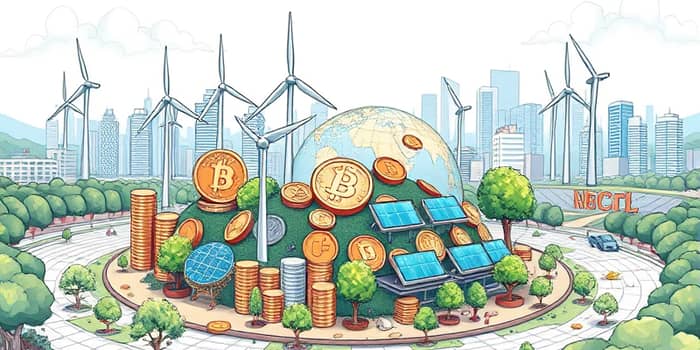
In an era defined by climate urgency, investors are increasingly recognizing that sustainability is synonymous with profitability.
The transition to a low-carbon economy represents a historic reallocation of capital, with trillions flowing into green assets and innovative solutions.
From decarbonization efforts to adaptation finance, climate strategies are projected to fuel significant growth by 2026.
Geopolitical shifts and policy changes are accelerating this trend, making climate investing a mainstream priority worldwide.
This movement transcends mere environmentalism; it is a fundamental reshaping of global markets.
Climate risk and financial opportunity now converge to drive unprecedented change and resilience.
Climate-focused strategies are no longer niche; they are essential for long-term value creation.
Investors are prioritizing actions that mitigate physical risks and capitalize on emerging trends.
Key areas driving this shift include decarbonization, sustainable debt, and nature-based solutions.
These approaches offer unique avenues for impact and competitive returns in volatile markets.
Projected to fuel significant growth, these strategies are reshaping investment portfolios globally.
Effective climate investing relies on robust frameworks and diverse instruments to manage risks.
Green bonds, for example, provide transparency and impact reporting similar to conventional bonds.
Decarbonisation strategies focus on reducing carbon exposure in equities and fixed income.
Climate-aware frameworks incorporate macro shifts and transition-aligned premiums for better returns.
Sustainable debt instruments are gaining traction, offering risk-adjusted returns and scalability.
Climate investing drives both financial returns and broader economic growth, creating a virtuous cycle.
It reduces physical climate risks while aligning with evolving investor preferences and regulations.
Positive effects include higher returns for greener assets and sectoral outperformance in technology.
Economic growth is fueled by green economy expansion and clean tech exports from regions like China.
Resilient infrastructure investments are critical, with adaptation spending lagging behind mitigation efforts.
Challenges include policy shifts and selective venture capital in climate tech.
Carbon pricing coverage now extends to 28% of global emissions, incentivizing change.
Climate investing varies by region, with Europe and Asia-Pacific leading the charge.
Europe prioritizes climate commitments and sovereignty initiatives, mobilizing capital for resilience.
Asia-Pacific sees record sustainable debt issuance and clean tech exports driving growth.
Institutions like pension funds and insurers are expanding their allocations to sustainable assets.
Regional leadership in Europe sets benchmarks for other markets to follow suit.
Looking ahead to 2026, climate investing is set to deepen and diversify.
Focus areas include green bonds, nature solutions, and mainstreaming climate tech in corporate strategies.
Transition finance is expected to break out, with rising carbon pricing and blended finance.
Rebalancing towards adaptation will become crucial as climate conditions worsen.
Energy transition focus on grid storage and carbon removal will drive innovation.
Climate-focused investment strategies offer a pathway to both planetary health and economic prosperity.
By embracing these approaches, investors can mitigate risks and unlock new growth frontiers.
Economic growth drivers like the circular economy and AI-energy demands will shape future trends.
The time is now to align capital with sustainability for a resilient and thriving world.
References