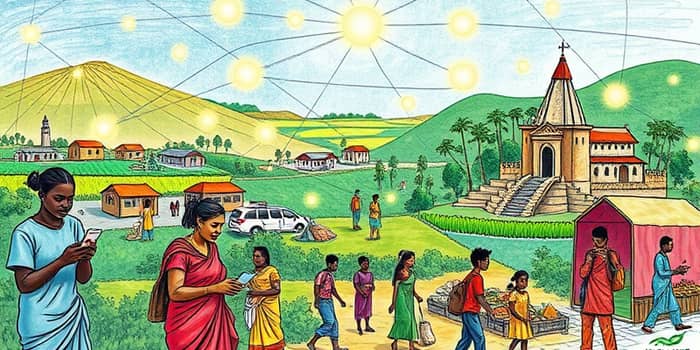
Across the globe, an estimated 1.4 billion people remain unbanked, trapped outside formal financial systems despite historic gains in digital access. While four in five adults now hold an account, these achievements mask stark regional, gender and urban-rural disparities. Understanding why millions still lack secure, affordable services is the first step toward forging solutions that uplift individuals, families and communities.
In this article, we explore progress, persistent barriers and the innovative models transforming how underserved populations access credit, savings and payments. By spotlighting case studies, data trends and practical strategies, we aim to inspire stakeholders—from policymakers to fintech innovators—to join forces and close the unbanked divide.
Although the Global Findex 2025 reports 80% account ownership, 1.4 billion adults lack any financial account. Among 400 million micro-enterprises in emerging markets, 345 million operate informally—often without access to credit, insurance or digital tools. Rural communities and women face greater exclusion: in Pakistan, 79% of adults remain unserved, while gender account gaps persist in South Asia and sub-Saharan Africa.
The past two decades have seen remarkable strides. Global account ownership rose from 62% in 2014 to 80% in 2025, fueled by mobile money in Africa and digital wallets in Latin America and Asia. Yet the shift now moves beyond access toward outcomes like financial health, resilience against shocks and enhanced economic participation.
Regional Financial Inclusion Index scores climbed steadily: the Americas reached 53.1 in 2024, up from 46.8 in 2022. Asia and Africa continue rapid digital adoption, supported by open banking frameworks, instant payments and targeted connectivity pledges such as e&’s $6 billion investment across Middle East, Africa and Asia (2024–26).
Market forecasts reinforce the opportunity: global financial services revenue is projected to grow from $36.1 trillion in 2025 to $51.1 trillion by 2030, at a 7.3% CAGR. These dynamics create fertile ground for fintechs, investors and governments to expand inclusion while ensuring sustainable outcomes.
Despite momentum, funding shifts threaten progress. Major bilateral donors have cut commitments and foundations are sunsetting legacy programs. As USAID ends direct support, institutions must adapt or risks include talent loss, weakened consumer protection and erosion of critical agendas like resilience.
Gender and diversity challenges persist: women earn 82–84 cents per dollar globally, and female-led businesses face higher denial rates. In the UK, ethnic minority entrepreneurs are 20% more likely to be denied finance. Addressing these systemic biases requires concerted policy, data transparency and targeted capacity building.
To navigate funding headwinds, support ecosystems are reconfiguring into four archetypes that blend sustainability with impact:
Each model balances trade-offs between stability, independence and scalability. Hybrids leverage digital data analytics and AI insights, while public mandates ensure policy alignment. Investor-embedded structures sustain operations through capital returns.
In Egypt, Erada disbursed EGP 1.3 billion (≈$52 million) in microloans to 41,000 rural clients, averaging EGP 25,000 per loan. Financial literacy workshops and community savings groups boosted repayment rates above 98% and increased household resilience.
Pakistan’s U Bank serves over 400,000 clients through a fully digital platform, achieving 5× loan portfolio growth in two years. By integrating biometric verification and instant disbursement, U Bank reduced operational costs while reaching remote villages.
These case studies showcase the transformative potential of microloans, unlocking income-generating opportunities and empowering women entrepreneurs to reinvest in families and communities.
Embedding services into everyday digital touchpoints—from mobile wallets to e-commerce platforms—drives sustainable engagement. Policymakers must adopt risk-based regulations that encourage innovation while safeguarding vulnerable users.
Equally, ecosystem actors should prioritize capacity building for local institutions, ensuring that community organizations and regulators can adapt swiftly to emerging technologies.
As we approach 2026, stakeholders express cautious optimism: 76% of consumers feel confident about their financial futures despite global headwinds. To maintain momentum, the sector must measure not just account penetration but financial health and resilience, using evolving toolkits from OECD/INFE and GPFI’s 69 indicators.
Collaboration will be paramount. Donors, governments, fintechs and academics can pool resources in hybrid models, protect crucial memory of past initiatives and rapidly scale what works. This collective effort can transform financial services from a privilege into a universal right.
Together, we have the ingenuity, technology and moral imperative to bridge divides. By combining data-driven insights, resilient institutional frameworks and inclusive policies, we can ensure that every adult—regardless of location, gender or economic status—accesses the tools to build a prosperous future.
References