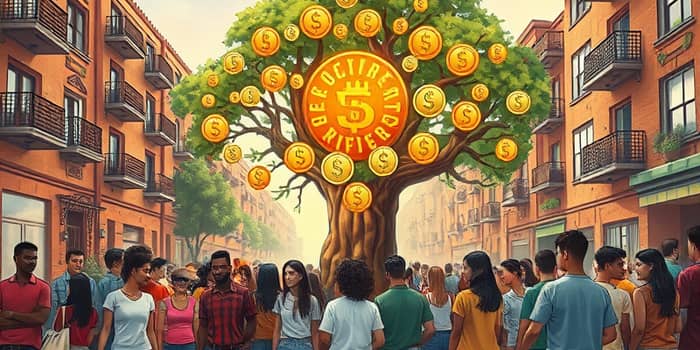
In cities and rural areas across the United States and around the world, families face mounting affordability crises and financial instability. While national policies set the stage, true transformation takes root at the local level. By collaborating with nonprofits, credit unions, community banks, and fintech providers, localized financial services through community-driven partners are changing the game. This movement empowers households to build savings, weather unforeseen shocks, and plan for their futures with confidence.
Despite decades of progress, millions of Americans remain unbanked or underbanked, without reliable access to safe and affordable financial tools. Recent data shows that only 20% of low-income households rate their personal finances as excellent or good, fewer than half maintain emergency savings for three months, and less than a third feel confident about meeting their long-term goals. In some communities, these stark realities reflect systemic barriers that national programs alone cannot overcome.
Globally, the challenges are even broader. According to the 2025 Global Findex, 79% of adults worldwide now have an account, yet 1.3 billion people remain unbanked and another 300 million hold inactive accounts. In low- and middle-income countries, formal saving rates lag below 40%, and the gender gap in account ownership persists, especially in fragile economies. These numbers underscore the need for building long-term financial resilience through targeted, community-centric strategies.
Over the past decade, the rate of financial inclusion has accelerated, with a notable 80% rise in account ownership in developing regions. Mobile money platforms and digital merchant payments have broken down geographic barriers, making it easier for rural and remote populations to engage with the formal financial system.
In the United States, community banks and credit unions have expanded their reach where larger banks have receded. Between 2004 and 2018, credit union branches increased by 1,700, compared to a similar decline in traditional bank branches. Today, credit unions hold 32.4 million member loans and extend $13.5 billion in small business financing annually. These institutions embrace intentional staffing reflecting communities for fairness and offer programs that address local needs.
The momentum behind localized solutions is fueled by strategic initiatives from both public and private sectors. The Citi Foundation’s 2026 Community Finance Initiative has earmarked $35 million for 70 nonprofits, each receiving half a million dollars to implement programs that boost household resilience in areas like housing, food, and childcare. Meanwhile, the Federal Reserve Bank of New York’s “An Economy That Works for All” forum spotlights best practices in financial inclusion, literacy, and innovation.
Other critical efforts include special savings accounts for incarcerated individuals, credit-building tools through the OCC’s Project REACh, and ABLE accounts to protect disability benefits. Internationally, Pakistan’s U Bank has quintupled its loan portfolio over five years, reaching over 400,000 rural clients with microloans and savings services.
Nonprofits, community banks, credit unions, fintech firms, and government bodies each play unique roles. Nonprofits often serve as trusted intermediaries, providing financial education and coaching that bridging the global banking gap where distrust runs deep. Community banks and credit unions contribute local knowledge and capital, while fintech brings data analytics and user-friendly platforms that personalize offerings. Public agencies, from the U.S. Treasury to international bodies like the World Bank, set regulatory frameworks and gather metrics to track progress.
Technological breakthroughs have enabled innovative fintech solutions for inclusion. Mobile banking apps with multilingual interfaces, alternative credit scoring based on utility payments, and AI-powered financial coaching tools help identify individuals most at risk. These solutions reduce costs, speed delivery, and allow for partnerships between public and private to scale effective models rapidly.
Co-creation with community members ensures that digital products are culturally relevant and accessible. In some regions, local organizations translate fintech platforms into native languages and run awareness campaigns to demonstrate their benefits firsthand.
Looking ahead, stakeholders are shifting focus from mere transaction access to measurable outcomes, such as emergency savings rates, credit score improvements, and sustainable business growth. National Financial Inclusion Strategies are emerging as forums for policy dialogue, ensuring that all voices inform long-term planning.
Despite some donor funding contractions, the ecosystem remains buoyed by strong public-private ties, maturing infrastructure, and local champions determined to leave no one behind. The next phase of expansion will target the “last mile,” reaching the most vulnerable groups through tailored interventions.
Through collaborative efforts, tailored support for low-income households can become a reality for every neighborhood. By combining community wisdom, innovative technology, and strategic funding, we can empower families to manage costs, build assets, and pursue their dreams. As these initiatives grow, they offer a powerful blueprint for creating an inclusive economy where everyone has the opportunity to thrive.
References