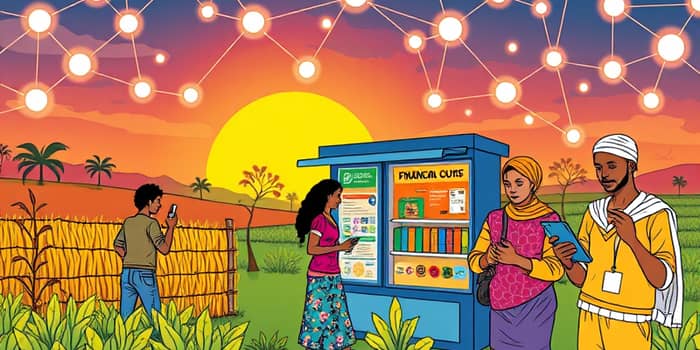
Achieving true financial inclusivity is a collective endeavor that goes beyond mere account openings. As economies evolve, the focus has shifted towards optimizing for financial health, resilience, equity and ensuring that no one is left behind. Today, 79% of adults globally hold some form of financial account, yet 1.3 billion remain unbanked and another 1.6 billion have inactive accounts. This article explores the four pillars of inclusive finance, offering both inspiration and practical guidance to design systems that empower all individuals and communities.
The landscape of financial access has transformed dramatically over the last decade. According to Global Findex 2025, 79% of adults worldwide now possess an account at a bank, financial institution or mobile money provider. In low- and middle-income economies, account ownership stands at 75%, reflecting an 80% rise since 2011. Despite these strides, 1.3 billion adults remain unbanked and 1.6 billion are either un- or under-served, underscoring the gap between access and meaningful usage.
Mobile technology has been a catalyst for inclusion. Approximately 15% of adults globally have a mobile money account, and in developing economies, 60% make or receive digital payments. Yet, 16% still lack access to mobile phones, and ownership is uneven: only 75% among those with primary education versus 93% for those with secondary or higher. These disparities present a critical design challenge.
Inclusion is not uniform across demographics. Over half of the world’s unbanked—roughly 650 million adults— reside in eight countries, including Bangladesh, China, India and Nigeria. Within this group:
These statistics reveal that financial exclusion intersects with gender, poverty, education and employment. Addressing these dimensions is essential for social mobility and market resilience, driving long-term economic growth and reducing vulnerability.
Designing financial systems with everyone in mind requires a set of clear principles. Products must be useful and affordable, accessible and delivered responsibly. They should account for varying literacy levels, limited connectivity and cultural contexts, ensuring that innovations do not inadvertently exclude those they aim to serve.
Beyond principles, a range of levers can drive impact. Digital public infrastructure, agent networks and interoperable systems expand reach, while partnerships with local organizations build trust. Data analytics can tailor offerings and measure outcomes, moving beyond account counts to real-world financial health indicators that reflect resilience and well-being.
The sector is undergoing a crucial shift. Stakeholders now emphasize outcomes—financial health and resilience—rather than mere account openings. The UN Secretary-General’s Special Advocate office has championed financial health over simple inclusion, urging practitioners to design products that foster sustainable well-being. CGAP’s Financial Inclusion 2.0 framework integrates climate goals and consumer protection into every strategy, recognizing the multifaceted nature of prosperity.
Climate resilience is gaining prominence, as financial tools can help vulnerable communities manage environmental risks. Digital public goods—such as open-source payment platforms—enable scalable and interoperable services, laying the groundwork for more robust ecosystems. These innovations promise to redefine our understanding of inclusion by linking financial services with broader societal goals.
Effective policy and institutional support are fundamental. The Global Financial Inclusion Index 2025 notes a plateau in scores at 49.4 out of 100, highlighting the need for renewed commitments. Employers must revitalize financial wellness programs, and governments should streamline regulations to encourage competition and protect consumers. Collaborative platforms that bring together regulators, financial institutions and civil society can accelerate progress and foster sustainable development.
At the system level, leveraging public-private partnerships, aligning incentives for service providers and fostering transparent data-sharing frameworks can create a virtuous cycle of innovation and inclusion. By prioritizing long-term sustainability over short-term targets, stakeholders can build financial architectures that grow with communities, ensuring enduring impact.
Achieving inclusive finance demands concerted efforts from designers, policymakers and financial service providers. Begin by embedding user research throughout the product lifecycle, ensuring that solutions address real needs and constraints. Iterate rapidly, using feedback loops to refine features and reduce pain points.
Practical steps include co-designing with target users, piloting minimal viable products in diverse communities, and measuring success with metrics like savings rates and reduced debt stress. Offer modular services that evolve with changing needs, invest in digital literacy and support agent networks in remote areas. By centering on outcomes and embracing collaboration, we can unlock the power of finance to uplift the most vulnerable and build a fairer, more resilient world.
References