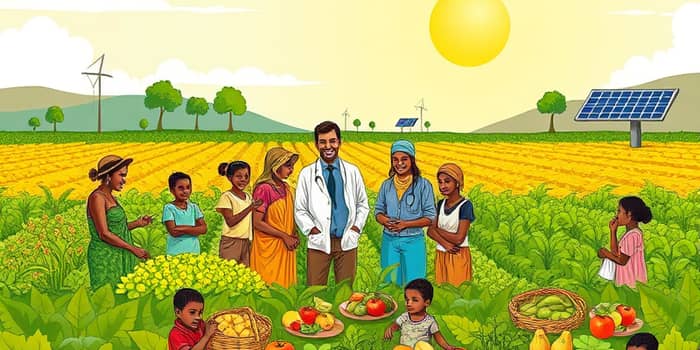
Today, hunger is not just a moral failure—it is a call to action for investors, policymakers, and communities everywhere. The gap between what we spend and what we need to secure food for all has never been more urgent. Bridging this gap requires a united effort that combines ambition, resources, and unwavering commitment.
Despite small improvements, the world remains off track to end hunger by 2030. The numbers tell a story of resilience and risk, of hope and hardship. Understanding these challenges is the first step toward building a future where every person has access to sufficient, safe, and nutritious food.
In 2024, about 8.2% of the global population faced hunger, roughly 673 million people. Although marginally lower than in previous years, this statistic masks a deeper reality: nearly 2.3 billion people experienced moderate or severe food insecurity, a number that has steadily risen since 2015. This is not merely a statistic—it represents families, farmers, and children trapped in cycles of uncertainty and need.
The most extreme cases are found in conflict-affected regions, where violence has disrupted production, destroyed livelihoods, and blocked humanitarian access. In mid-2025, 1.2 million people were classified in IPC Phase 5 (catastrophic hunger) across Gaza, Sudan, South Sudan, Yemen, Haiti, and Mali. Without immediate support, these communities face widespread death and devastation.
Hunger is only one dimension of the crisis. Across many low- and middle-income countries, children suffer from wasting, stunting, and micronutrient deficiencies. At the same time, the prevalence of overweight and obesity is rising, driven by unhealthy food environments that prioritize cheap calories over nourishment.
In 2025, over 13 countries reported more than one million acutely malnourished children each. Funding cuts are projected to leave 2.3 million children without treatment for severe acute malnutrition, potentially causing 369,000 additional preventable child deaths annually. This triple burden of malnutrition—undernutrition, micronutrient deficiencies, and obesity—underscores the complexity of what “food security” truly means.
Three primary categories of shock have converged to push millions toward starvation:
Untangling these drivers demands a multi-faceted approach that addresses immediate relief while building resilience for the long term.
Despite the scale of need, public and private spending on food systems remains stagnant. Agriculture’s share of public expenditure hovers around 2.3%, even as risks mount. International aid is under pressure: a projected 17% drop in official development assistance for food security and nutrition in 2025 threatens to leave millions without vital support.
The WFP expects to reach 16.7 million fewer people this year, a 21% decrease from 2024. In the nutrition sector, only 27% of required funds have been secured, creating an alarming nutrition treatment gap that imperils child survival.
Meanwhile, climate finance is misaligned. Agrifood systems receive just 7.2% of global climate funds—around US$95 billion annually—despite being among the most vulnerable to climate change and a major source of greenhouse gas emissions. This reveals staggering cost of inaction and missed opportunities for sustainable growth.
Closing the investment gap requires bold vision and collaboration across sectors. Stakeholders can champion solutions that deliver both immediate relief and long-term resilience:
Each of these pathways offers a tangible route to impact. By redirecting capital toward inclusive, resilient, and low-carbon food systems, investors can help safeguard livelihoods, combat malnutrition, and mitigate climate risks.
At the same time, donors and governments must prioritize urgent humanitarian action and investment for those on the brink. Funding appeals need reinforcement, and aid agencies must coordinate to minimize overlap and maximize reach.
Long-term transformation hinges on innovation and accountability. Data systems, early warning platforms, and transparent reporting will guide resources where they matter most. Empowering local communities and organizations ensures that solutions are context-driven and sustainable.
Food security is not a zero-sum game. Every dollar invested generates returns in health, productivity, and stability. Conversely, the hidden costs of underinvestment—lost lives, economic setbacks, and environmental degradation—are too high to ignore. The choice is clear: innovative climate-smart agrifood solutions and robust social safety nets today will forestall catastrophe tomorrow.
Securing food for all demands our collective resolve. By aligning public budgets, private capital, and humanitarian funding, we can turn the tide on hunger and malnutrition. The world stands at a crossroads: carve a path toward shared prosperity, or watch crises deepen and extend. The time to invest is now.
Together, we can build a future where every person, community, and nation thrives with dignity and hope. Let us seize this global investment challenge and redefine what is possible for food security.
References