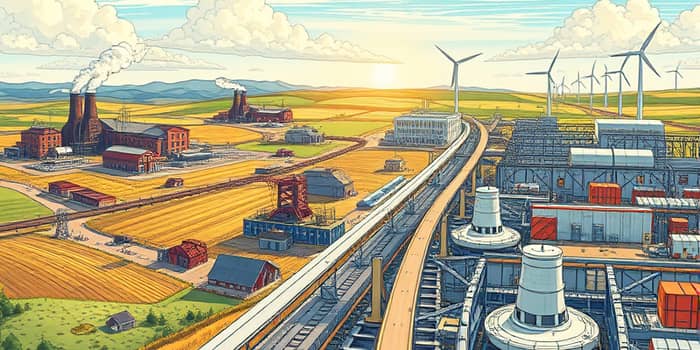
The story of manufacturing is a chronicle of human ingenuity and technological breakthroughs. From horse-drawn plows to AI-driven production lines, each phase reshaped economies, societies, and global power structures. This journey explores the evolution of six industrial revolutions, tracing how key inventions and visionary pioneers propelled us from mechanized beginnings toward a future of sustainable, human-centered manufacturing.
Between 1700 and 1760, incremental advances in agriculture and early textile mills set the stage for the first major leap. Inventions like Jethro Tull’s seed drill and the flying shuttle boosted output and labor efficiency.
John Lombe’s water-powered silk mill in 1721 marked the foundation for mechanized textiles, shifting production from homes to centralized workshops and laying the groundwork for the steam age.
The period from 1760 to 1840 witnessed the advent of steam engines and power looms. Innovators including James Watt, Samuel Crompton, and Edmund Cartwright transformed raw cotton into finished cloth at unprecedented speeds.
These breakthroughs enabled steam-powered factories and early mass production, sparking urban migration and creating the modern factory system characterized by division of labor driving urbanization.
From the 1870s through 1914, the harnessing of electricity and steel catalyzed a second wave of growth. The Bessemer process made steel affordable, while assembly line methods pioneered by Ransom E. Olds and Henry Ford slashed production times and costs.
Ford’s conveyor system and Olds’ moving line boosted auto output by 500 percent in a single year, making cars accessible to the middle class. Meanwhile, railroads and telegraphs forged rapid economic growth and global integration, knitting continents together in a burgeoning trade network.
The 1970s ushered in the digital revolution as microprocessors and computers infiltrated factory floors. Programmable logic controllers replaced mechanical relays, enabling precision and adaptability.
Early industrial robots such as the Versatran and PUMA automated repetitive tasks, while quality methodologies like Six Sigma optimized processes. Contract manufacturers like Solectron exemplified how digital tools enabled outsourcing and global supply chains.
By integrating computers with industrial machinery, businesses achieved unprecedented efficiency and flexibility, setting the stage for fully connected operations.
In the 2010s, the Internet of Things and cyber-physical systems gave rise to smart factories. Machines, sensors, and software streams now communicate in real time, enabling predictive maintenance and dynamic resource allocation.
Projects like GM’s Vanguard “factory of the future” combined robots, AGVs, and advanced analytics, marking the era of full connectivity and data-driven production that transforms isolated plants into self-optimizing ecosystems.
As industries mature, a new paradigm emerges—Industry 5.0. This phase emphasizes collaboration between humans and machines, leveraging AI, cobots, and renewable energy to achieve both customization and ecological balance.
By combining human creativity with machine precision, Industry 5.0 aspires to deliver customization and eco-friendly processes that serve individual needs while preserving our planet.
From its origins in 18th-century Britain to its global spread by the 20th century, manufacturing has reshaped societies and powered economic growth. Urban skylines rose on steel and steam, while mass production made everyday goods affordable.
Today, lessons from past revolutions guide our path toward sustainable, resilient industries. The convergence of AI, renewable energy, and advanced robotics promises lights-out factories and personalized production, forging economies that adapt swiftly to change and prioritize human well-being.
By tracing this remarkable evolution, we uncover insights that empower businesses, policymakers, and communities to build a future where manufacturing fuels innovation, equity, and environmental stewardship.
References