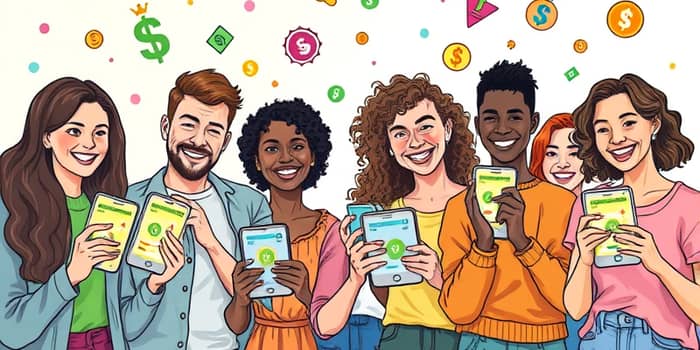
Saving money has traditionally been seen as a chore, but technology is revolutionizing this essential habit by infusing it with excitement and interactivity.
Gamified savings transform financial management into a playful experience, leveraging game mechanics to motivate users and foster long-term engagement.
This innovative approach taps into psychological principles like immediate positive reinforcement, making it easier for people to stick to their goals and enjoy the process.
As digital tools evolve, gamification is proving to be a powerful ally in addressing widespread savings gaps and financial anxiety.
By blending entertainment with education, these apps not only boost savings but also enhance overall financial literacy and confidence.
Gamification integrates game-like elements into non-game contexts, such as savings apps, to drive behavioral change.
It uses points, badges, levels, rewards, progress bars, animations, competitions, and visualizations to create an engaging environment.
The core concept is to make saving fun and rewarding, addressing motivational barriers that often hinder financial progress.
Studies, including those in "Computers in Human Behavior," highlight how gamification leverages human psychology to encourage consistent action.
This method transforms abstract financial goals into tangible, achievable milestones, reducing stress and building positive habits.
Key statistics reveal the profound effect of gamification on personal finance.
These numbers underscore how gamified tools can bridge savings gaps and promote financial resilience.
Regional data shows that 21-46% of New England households lack three months' poverty-level liquid assets, highlighting the urgent need for effective solutions.
Gamified savings apps employ various strategies to keep users motivated and engaged.
These features turn saving into a dynamic activity, reducing the monotony often associated with budgeting.
By offering immediate gratification through visual feedback, apps help users stay committed and see tangible results.
Numerous apps and programs demonstrate the success of gamification in real-world settings.
These examples show how gamification can be tailored to different audiences, from beginners to seasoned savers.
Apps like Current and Finotta have gained millions of users by making financial management interactive and rewarding.
Gamification works by tapping into deep-seated psychological mechanisms that drive human behavior.
By understanding these principles, apps create environments where saving feels less like a duty and more like a game.
This psychological leverage is key to addressing motivational barriers in financial contexts, making it easier for users to adopt healthy behaviors.
Financial institutions gain significant advantages from implementing gamified savings features.
These benefits highlight how gamification not only helps individuals but also strengthens business models in the financial sector.
By fostering loyalty and enhancing customer lifetime value, institutions can build more sustainable relationships.
The future of gamified savings is bright, with ongoing innovations and broader adoption.
To get started, users can explore popular apps, set small, achievable goals, and leverage social features for accountability.
Financial institutions should invest in user-friendly designs and data-driven insights to tailor experiences and maximize impact.
As technology evolves, gamification will continue to play a crucial role in making financial health accessible and enjoyable for all.
References