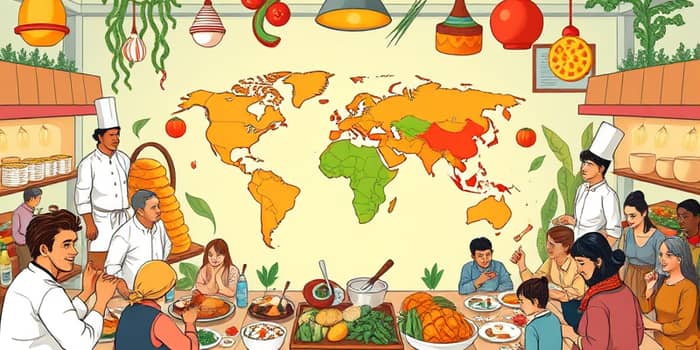
Imagine a world where every meal is a journey, and every flavor tells a story of distant lands.
The global food service market is set to expand dramatically, projected to grow from USD 3.9 trillion in 2025 to USD 6.5 trillion by 2035.
This surge, driven by a compound annual growth rate of 5.3%, reflects our deepening love for culinary diversity.
For entrepreneurs and food lovers, this isn't just a trend; it's a call to action.
Embrace the opportunity to bring global tastes to local communities.
Quick service restaurants hold a dominant 42% share in 2025, while delivery and takeaway account for 55% of service delivery.
This shift highlights how convenience and technology are reshaping dining habits.
Ethnic and international foods are at the heart of this growth.
They offer authentic experiences that captivate modern consumers.
Here is a snapshot of key sub-markets to illustrate the diversity.
This table underscores the robust potential in specialized cuisine segments.
Asia Pacific leads with up to 42.63% global share in 2024, thanks to urbanization and rising incomes.
Countries like China and India are pivotal to this expansion.
Here are the projected CAGRs for key regions from 2025 to 2035.
These figures highlight where investment and innovation are thriving.
North America remains a powerhouse, with the U.S. ethnic market growing at 7.8% CAGR.
Europe excels in ethnic dominance, while Latin America sees rapid growth.
The food service industry is evolving beyond traditional dine-in experiences.
Omnichannel approaches and ghost kitchens are becoming essential.
Consider these major service types shaping the market.
Business models are adapting to consumer demands for convenience.
Cloud restaurants and digital ordering are on the rise.
This shift offers flexibility for new entrants.
Cultural diversification is a primary driver, bringing traditions to new markets.
Social media and travel amplify this effect, boosting demand for authentic experiences.
Health and sustainability trends are also influential.
Consumers seek plant-based ethnic options and locally sourced ingredients.
Here are key trends to watch in the coming years.
These trends create a dynamic environment for innovation.
Entering this market requires strategy and passion.
Focus on niches like fusion cuisines or vegan international dishes.
Leverage technology to reach a wider audience through delivery platforms.
Here are practical steps to capitalize on these opportunities.
These actions can help turn a culinary dream into a thriving business.
Navigating this industry comes with hurdles.
Conflicting market estimates, such as ethnic food values ranging from USD 48.6B to 78.2B in 2024, require careful analysis.
Competition is fierce, with giants like McDonald's and Starbucks dominating.
Here are key challenges to address.
Overcoming these challenges demands resilience and adaptability.
Embrace them as part of the journey to success.
The business of international cuisine is more than numbers; it's about connection and creativity.
With the market projected to reach USD 6.5 trillion by 2035, the potential is immense.
Whether you're a chef, investor, or food enthusiast, now is the time to act.
Bring global flavors to life and enrich communities one dish at a time.
Let your passion for food guide you toward a fulfilling and profitable venture.
References