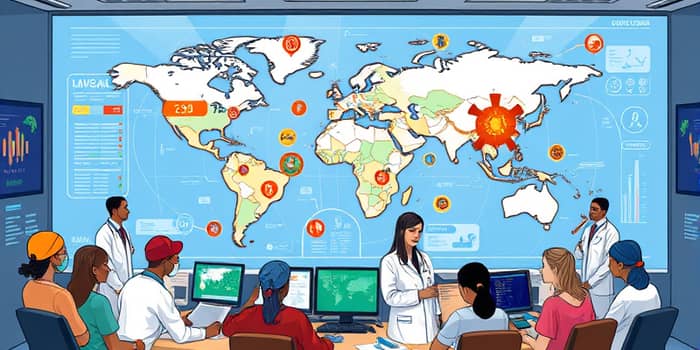
The COVID-19 pandemic has laid bare the fragile state of our world's health defenses, with cumulative economic losses estimated at $13.8 trillion.
This staggering cost serves as a stark wake-up call for humanity.
Global Health Security (GHS) is the comprehensive framework designed to prevent, detect, and respond to infectious disease threats that cross borders.
It encompasses Pandemic Prevention, Preparedness and Response (PPPR), aiming to minimize vulnerabilities and save lives.
Investing in this arena is not just a moral imperative but a critical economic necessity for a stable future.
Our journey toward robust pandemic preparedness has been marked by both progress and setbacks.
The International Health Regulations (IHR), revised in 2005, mandated countries to build capacities for outbreak management.
However, by 2018, progress remained slow and uneven globally.
In 2014, the Global Health Security Agenda (GHSA) emerged as a multilateral effort to address these gaps.
It involved over 50 U.S. partners and G7 commitments to bolster defenses.
The Global Preparedness Monitoring Board (GPMB), established in 2018, continues to monitor readiness and advocate for change.
Key historical initiatives include:
These efforts highlight the evolving recognition of health security as a global priority.
At the heart of GHS lie essential components that must be strengthened collectively.
Surveillance systems enable early detection of outbreaks through real-time data monitoring.
Laboratory networks provide the diagnostic capabilities needed for accurate threat assessment.
Front-line workforce development ensures that healthcare professionals are trained and ready.
Health systems resilience, including surge capacity, allows for adaptability during crises.
Emergency management and communication coordination are vital for swift, organized responses.
The One Health approach integrates human, animal, and environmental health to reduce risks.
Critical pillars for building resilience include:
Strengthening these areas is fundamental to preventing future pandemics effectively.
Funding for pandemic preparedness has historically been inadequate, creating dangerous vulnerabilities.
Pre-COVID, most countries were at low to moderate preparedness levels, with none fully ready.
From 2020 to 2021, development assistance for health (DAH) allocated only $1.8 billion to preparedness in low- and middle-income countries (LMICs).
In contrast, $37.8 billion was directed toward COVID-19 health response, highlighting a reactive rather than proactive approach.
Current estimates reveal a need for $10.5 billion in annual international financing for LMICs over the next five years.
The Pandemic Fund, with U.S. pledges up to $667 million, seeks to address these gaps but faces significant shortfalls.
Recommended investments to close financing gaps include:
This table summarizes key financial needs for pandemic preparedness:
Bridging these gaps requires sustained global commitment and innovative financing mechanisms.
To transform preparedness from theory to practice, actionable steps are essential.
The High-Level Independent Panel (HLIP) recommends a 1% GDP increase in government health spending for LMICs.
This should be coupled with $15 billion in annual development assistance to strengthen global systems.
The 2026 UN High-Level Meeting (HLM) on pandemic preparedness is a pivotal opportunity for collective action.
It calls for a paradigm shift toward primary health care and real-time risk assessment.
Practical recommendations for stakeholders include:
Implementing these measures can help avoid the panic and neglect cycle that has plagued past efforts.
Persistent underfunding post-COVID poses a significant threat to global health security.
Unequal capacities across countries, as shown in 2018 WHO reviews, exacerbate vulnerabilities.
Health system strains, such as shortages during surges, highlight the need for robust infrastructure.
Despite these challenges, investing in preparedness offers a high return on investment (ROI).
The $13.8 trillion economic loss from COVID-19 dwarfs the relatively modest costs of prevention.
Each major pandemic can cost over 1% of global GDP, making preparedness a sound economic strategy.
Key challenges to address include:
Overcoming these obstacles requires global cooperation and leadership, particularly from nations like the U.S.
The year 2026 represents a critical juncture for advancing pandemic preparedness.
With the UN High-Level Meeting and Pandemic Fund goals on the horizon, collective action is paramount.
Tools like the Global Health Security Index and Health Security Net database can aid in tracking progress.
Reports from the GPMB and World Bank provide actionable insights for policymakers.
Future steps to ensure a safer world include:
By embracing these strategies, we can build a resilient global health architecture that protects everyone.
Together, we can turn the lessons of COVID-19 into a legacy of prevention and hope.
References