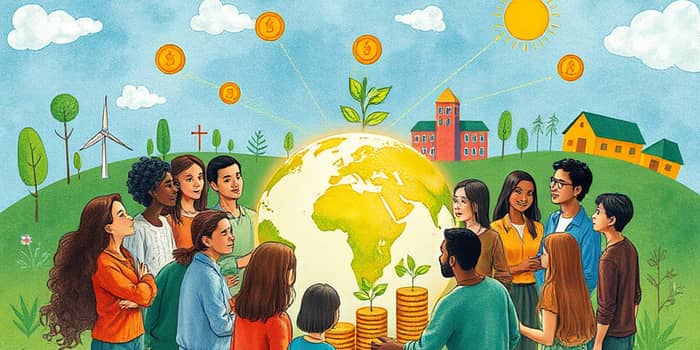
In an era defined by unprecedented wealth concentration and shifting social priorities, global philanthropy is experiencing a transformation. The convergence of charitable giving and market-based investing has created a capital for purpose ecosystem where donors and investors alike seek both financial return and measurable social impact.
Philanthropic capital has reached record highs, with total U.S. charitable giving hitting $592.5 billion in 2024. This growth is steady as a percentage of GDP, yet absolute dollars reflect the outsized influence of the wealthiest individuals and institutions.
Religious giving has declined from 56% of total contributions in the late 1980s to 25% today, redirecting support toward education, health, environment, and social services.
High-net-worth individuals continue to donate at scale: North American HNWI wealth grew 8.9% in 2024, and the top 25 U.S. philanthropists have given $241 billion over their lifetimes.
The 2025 Global Philanthropy Environment Index (GPEI) assesses 95 countries on six factors: ease of operating, tax incentives, cross-border flows, political climate, economic conditions, and sociocultural influences. Findings highlight stark contrasts:
Intergenerational wealth transfer and evolving cross-border giving policies are pivotal forces shaping future philanthropic activity, encouraging both local innovation and global collaboration.
Impact investing is defined as investments made with the intent to generate positive measurable social and environmental outcomes alongside financial returns. Unlike ESG integration, which primarily screens risks, impact investing is outcome-oriented and intentional, with active measurement of social impact.
The global impact investing market was valued at $629.07 billion in 2025 and is projected to reach $1.27 trillion by 2029 at a 19.4% compound annual growth rate. The Global Impact Investing Network estimates assets under management at $1.57 trillion, reflecting a six-year growth rate of 21%.
Despite rapid growth, measurement remains an “open secret of impact”: data quality and consistency are poor across regions and sectors. Common challenges include the lack of standardized metrics and the risk of impact washing when claims go unverified.
However, donor and investor expectations are rising:
Investors often distinguish between impact-first and finance-first approaches. Impact-first prioritizes social outcomes and may accept concessionary returns, leveraging catalytic capital through first-loss guarantees and patient debt to de-risk senior investors.
A 2025 SOCAP study revealed that scaling impact-first strategies requires “smart subsidy to cover costs”: transaction costs of early-stage or high-risk investments are higher, and philanthropic grants can subsidize monitoring, origination, and measurement expenses.
As capital for purpose continues to mature, collaboration among donors, investors, policymakers, and communities is essential. To maximize both social returns and financial sustainability, stakeholders can:
For individual donors eager to participate, starting points include joining community foundations, exploring DAFs, or contributing to verified impact funds. Corporations can embed social criteria into procurement and volunteering programs, amplifying their brand and workforce engagement. Governments can further enable this ecosystem by harmonizing tax incentives and reducing barriers to cross-border philanthropy.
Together, these actions will solidify a resilient, dynamic movement where every dollar is optimized for social good. The future belongs to those who measure success not just in financial terms, but in the lives uplifted and communities transformed.
References