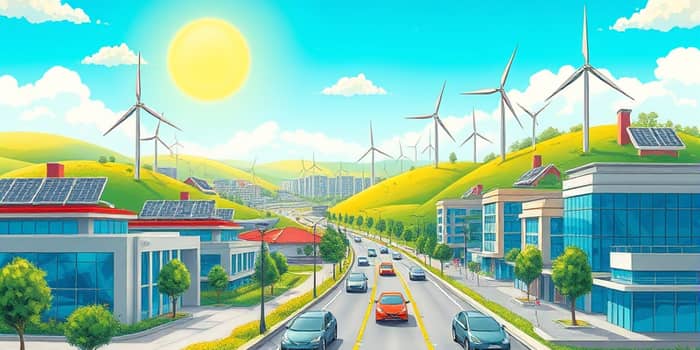
Imagine a world where clean, abundant energy fuels our homes, cities, and industries without harming the planet. This vision is now becoming a reality, as the renewable energy sector has blossomed into a trillion-dollar economic force. No longer a fringe movement, it commands a market value rivaling entire national economies, signaling a profound shift in global priorities.
Driven by plummeting costs and robust policy support, renewables are outpacing fossil fuels with a consistent annual growth rate that attracts savvy investors. From solar panels to wind turbines, the technologies are advancing at a breakneck pace, making clean energy not just an environmental imperative but a lucrative business opportunity.
With global installed capacity hitting 4,448 GW in 2024, the stage is set for exponential expansion and strategic importance. The ambitious COP28 pledge to triple renewables by 2030 adds urgency and scale to this green revolution, underscoring its critical role in combating climate change.
In 2024, the renewable energy market is estimated at $1.4 to $1.5 trillion, a staggering figure that highlights its dominance. This growth trajectory has been relentless, with a compound annual growth rate (CAGR) of 12-15% since 2019, showcasing its resilience and appeal.
The historical data paints a vivid picture of this ascent, revealing how renewables have skyrocketed in value and impact over just a few years.
Looking ahead, projections vary based on policy frameworks and innovation breakthroughs. Future scenarios offer a glimpse into potential outcomes, from conservative estimates to optimistic visions of a $12 trillion market by 2035.
Capacity additions are a key metric, with 717 GW added in 2024 and forecasts for 793 GW in 2025. This represents an 11% increase, driven largely by solar and wind technologies that are becoming more efficient and affordable.
Key growth factors include:
Solar power stands as the undisputed leader, commanding a 42% share of the market. Its rapid cost reductions and efficiency gains make it a cornerstone of residential and commercial adoption, with over 75% of new capacity additions in 2024.
Wind energy follows closely, with a 25-30% share, split between onshore and offshore developments. Countries like China lead in installed capacity, showcasing global disparities and opportunities for expansion.
Other technologies play crucial roles in this diverse landscape:
In the United States, renewables combined with natural gas are reshaping the energy mix. Wind and solar now contribute 17% of electricity, surpassing coal for the first time and highlighting a transformative shift.
The Asia-Pacific region dominates, accounting for 55% of the global market. China, in particular, has accelerated its deployment, meeting 2030 targets early through massive investments in solar and wind projects.
North America, led by the United States, shows a 12-15% CAGR. The surge in data center demand is a significant driver here, highlighting the intersection of tech and energy in modern economies.
Europe remains a strong player, bolstered by initiatives like the Green Deal. Countries like Germany and France are making strides in integrating renewables into their grids, with Germany achieving 22% renewables across power, heat, and transport.
Key regional opportunities include:
Several factors are propelling this sector forward, making it an attractive investment. Policy mandates, such as the COP28 tripling goal, create a stable regulatory environment that encourages long-term planning and funding.
Technological advancements, especially in AI and cleantech, are reducing costs and improving efficiency. This opens up new avenues for entrepreneurs and corporations to innovate and capture market share.
The investment scale is monumental, comparable to the GDP of large economies. Opportunities abound in various segments, offering practical pathways for involvement.
In the U.S., the synergy between renewables and natural gas is optimizing energy systems. The need for carbon capture and storage (CCS) adds another layer of potential, driving innovation in sustainable practices.
Despite the optimism, challenges persist that require careful navigation. Data conflicts arise from varying scopes in market estimates, ranging from $960 billion to $1.48 trillion in 2024, which can confuse investors and policymakers.
Other hurdles include supply chain disruptions, policy shifts, and workforce development needs. These factors create a complex landscape that demands adaptability and resilience from all stakeholders.
Specific risks to consider:
In some regions, like the U.S. power sector, coal use has seen a temporary uptick before renewables take over. This underscores the complex transition dynamics at play, where old and new energy systems coexist during the shift.
The momentum is undeniable, with solar and wind leading the charge into 2025 and beyond. AI and carbon management technologies will be key differentiators, enabling smarter energy systems that maximize efficiency and sustainability.
For stakeholders, the message is clear: invest in scale and innovation. The required trillions in funding for climate goals present both a challenge and an opportunity, but renewables are now economically competitive with traditional fuels, making them a sound choice.
Tools like IRENA's datasets provide valuable insights for planning and decision-making. By leveraging data and embracing collaboration, businesses can thrive in this green era, contributing to a healthier planet while reaping financial rewards.
The journey ahead is filled with promise. As we harness the power of sun, wind, and water, we are not just saving the planet; we are building a prosperous, sustainable future for all. This green gold rush invites everyone to participate, innovate, and grow together.
References