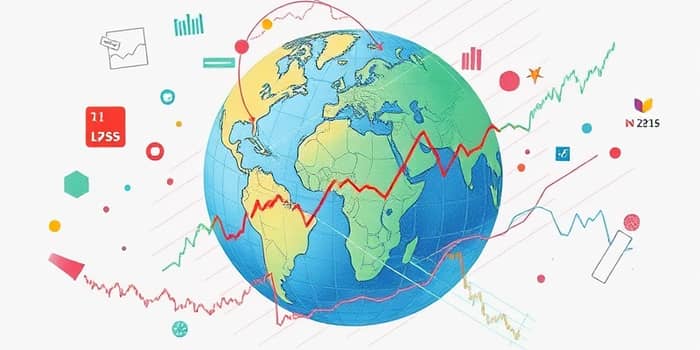
Financial markets are not isolated entities; they pulse in response to the heartbeat of global events, from political upheavals to natural disasters.
Understanding this dynamic is crucial for investors seeking to navigate volatility and seize opportunities in a rapidly changing landscape.
This article explores the mechanisms, historical lessons, and practical strategies to help you stay resilient amid uncertainty.
Global events influence financial markets through interconnected pathways that often start with investor psychology.
Investor sentiment and psychology can trigger emotional reactions like fear or optimism, leading to rapid market shifts.
For instance, headlines about geopolitical tensions may cause panic selling or euphoric buying, amplifying volatility.
Herd behavior exacerbates these movements, as investors follow trends without deep analysis.
Economic fundamentals also play a pivotal role, with indicators such as GDP growth and inflation rates shaping confidence.
Changes in interest rates directly impact economic health, influencing market performance over time.
Supply chain disruptions add another layer, as events like natural disasters can halt production and spike prices.
This creates ripples across industries, from energy to consumer goods.
Different global events have distinct impacts, each weaving into the fabric of market dynamics.
Political events, such as elections or policy changes, introduce uncertainty that can sway investor sentiment.
Geopolitical conflicts often lead to short-term equity declines, though markets may rebound as risks are assessed.
Economic events, including recessions or trade agreements, alter market confidence and volatility.
Natural disasters, like hurricanes, devastate regional economies and affect commodity markets, such as oil prices.
Global health crises, exemplified by COVID-19, trigger widespread sell-offs but also highlight sectoral resilience.
History offers valuable lessons on how markets react to global shocks, providing a roadmap for future preparedness.
Events like the 9/11 terrorist attacks caused sharp declines, but recovery followed as stability returned.
The Global Financial Crisis of 2008 led to a prolonged bear market, highlighting the importance of economic fundamentals.
Brexit and the US-China trade war showcased how political decisions can disrupt trade and investor confidence.
COVID-19 demonstrated the rapid rebound possible with government stimulus and technological adaptation.
These cases underline that while markets may dip, resilience often emerges from adaptive strategies.
In 2026, markets show remarkable resilience, hovering near record highs despite ongoing global uncertainties.
Strong economic fundamentals, such as robust consumer spending, support this trend.
However, investors face multiple volatility drivers, including potential government shutdowns and overseas conflicts.
Inflation risk remains a critical concern, as rising energy prices could force interest rate hikes.
This might temper corporate earnings and alter investment landscapes.
Ongoing events like the Russia-Ukraine war add layers of complexity to market predictions.
Economic indicators serve as vital tools for gauging market health and anticipating shifts from global events.
Monitoring GDP growth, inflation rates, and unemployment levels provides insights into economic resilience.
Central banks use these data points to formulate monetary policies that stabilize markets during volatility.
Capital flow dynamics have grown more volatile post-crisis, with funds moving between advanced and emerging economies.
Quantitative easing programs have influenced these flows, seeking yield in diverse markets.
To thrive in this environment, investors can adopt practical strategies that leverage insights from global events.
Diversification across sectors and geographies helps mitigate risks from localized shocks.
Staying informed about economic indicators allows for timely adjustments to investment portfolios.
Embracing a long-term perspective can cushion against short-term market fluctuations driven by sentiment.
Market resilience often rewards patience, as historical recoveries demonstrate.
Utilizing tools like stop-loss orders or hedging can provide added security during volatile periods.
By understanding these dynamics, you can transform global events from threats into opportunities.
Financial markets are a reflection of our world's complexity, and with knowledge, you can navigate them with confidence.
Embrace the interconnectedness, and let it guide your journey toward financial resilience and growth.
References