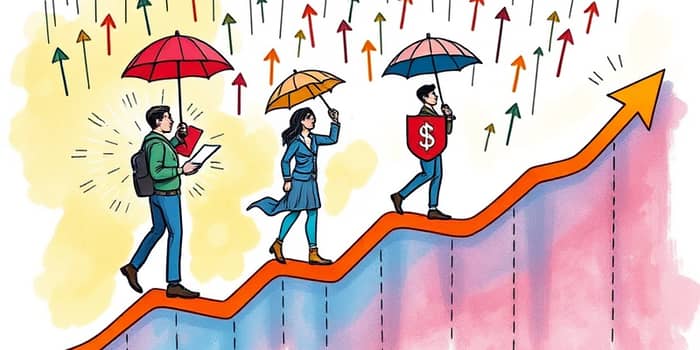
In 2025, the global economy is navigating elevated but moderating global inflation that tests the resilience of households, businesses, and investors alike. This comprehensive guide combines data-driven insight, historical perspective, and actionable strategies to empower readers in every sector.
Inflation measures the pace at which the general level of prices for goods and services rises. In 2024, global inflation hit 5.76%, the highest since 1996. Although forecasts expect a decline toward 3.4% annualized in H2 2025, price pressures remain significant in many regions.
Key drivers include sustained supply chain disruptions, tariff-induced cost shifts, and persistent labor market imbalances. For example, U.S. core PCE inflation held at 4.6% annualized in Q3 2025, reflecting sticky wage pressures sustaining inflation. Meanwhile, Eurozone inflation trends toward below 2%, driven by a softening of services prices and wage growth.
Certain sectors experience disproportionately higher price increases. All-Food CPI rose 3.2% year-over-year in August 2025, outpacing the headline rate. Essential staples such as eggs and meat are especially volatile, while energy markets remain sensitive to geopolitical shocks.
Although oil and gas prices have dipped recently, looming conflicts in key producing regions threaten fresh spikes. Service sectors, from transportation to hospitality, face the dual drag of higher labor costs and supply constraints.
Inflation’s uneven footprint means stakeholders must tailor their response to sector-specific dynamics, whether stockpiling grains or hedging energy inputs.
Monetary authorities have taken divergent stances to curb price growth. The U.S. Federal Reserve remains in a tighter for longer approach, keeping rates elevated until core inflation convincingly retreats.
The Bank of England is expected to ease gradually toward a 3.5% terminal rate by early 2026, while the European Central Bank maintains policy in a neutral range, ready to adjust if growth falters. Emerging market central banks in Brazil, Colombia, and Mexico stand poised to cut rates if disinflation gains traction.
Global GDP growth is forecast to ease from 3.3% in 2024 to 3.2% in 2025 and 3.1% in 2026, reflecting a modest slowdown in advanced economies alongside stable expansion in developing regions.
Outlier countries such as Argentina (31.3%), Iran (45.3%), and Suriname (10.7%) will continue to grapple with double-digit inflation, underscoring the importance of context-specific responses.
While inflation can erode purchasing power, targeted actions can preserve wealth and ensure operational continuity. Below are tailored recommendations for investors, businesses, and households.
For Investors: Consider diversifying into hard assets like real estate, commodities, and inflation-linked securities (TIPS). Allocate equity exposure to companies with pricing power in essential sectors, such as consumer staples, healthcare, and utilities. Floating rate debt instruments can also offer protection when interest rates rise.
For Businesses: Adopt dynamic or frequent price reviews to keep pace with cost fluctuations. Enhance supply chain resilience through supplier diversification and strategic stockpiling of key inputs. Invest in automation and lean manufacturing to reduce dependency on volatile labor markets, and explore hedging strategies for commodities and foreign exchange.
For Households: Adjust monthly budgets to prioritize essentials, limit discretionary spending, and build an emergency savings buffer. Manage debt by locking in fixed-rate loans when rates are relatively low, and consider prepaying high-interest obligations. Rebalance investment portfolios toward inflation-resistant assets like dividend-paying stocks or short-duration bond funds.
Past inflationary episodes offer valuable insights. The supply chain disruptions and energy price shocks of the 1970s prompted aggressive rate hikes under Fed Chairman Paul Volcker, ultimately breaking inflation but at the cost of a deep recession.
More recent tariff rounds in 2018–19 revealed transmission lags of two to four months before consumer prices fully reflected new import duties. These lessons highlight the importance of proactive planning and early adjustments in procurement and pricing strategies.
Consensus forecasts anticipate a gradual moderation of global inflation toward 2026, provided no new external shocks emerge. Variability will persist across regions, with emerging markets more sensitive to commodity cycles and capital flows.
Key indicators to watch include wage growth metrics, tariff announcements, and geopolitical developments in energy-producing regions. Scenario planning—best, base, and worst cases—will help organizations and individuals prepare for a range of outcomes.
Inflation’s shadow may loom large, but it need not define our economic trajectory. By combining data-driven insight, historical perspective, and agile operational adjustments, stakeholders can transform challenges into opportunities, ensuring resilience and sustainable growth in a rising price environment.
References