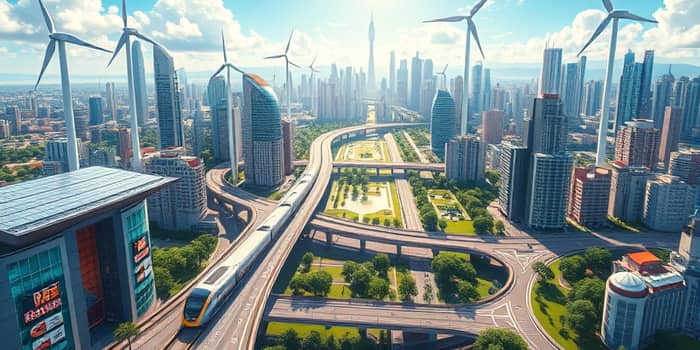
As governments, corporations, and investors look toward the next decades, the imperative is clear: we must mobilize capital to construct resilient, sustainable, and inclusive infrastructure. The scale of this endeavor is staggering. With global infrastructure investment needs estimated at $94–106 trillion by 2040 and a persistent $15 trillion funding gap, the challenge is both urgent and monumental.
Yet this gap presents a historic opportunity: to shape urban landscapes, empower economies, and protect communities against climate threats. In 2025 alone, projected spending on infrastructure will exceed $9 trillion, with Asia-Pacific commanding about 60% of that investment, Europe around 10%, and North America maintaining a steady pace driven by digital and energy projects.
The sheer magnitude of required investment spans multiple sectors. Transport and logistics lead with $36 trillion needed through 2040, followed by energy and power at $23 trillion, digital infrastructure at $19 trillion, and social infrastructure—health, education, housing—at $16 trillion. Waste and water systems require $6 trillion, agriculture $5 trillion, and defense $2 trillion.
This table underscores how diversely capital must flow to meet both environmental and social objectives. Meanwhile, private investment is surging: fundraising rebounded by 14% year-on-year in 2024, and investors remain optimistic. In a recent survey, 86% anticipate growth in deal count in 2025, up from 77% the previous year.
Private infrastructure transactions hit almost $520 billion in the first half of 2025, signaling the potential to match or exceed full-year records. Core and value-add strategies dominate, especially in energy transition, digital assets, and hybrid infrastructure models.
Each megatrend not only shapes demand but also influences policy, technology, and financing structures. Governments are crafting incentives and public-private partnerships to bridge gaps, particularly in developing markets where investment is growing twice as fast as in developed economies.
Asia-Pacific remains the engine of global infrastructure growth, investing nearly 60% of the 2025 total. China alone allocates roughly 4.8% of its GDP to infrastructure, focusing on high-speed rail, smart grids, and digital networks. Europe’s share has dipped to about 10% but benefits from strong green-energy mandates and data center incentives. North America directs around 0.5% of US GDP toward new projects, with a private sector push in renewable power and digital assets. Emerging markets—from Latin America to Southeast Asia—are unlocking projects in transport, water, and urban housing through innovative financing.
Investors are diversifying across these sectors, recognizing that resilience and sustainability deliver both financial and societal returns. Infrastructure’s inflation-hedged, stable long-term returns make it an attractive asset class amid market volatility.
Despite optimism, barriers remain. Macroeconomic uncertainty—rising interest rates, trade tensions, political risk—can raise project costs and limit appetite. Regulatory and permitting delays hamper speed, especially for novel energy and digital ventures. Additionally, workforce technology and skills gaps require investment in training to operate advanced infrastructure.
Closing the funding gap demands innovative financing: blended public-private partnerships, green bonds, and semi-liquid structures that open retail channels. Governments and multilateral agencies must streamline approvals and offer risk-sharing mechanisms to attract private capital at scale.
As we navigate toward 2040 and beyond, long-term optimism endures. Decarbonization, digitalization, and demographic megatrends provide a clear roadmap. Infrastructure will be pivotal for economic recovery, equitable growth, and climate resilience.
Emerging frontiers include AI-enabled infrastructure and advanced connectivity, next-generation energy storage, green hydrogen, and circular-economy assets. By aligning public policy, private capital, and community needs, we can bridge the $15 trillion gap and erect the pillars of tomorrow’s world.
Ultimately, investing in infrastructure is more than a financial endeavor—it is a commitment to the future. Every bridge rebuilt, data center energized, and transit line modernized strengthens economies, uplifts societies, and safeguards our planet. Together, we can ensure that the infrastructure we build today lays the foundation for a more prosperous, sustainable, and connected tomorrow.
References