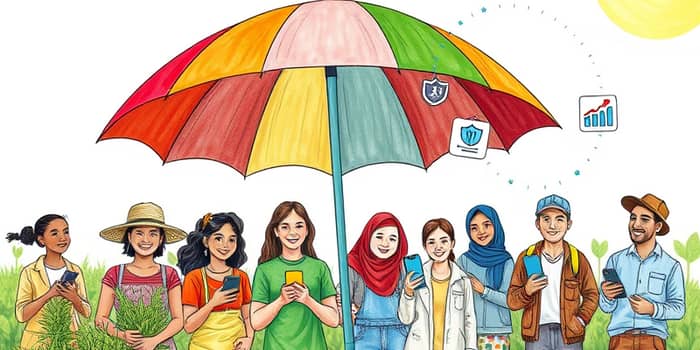
In a world where financial stability often feels like a distant dream for millions, microinsurance emerges as a powerful lifeline, bringing hope and resilience to those on the margins of society.
This innovative approach transforms the traditional insurance model by scaling it down to meet the unique needs of low-income and underserved populations.
With premiums as low as one euro per month, it offers a practical solution to safeguard against life's unexpected twists and turns.
Microinsurance provides affordable, scaled-down insurance products tailored to specific risks like health emergencies, natural disasters, and property damage.
It features simple underwriting and claims processes to ensure accessibility for people unfamiliar with complex financial services.
Key types include life, health, and index-based insurance, such as weather-indexed policies for farmers.
The emphasis is on specificity, with event-based or need-based coverage that reduces costs through innovative design.
This model not only protects individuals but also fosters a sense of security in communities often overlooked by mainstream finance.
Primarily, microinsurance targets low-income families in developing regions like rural India, Africa, and Latin America.
However, its reach extends to gig economy workers and even non-low-income groups seeking targeted, low-cost options.
The purpose is to promote financial inclusion and social empowerment, enabling investments in education, healthcare, and small businesses.
By addressing their unique risks, microinsurance helps bridge the gap between poverty and prosperity.
For individuals, microinsurance offers a shield against unforeseen events, providing economic stability and peace of mind.
It empowers people to plan for the future without fear, knowing they have a safety net in place.
For insurance providers, it opens new markets and enhances reputation through social responsibility.
It allows for portfolio diversification and scalable profits via digital platforms.
This win-win dynamic fuels growth and fosters sustainable development.
The microinsurance market is experiencing rapid expansion, with projections showing significant growth across regions.
Discrepancies in estimates arise from different methodologies, but the upward trend is clear and compelling.
Regional highlights include Asia Pacific as the largest market, driven by digital wallets and mobile penetration.
North America shows the fastest growth, indicating broader adoption beyond traditional low-income segments.
Smartphone penetration and financial inclusion efforts are key drivers, making insurance more accessible than ever.
These factors create a fertile ground for innovation and impact.
Microinsurance is segmented by provider, distribution channel, and end-use, reflecting its dynamic nature.
Commercially viable private insurers hold the majority share, while aid-supported models show high growth potential.
Emerging trends focus on digital transformation and innovative products that cater to evolving needs.
Index-based insurance for farmers and micro-policies for the gig economy are gaining traction, showcasing adaptability.
Digital platforms and AI integration are revolutionizing delivery, making insurance more efficient and scalable.
These trends highlight the industry's commitment to inclusivity and innovation.
Despite its potential, microinsurance faces hurdles like cost reduction and building insurance culture in new markets.
Innovations in technology and unconventional channels are key to overcoming these barriers.
Sustainability requires balancing profitability with social impact, ensuring long-term viability.
By addressing these challenges, the industry can unlock even greater potential for positive change.
Microinsurance is more than just a financial tool; it's a catalyst for sustainable development and empowerment.
By providing tailored and accessible coverage, it empowers millions to build resilient futures and break cycles of poverty.
The journey ahead involves continued innovation, collaboration, and a steadfast commitment to reaching every corner of the globe.
Together, we can create a world where financial security is not a privilege but a universal right, fostering hope and prosperity for all.
References