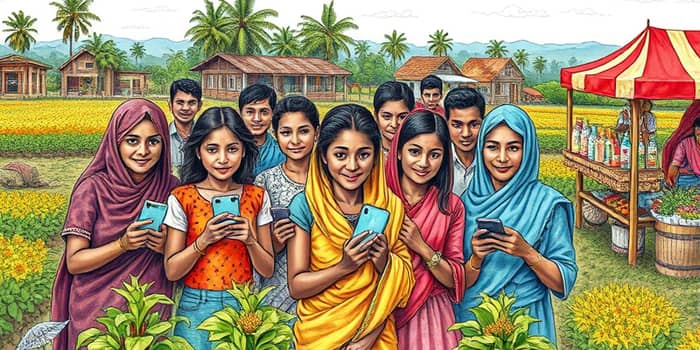
Microfinance has emerged as a beacon of hope for millions of individuals who have long been sidelined by traditional banking systems. Through targeted financial products and services, it offers not just capital but also dignity and the opportunity to shape a better future. By mid-2024, microfinance institutions reached more than 140 million borrowers worldwide, with women making up nearly 80% of this vibrant network. Valued at US$279.22 billion global market value in 2024, the industry is on track to expand to US$797.11 billion by 2034, propelled by a long-term annual growth rate of 11%. Beyond raw figures, microfinance is a testament to human ingenuity and resilience, proving that strategic support can unlock latent potential in even the most remote villages.
Consider the smallholder farmer in sub-Saharan Africa who uses a microloan to purchase drought-resistant seeds, or the artisan in South Asia who establishes a handicraft enterprise. These individual stories collectively fuel economic growth, foster community cohesion, and inspire broader social transformation.
Microfinance encompasses a spectrum of financial services designed for individuals who lack access to formal banking. These services include microcredit, savings, micro-insurance, and payment and remittance solutions. With a core emphasis on vital lifeline for underserved communities, microfinance bridges gaps in financial infrastructure.
To maximize outcomes, many institutions integrate non-financial services such as financial education, business development coaching, and health awareness programs. By fostering holistic development, these initiatives empower participants to make informed decisions and sustain growth.
Geographically, South Asia dominates microfinance outreach, serving tens of millions of clients. Sub-Saharan Africa, driven by mobile money innovations, is a rapidly expanding frontier. Latin America and parts of Southeast Asia are also embracing digital platforms that streamline loan disbursement and repayment, minimizing overhead and enhancing transparency.
The relationship between microfinance and poverty alleviation is both profound and multifaceted. Landmark studies in Bangladesh demonstrate that villages with microfinance programs experienced a 1.0 percentage point reduction in moderate poverty and a 1.3 point decline in extreme poverty each year. These effects accumulated to deliver a substantial boost in living standards.
Through microloans, participants increase consumption, invest in health and education, and build productive assets. In Yemen, the introduction of microcredit correlated with sustained increases in household income, although social barriers sometimes limited women’s autonomy. In India, SHG-linked borrowers demonstrated greater resilience to shocks, reporting fewer instances of negative coping strategies such as distress asset sales.
Mechanisms driving these outcomes include income generation, employment creation, and enhanced risk management. However, the impact is contingent upon factors like local market access, cultural norms, and complementary services. Comprehensive programs that pair credit with training achieve deeper, more sustainable poverty reduction.
Microfinance has become synonymous with the empowerment of women entrepreneurs worldwide. By targeting female clients, institutions leverage evidence that women are reliable borrowers who reinvest earnings into household welfare, including children’s nutrition and schooling.
Research from South Asia reveals that women in microfinance programs are more likely to participate in community decision-making and report higher self-confidence. In Bangladesh, extended membership in Grameen-style groups was strongly associated with improvements in women’s mobility, bargaining power, and overall well-being.
Non-financial components, such as gender-sensitization workshops and legal literacy modules, further amplify results. When women gain access to both capital and knowledge, they transform from passive beneficiaries into proactive agents of change.
The digital revolution presents unprecedented opportunities for microfinance. Fintech solutions are expanding financial services to remote and marginalized populations by harnessing mobile networks, cloud computing, and artificial intelligence. Data analytics empower lenders to refine credit risk assessments, tailor products, and monitor social impact in real time.
In East Africa, mobile money integration reduces reliance on cash, cuts transaction costs, and accelerates loan cycles. Latin American platforms are experimenting with blockchain-based remittances that promise faster, more secure cross-border transactions. Yet, embracing technology requires investments in digital literacy, consumer protection policies, and robust cybersecurity protocols to safeguard vulnerable users.
These tools ensure access to tailored financial services at the fingertips of borrowers, transforming smartphones into banking hubs that empower individuals to track budgets, initiate savings, and secure credit seamlessly.
Successful pilots increasingly feature partnerships between traditional MFIs, telecom operators, and global technology firms. These alliances combine local expertise with cutting-edge tools, ensuring that innovation translates into tangible benefits for end-users.
To harness microfinance’s full potential, a multi-pronged strategy is essential. Stakeholders must coordinate to deliver integrated services, measure outcomes rigorously, and adapt to evolving challenges.
Institutional transparency, ethical lending practices, and consumer protection frameworks are fundamental. By adopting a client-centric approach and prioritizing sustainability over rapid expansion, microfinance can deliver enduring change.
As the sector scales, microfinance must balance innovation with accountability. Embracing emerging technologies, championing gender-inclusive policies, and fostering cross-sector collaboration will solidify its role as a catalyst for global development.
By safeguarding client welfare and focusing on transformative outcomes, microfinance can bridge persistent inequalities and unlock human potential. The journey demands collective resolve: from policymakers crafting enabling environments, to investors channeling capital towards social enterprises, to practitioners embedding empathy and expertise in every loan. Together, these efforts can ensure that microfinance remains a dynamic engine of opportunity, lifting communities and forging a path toward a more equitable world.
References