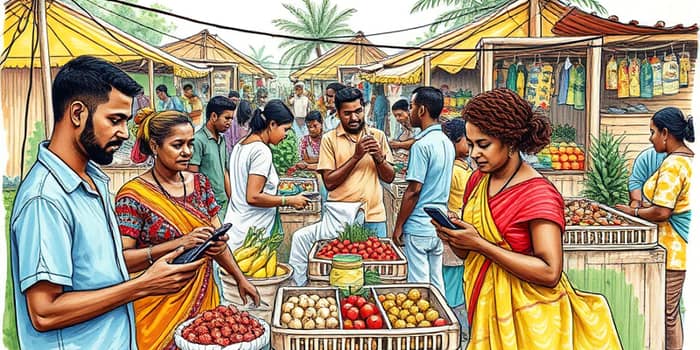
Microfinance has emerged as a transformative force in developing regions, unlocking access to capital for those traditionally excluded from mainstream banking. As a catalyst for entrepreneurs, households, and local communities, microfinance drives job creation, economic resilience, and inclusive growth.
At its core, microfinance involves providing financial services—such as small loans, savings accounts, and insurance—to individuals and micro-entrepreneurs who lack access to conventional credit. These services are tailored to the needs of low-income clients, often in rural or underserved urban areas.
The guiding principles of microfinance center on social impact and sustainability. Institutions strive to balance profitability with a mission to uplift communities.
The global microfinance market is experiencing robust annual expansion rates, reflecting surging demand. As of 2024, its valuation stood between $209 billion and $279 billion. Projections estimate a rise to $310 billion in 2025, $377 billion by 2030, and a remarkable $797 billion by 2034.
This growth is underpinned by compound annual growth rates between 10.5% and 12.5%, driven by increased digital penetration, regulatory reforms, and rising awareness of financial inclusion benefits.
Microfinance champions financial inclusion and resilience by empowering marginalized populations. Over 20 million jobs have been created globally through microfinance initiatives, with repayment rates soaring at 96%, signaling trust and client responsibility.
Financial literacy programs offered by MFIs have educated more than 10 million individuals, equipping them to manage budgets, save for emergencies, and make informed investment decisions.
Microfinance’s impact varies by region, reflecting local demographics and economic structures. South Asia remains the largest market, accounting for 35% of global microfinance clients in 2023. India alone boasts over 85.6 million borrowers, supporting small enterprises in rural and peri-urban areas.
In Sub-Saharan Africa, outreach grew 15% in 2023, serving 18 million clients. Rapid population growth and expanding mobile networks have propelled digital micro-lending solutions, with digital transactions expected to rise by 30% in 2024.
Latin America’s microfinance sector underpins MSMEs that generate 60% of employment, with private credit representing 50–60% of GDP. Innovative credit products tailored for agriculture and artisanal industries are gaining traction.
Europe and Central Asia account for 6% of the global portfolio, with Eastern Europe witnessing 8% annual growth in micro-lending, driven by post-crisis recovery financing and targeted government incentives.
The COVID-19 pandemic accelerated mobile and digital financial services, making remote lending and saving more accessible than ever. Mobile banking and digital wallets now provide seamless transactions for millions of previously unbanked individuals.
Emerging technologies—such as cloud computing, biometric identification, and embedded payments—are streamlining operations and reducing costs. Microinsurance products integrated into loan packages protect clients against unforeseen events, enhancing the sector’s resilience.
Over 1,200 startups and more than 2,500 established companies operate within microfinance, collectively employing 783,000 people worldwide. With an average funding round of $17.5 million and over 430 active investors, the investment ecosystem is robust and rapidly evolving.
Despite significant progress, the sector faces a funding gap estimated between $5.2 and $9 trillion for MSMEs globally. This shortfall highlights a pressing opportunity for impact investors, development agencies, and governments to collaborate on innovative financing instruments.
Many nations have introduced supportive policies. For example, India’s central bank has reduced risk weight requirements for microfinance loans, while Indonesia and Vietnam offer credit guarantees for MSMEs. These measures are propelling sector expansion and deepening market penetration.
Looking ahead, rising internet penetration and digital literacy will vastly enhance outreach. Innovative digital micro-lending solutions and embedded financial services are set to redefine access models, making microfinance even more inclusive.
Investments in sustainable energy and climate-resilient agriculture financing will address emerging global challenges, ensuring that microfinance remains a driver of local prosperity.
As stakeholders align around environmental sustainability and social responsibility, the sector is poised for unprecedented growth. By nurturing entrepreneurs, fostering financial capability, and leveraging technology, microfinance will continue to shape sustainable local economic development across the globe.
Ultimately, microfinance is not just about loans and savings—it’s about building hope, strengthening communities, and unlocking the potential that resides in every individual, regardless of circumstance.
References