In the heart of Asia, a monumental vision is reshaping the continent's economic landscape, promising unprecedented growth and connectivity through the flagship infrastructure and economic strategy known as the Belt and Road Initiative.
Launched in 2013, this ambitious project aims to bridge nations and foster prosperity, echoing the ancient Silk Road's legacy while propelling Asia into a new era of global influence.
As we explore this journey, understanding its pathways and impacts can offer practical insights for businesses, policymakers, and communities seeking to thrive in this transformative environment.
The Belt and Road Initiative (BRI), often called the New Silk Road, is China's comprehensive global connectivity plan designed to enhance trade and investment across continents.
It connects over 150 countries and international organizations via land and sea routes, focusing on key priorities that drive its success.
These elements collectively aim to create a more integrated and prosperous world, with Asia at its core.
Proposed by President Xi Jinping in 2013, the BRI revives the ancient Silk Road routes, blending history with contemporary ambition.
Its origins in speeches in Kazakhstan and Southeast Asia highlight a strategic vision to reconfigure global economic networks and address modern challenges.
Incorporated into China's constitution in 2017, the initiative marks a decade of evolution, now shifting towards sustainable and tech-driven projects.
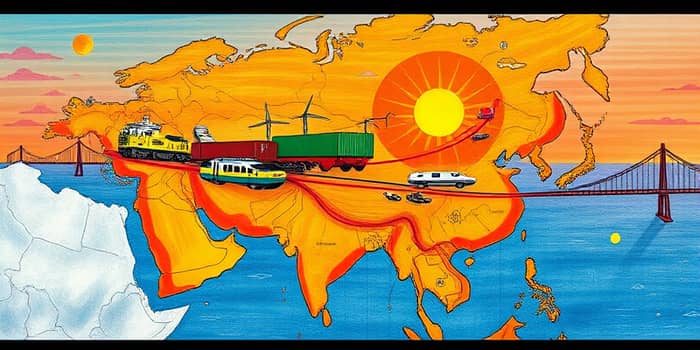
The Silk Road Economic Belt comprises three proposed overland routes that span from China to Europe, each with unique hubs and corridors.
Meanwhile, the 21st Century Maritime Silk Road focuses on sea routes, connecting ports from Southeast Asia to Africa and Europe.
This maritime network aims to boost global trade efficiency and reduce dependency on traditional chokepoints like the Malacca Strait.
The BRI's economic impacts are profound, with projections indicating significant global income increases and poverty reduction.
It channels China's excess capacity into infrastructure projects, creating new markets and opportunities for partner nations.
These gains are driven by reduced transport costs and times, fostering agglomeration economies that attract investment and talent.
For China, the initiative develops western provinces and provides new export market opportunities, strengthening its economic leverage globally.
Partner countries benefit from infrastructure that fills critical gaps, such as transport and power systems, though challenges like debt risks persist.
Key institutions like the Asian Infrastructure Investment Bank (AIIB) play a vital role in funding BRI projects, promoting transparency and regional integration.
Chinese loans often utilize domestic firms and expertise, generating export demand and supporting sustainable development goals through green finance initiatives.
This financing model encourages open platforms for trade rules, ensuring supply chain stability in a volatile global economy.
The BRI is central to Chinese foreign policy, reconfiguring international relationships and shifting geopolitical power balances.
It promotes the internationalization of the RMB and aims to break connectivity bottlenecks in Asia, offering a win-win rhetoric of open globalization.
However, critiques highlight concerns over debt traps and sovereignty issues, emphasizing the need for careful navigation by participating nations.
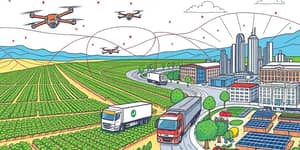
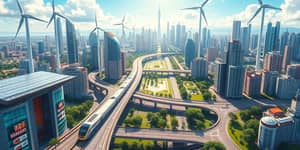
Post-2023, the BRI is rebalancing towards green projects and digital infrastructure, reflecting a commitment to eco-conscious growth.
This shift includes focus on renewable energy, e-commerce, and science cooperation, aiming to bridge the digital divide and promote low-carbon Silk Road initiatives.
Such evolution ensures that the initiative remains relevant and responsive to global challenges like climate change.
Examining specific projects provides practical insights into the BRI's implementation and outcomes.
These examples demonstrate the potential for transformative growth, while also highlighting the importance of local context and stakeholder engagement.
While the BRI offers immense opportunities, it comes with risks that require proactive management.
Debt sustainability is a critical issue, as some partner countries face high loan burdens that could lead to economic dependency.
Environmental trade-offs, such as increased CO2 emissions, necessitate green infrastructure investments to mitigate impacts.
Uneven benefits across regions call for inclusive policies that ensure broad-based prosperity and resilience.
Looking ahead, the BRI is poised to drive Asia's economic ascent, with projections extending beyond 2030 towards greater integration and innovation.
Its focus on digital and green corridors will likely enhance global trade flows and promote sustainable development pathways.
By embracing this evolution, nations can harness the initiative's potential for collective growth, positioning Asia as a leader in the new global economy.
Practical steps for stakeholders include engaging in policy dialogues, investing in compatible infrastructure, and leveraging technological advancements.
Ultimately, the New Silk Road represents not just a network of routes, but a vision for a more connected and prosperous world, inspiring hope and action across continents.
References