In today’s fast-paced world, financial anxiety grips nearly half of teenagers—42% report feeling terrified they won’t have enough money for future goals. Despite increased participation in personal finance classes, traditional teaching methods leave significant knowledge gaps unaddressed. It’s time to unlock a more engaging, effective approach to nurturing lifelong financial skills.
By transforming lessons into interactive experiences, educators can spark curiosity, build confidence, and foster real-world behavior change.
In many schools, financial literacy remains confined to lectures, slides, and worksheets. Yet randomized trials in rural Western Uganda revealed that lecturing alone produced no measurable improvement in behavior, while active learning drove significant gains among self-employed participants. Similarly, small-scale retailers exposed to interactive exercises saw increases in savings and investments, whereas traditional methods stagnated.
Participation in personal finance courses has risen—from 31% of high schoolers in 2024 to 45% in 2025—yet persistent knowledge gaps show that attendance alone is insufficient. Students still enter these programs lacking confidence, rarely apply lessons outside the classroom, and often revert to unhealthy money habits.
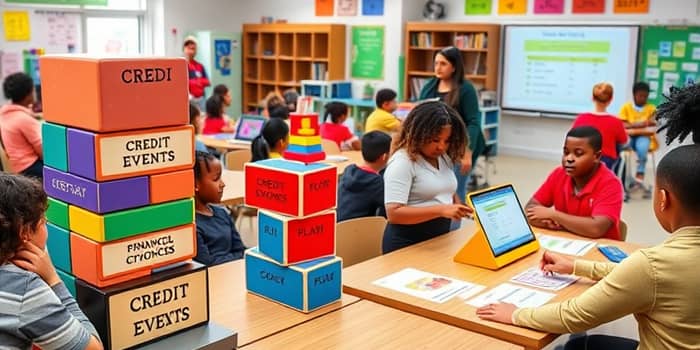
Active learning places students at the center of their education, requiring them to apply concepts in realistic scenarios. Gamification harnesses game mechanics—competition, rewards, hands-on challenges—to turn abstract principles into tangible experiences.
Field experiments and classroom pilots underscore how these methods outperform passive instruction. In one program, students using credit-wheel simulations improved their understanding of interest and penalties more than those in lecture-based classes. Another school introduced i>clicker polls to compare personal budgets to peer averages, sparking rich discussions and self-reflection.
These interactive elements do more than deliver information; they ignite emotions, curiosity, and healthy competition—key drivers of lasting behavioral change.
A landmark three-year study by EVERFI and Blackbaud demonstrated that multiple financial education courses are more effective than standalone sessions. Students completing two courses maintained improvements in self-efficacy and planned behaviors months later, while single-course participants saw their gains diminish without reinforcement.
Specific modules delivered targeted outcomes: one course increased parent-child financial communication, another boosted investing knowledge test scores, and combined programs sustained long-term saving and budgeting habits.
This evidence underscores that layering interactive, context-rich experiences cements knowledge far more robustly than isolated lectures.
Across the U.S., teachers are bringing these strategies to life. In California, one educator showcased her own wallet and credit cards, letting students examine real-world examples of interest rates and fees. In Colorado, a math teacher developed a month-long budgeting unit, guiding students through housing and transportation choices while sticking to a mock salary.
Teacher confidence has soared—from just 9% in 2009 to 70% today—indicating a strong foundation for adopting game-based methods with minimal additional resources.
Educators and administrators can follow a clear roadmap to integrate gamified financial education:
By fostering a cycle of continuous improvement, schools can build a lasting culture of financial empowerment.
A meta-analysis of 76 randomized controlled trials confirms that financial education is a cost-effective method of increasing financial knowledge and improving behaviors. Programs combining interactive elements with multiple touchpoints yield the highest return on investment, driving savings, responsible credit use, and long-term planning skills.
Students exposed to sustained, hands-on learning demonstrate higher rates of saving for education, starting side hustles, and exploring investment tools. These outcomes translate into improved economic resilience, productivity, and well-being throughout adulthood.
Financial education need not be dull or passive. By combining gamification with active learning, educators can transform anxiety into confidence, ignorance into mastery, and habit into prosperity. The evidence is clear: interactive, personalized, and iterative approaches deliver measurable, lasting benefits.
As teacher readiness and research validation converge, the moment is ripe to reimagine how we equip the next generation with the skills to navigate an increasingly complex financial world. Play your way to prosperity—empower students today to build secure, fulfilling tomorrows.
References