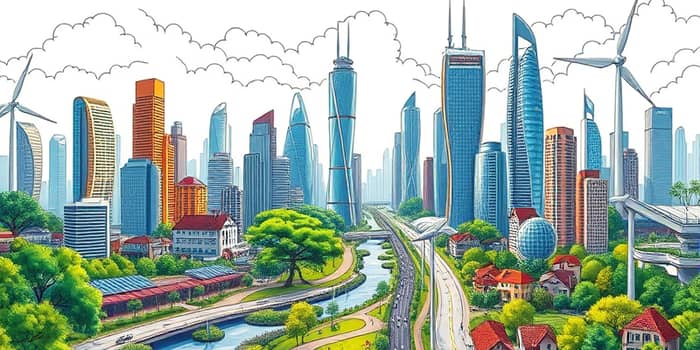
Across the globe, urban centers are at a crossroads. They hold the promise of innovation, cultural exchange, and economic growth, yet they face unprecedented pressures from climate change, population growth, and resource scarcity. As nearly 70% of humankind heads toward cities by 2050, these hubs must evolve into bastions of resilience and equity rather than engines of pollution and inequality.
This article delves into the core frameworks, data, and strategies that can shape truly sustainable cities. We explore why sustainable urbanization matters, the trends reshaping our metropolises, the pillars that uphold green development, sector-specific tactics, and inspiring case studies from around the world. Finally, we peer ahead to 2050, imagining how cities will continue their transformation on a global stage.
The United Nations and World Bank define sustainable cities as resilient urban areas that can adapt to and mitigate economic, social, and environmental change while ensuring quality of life for current and future generations. This concept lies at the heart of SDG 11, which calls for safe, affordable, resilient and sustainable cities with inclusive access to housing, transport, services, and green spaces.
Urban areas drive the global economy, generating a large share of GDP, yet they also account for over two-thirds of energy consumption and related greenhouse gas emissions. The decisions made today on urban form, energy systems, and governance will either lock in harmful pathways or unlock opportunities for carbon neutrality and robust social well-being.
By 2050, the United Nations projects that approximately 70% of the world’s population will live in urban settings. From 2018 to 2050, India, Nigeria, Pakistan, the Democratic Republic of Congo, Egypt, Bangladesh, and Ethiopia alone are expected to add over 500 million new urban residents.
Unchecked growth often leads to sprawling informal settlements, traffic congestion, and heightened exposure to floods, heatwaves, and air pollution. Sustainable urban development aims to manage this surge through planned densification, climate resilience, and inclusive infrastructure planning.
Effective strategies rest on four interdependent pillars:
Transitioning to sustainable cities requires tailored solutions across key sectors. From compact planning to circular economies, a mosaic of tactics can deliver profound benefits in emissions reduction, cost savings, and human well-being.
Modern planning models emphasize higher density, mixed land uses, and transit-oriented development to curb sprawl and lower infrastructure footprints. The “15-minute city” concept restructures neighborhoods so that all essential services are reachable within a short cycle or walk.
Nature-based and place-making initiatives integrate urban forests, vertical gardens, and rain gardens into public spaces. These green elements mitigate heat islands, manage stormwater, and foster community well-being.
Vancouver’s “eco-density” policy demonstrates how targeted zoning and incentives can reshape skylines. By prioritizing urban infill, mixed-use towers, and expanded bike networks, the city reduced per capita carbon emissions by 25% over a decade while preserving adjacent greenbelts.
Zero-carbon and net-zero buildings merge advanced insulation, efficient glazing, and digital climate controls with on-site renewable generation. Integrating zero-carbon buildings with on-site renewables and efficiency measures eliminates operational emissions and reduces utility costs.
Leading cities incentivize retrofits and enforce green building standards like LEED and BREEAM. Vancouver’s mass timber pilot projects and energy-efficient window mandates exemplify how material innovation supports both sustainability and seismic resilience.
Sydney’s 2035 net-zero roadmap includes a net-zero emissions for Sydney by 2035 commitment, coupled with a 15% per-person waste reduction target by 2030 and a 40% green cover goal by 2050. Lahti, Finland, offers another blueprint, having phased out coal in 2019 and targeting carbon neutrality by 2025 through biomass heating and lake-source cooling.
Urban decarbonization journeys pivot on comprehensive renewable energy transitions. Cities invest in solar farms, wind parks, and district heating networks to power homes and businesses with minimal carbon footprints.
Copenhagen’s plan to be the world’s first carbon-neutral capital by 2025 leverages wind turbines, electric ferries, and an expansive cycling network. Stockholm has halved its greenhouse gas emissions since 1990 while its population continues to grow. In Asia, Singapore’s quest to exceed 1 GWp of solar capacity by 2025 demonstrates how even land-constrained cities can harness clean power.
Local energy systems like microgrids, battery storage, and community solar cooperatives further decentralize power, improving reliability and enabling peer-to-peer energy trading.
Efficient, low-emission mobility systems are a cornerstone of green urbanism. Investing in reliable, eco-friendly public transit and active mobility networks reduces private vehicle dependence and congestion. Copenhagen’s 375 km of cycle lanes and Medellín’s Metrocable illustrate how infrastructure can bridge social divides and promote healthy lifestyles.
Bus rapid transit lines and electric tram expansions reduce street-level pollution in dense corridors, while demand-responsive shared mobility services fill last-mile gaps in under-served neighborhoods.
Robust water management strategies blend rainwater harvesting, efficient fixtures, and flood-adaptive landscapes. Singapore’s “Four National Taps” program recycles wastewater, harvests rain, and desalinates seawater to meet its needs.
Rotterdam’s Maeslant Barrier and adaptive floodwalls exemplify large-scale resilience engineering, while small-scale bioswales and permeable pavements refill aquifers and enrich urban biodiversity.
Cities like San Francisco lead with aggressive zero-waste targets, coupling comprehensive recycling, composting, and producer responsibility schemes. Amsterdam aims to become fully circular by 2050, transforming waste streams into new resources for construction, textiles, and electronics.
San Francisco achieved an 80% landfill diversion rate by 2018 through aggressive landfill bans, standardized organics collection, and citywide educational campaigns. Initiatives to upcycle construction debris into road base and recycled plastics into building materials showcase circular principles in action.
True sustainability marries environmental stewardship with social justice. Inclusive policies ensure that affordable housing, healthcare access, and job opportunities reach all residents. Participatory governance, open data platforms, and community engagement nurture trust and empower neighborhoods to shape their own futures.
Medellín’s integrated strategy paired its cable car system with new libraries, sports facilities, and health centers. Crime rates dropped by 67% over 20 years, underlining the power of equitable infrastructure to reshape social outcomes.
By mid-century, emerging technologies like digital twins, artificial intelligence, and integrated sensor networks will refine urban operations, enabling predictive maintenance of infrastructure, dynamic energy trading, and personalized public services.
Climate-driven migration, demographic shifts, and technological breakthroughs will continue to stress-test urban resilience. Yet, the rise of green finance instruments—like resilience bonds and sustainability-linked loans—offers new avenues to fund inclusive urban transformations at scale.
The path ahead demands collaboration among governments, private sector innovators, and communities. Each step toward sustainable urbanism is a vote for a healthier planet and a fairer society. Together, cities can become thriving places of opportunity and well-being for all.
References