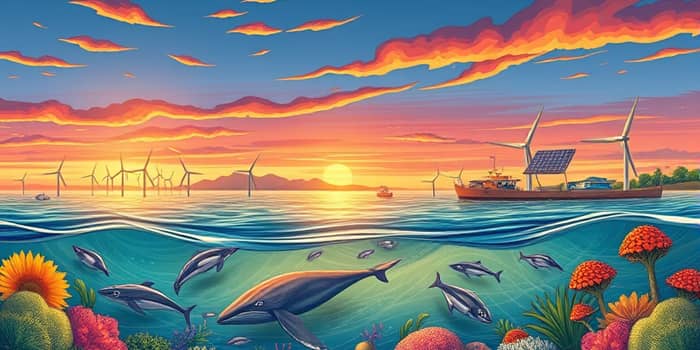
Our oceans are the lifeblood of Earth, driving climate and supporting billions.
Imagine a world where prosperity and environmental health thrive together.
This is the promise of the Blue Economy, a sustainable ocean economy.
It balances economic growth with preservation of marine ecosystems for future generations.
By investing wisely, we can unlock immense potential while protecting our seas.
The Blue Economy has no single definition but centers on sustainability.
Major organizations provide insights that guide global efforts and investments.
These definitions highlight a balance between development and conservation as key.
Investors should grasp this holistic view to make informed decisions.
The ocean economy is already a multi-trillion-dollar sector with rapid growth.
Projections show it outperforming global trends, offering lucrative opportunities.
This data reveals immense economic potential but also significant risks to address.
Smart investments can mitigate threats and capitalize on growth areas.
The Blue Economy spans traditional and emerging sectors, each with unique prospects.
Understanding these helps identify where to allocate resources effectively.
Aquaculture, for instance, is the fastest growing food sector globally, vital for food security.
Investors should diversify across sectors to spread risk and maximize returns.
Oceans offer critical services that underpin economic activities and human well-being.
These often-overlooked benefits are essential for long-term sustainability.
However, 80% of marine pollution comes from land, threatening these services.
Investing in pollution control can preserve these vital ecosystem functions.
Transitioning to a sustainable model faces obstacles that require strategic action.
The World Bank identifies three primary barriers to overcome.
Transition risks include regulatory changes and environmental standards tightening.
Physical risks from climate change expose over $8 trillion in assets.
Proactive measures like adaptive policies can reduce these vulnerabilities.
The Blue Economy aligns with UN Sustainable Development Goal 14: Life Below Water.
This global target aims for conservation and sustainable use by 2030.
International agreements push for conservation of 30% of seas, enhancing resilience.
Investors should support policies that foster equitable and inclusive growth.
Engaging with governance structures ensures investments contribute to positive outcomes.
Concepts like Blue Growth and Regenerative Blue Economy expand the vision.
Innovations in technology drive efficiency and sustainability in ocean sectors.
These ideas promote a holistic approach to ocean management, inspiring new ventures.
By backing innovative solutions, investors can lead in sustainable development.
Subnational governments play a pivotal role in implementing blue economy strategies.
Their actions in planning and management directly impact local success.
Small Island Developing States face significant limitations requiring cross-border collaboration.
Investors can target regions with strong governance for better risk management.
Fisheries are currently overexploited, but aquaculture presents growth opportunities.
This sector is vital to food security, especially in poorer nations.
Investing in sustainable aquaculture practices can boost yields and reduce pressure.
Technologies like improved breeding and waste management enhance efficiency.
Supporting small-scale fishers ensures equitable benefits from ocean resources.
Investing in the Blue Economy is both an economic and ethical imperative.
It offers a path to prosperity while safeguarding our planet's health.
Start by educating yourself on sustainable investment opportunities in blue sectors.
Consider diversifying into renewable energy, marine tech, or conservation projects.
Advocate for policies that support ocean health and community well-being.
Together, we can build a future where seas thrive and economies flourish.
Take action today to be part of this transformative journey.
References