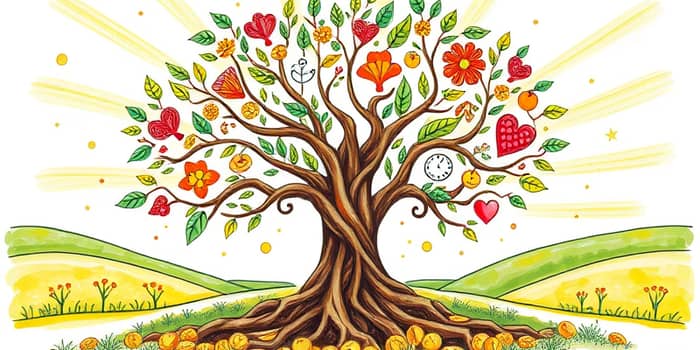
In a world obsessed with bank statements and asset portfolios, a new understanding of wealth has emerged. True prosperity transcends mere numbers and calls us to examine time, health, relationships, autonomy, and meaning. By redefining wealth on our own terms, we unlock pathways to deeper fulfillment and lasting well-being.
Traditionally, wealth is measured by net worth: assets minus liabilities on paper. Proxies such as income brackets, property holdings, luxury consumption, and inherited fortunes reinforce the notion that affluence equates to happiness. Thesaurus.com even lists fifty-three synonyms for wealth, ranging from affluence and richness to prosperity and worth.
Yet many enlightened advisors argue that authentic wealth has little to do with money alone. It arises from ordinary pleasures, personal growth, and deep connections. By contrasting “balance sheet wealth” with lived wealth rooted in experience, we begin to see prosperity as a multidimensional tapestry rather than a column on a ledger.
In essence, wealth is what you have; prosperity is how well you thrive; abundance is how you feel about what you have. Embracing these distinctions empowers us to pursue not just financial success, but genuine life satisfaction.
Metis Ireland’s financial planning framework elevates authentic wealth through four freedoms. Each pillar invites us to expand our definition of prosperity:
Viewing these freedoms as interdependent pillars helps us craft a balanced life where no domain is sacrificed for another.
A sustainability-oriented lens reframes prosperity as the daily experience of sufficiency and genuine well-being, grounded in time, attention, and health. This approach values “real currencies of life,” such as choice and the ability to align actions with deep values.
By trading material accumulation for temporal abundance and creative engagement, we reduce ecological impact and enrich our inner lives. Research shows that extrinsic goals—status, image, financial success—often undermine well-being, while intrinsic aspirations—personal growth, community contribution—promote resilience and satisfaction.
Flow activities, like crafting, sports, or problem-solving, exemplify resource-light yet psychologically regenerative experiences. These moments of deep immersion remind us that high-quality satisfaction can be decoupled from material spending.
Reexamining our relationship with money transforms it from a master to a servant. True wealth practice includes peace of mind from meeting needs, time and energy for passions, preparedness for life’s surprises, and the ability to give generously—whether in money, kindness, or attention.
Begin by listing three sources of wealth that cost nothing—perhaps good health, community support, or guilt-free time off. This simple exercise shifts focus away from external markers and toward inherent sources of fulfillment.
By affirming that money safeguards what we value most, rather than defining our worth, we reclaim autonomy over our priorities and cultivate a more resilient sense of self.
Even immense financial success can leave one feeling adrift without purpose. Consider the high-net-worth entrepreneur who sold his business and found himself lost. His portfolio would sustain generations, yet he yearned for meaning.
By channeling his resources into a literacy program and volunteering regularly, he transformed wealth into sustained prosperity. This case study reminds us that deliberate planning and purposeful giving are essential for converting abundance into authentic fulfillment.
Building your own prosperity requires intention and reflection. Consider these actions:
Through these steps, wealth becomes more than a number—it becomes a practice of living fully. When money serves our deeper aspirations, we unlock the true essence of prosperity.
Authentic wealth invites us to write our own definitions of success, one filled with time, health, connection, and purpose. By embracing multidimensional prosperity, we craft a life that resonates with our highest ideals and nourishes both ourselves and the world around us.
References