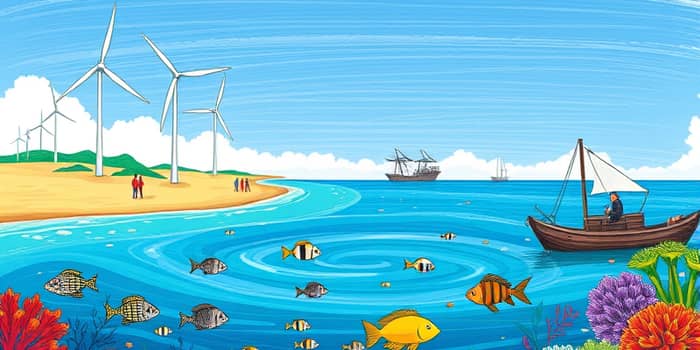
The world's oceans are not just vast bodies of water; they are a critical engine for global prosperity, yet their potential for sustainable development remains largely untapped.
Embracing the blue economy means shifting from extractive practices to regenerative and restorative activities that ensure long-term health for both people and the planet.
With climate change accelerating, investing in ocean sustainability is not just an option; it is an urgent necessity for future generations.
This article explores how the blue economy can drive economic growth while protecting marine ecosystems, offering practical insights for investors, policymakers, and communities.
The blue economy encompasses all economic activities linked to the ocean, but its sustainable version focuses on environmental protection and equitable development.
According to the World Bank, it is defined as “the sustainable use of ocean resources for economic growth, improved livelihoods, and job creation while preserving the health of ocean ecosystems.”
Key distinctions highlight the evolution from a broader ocean economy to a more focused approach.
This shift is essential to avoid ecological degradation and promote inclusive growth for coastal communities.
The current ocean economy is a multi-trillion-dollar sector, but its sustainable version promises even greater returns.
Studies estimate its value at around USD 2.2 trillion, with growth driven by sectors like offshore wind, marine aquaculture, and fish processing.
By 2030, this could expand to US$3 trillion, showcasing immense potential for investors and economies.
However, there is a significant investment gap, with private capital slow to enter, and only about 1% of oceans currently regulated.
Initiatives like the Rockefeller Credit Suisse Ocean Engagement Fund, with $780 million in assets, demonstrate growing interest in funding ocean health through equity strategies.
Sustainable blue economy investments span various regenerative themes, each offering unique opportunities for impact and profit.
Investment vehicles are also evolving to support these sectors.
Despite the opportunities, the blue economy faces significant hurdles that must be addressed for success.
Environmental threats are mounting, with climate change reducing CO2 absorption and causing sea-level rise, extreme weather, and plastic pollution.
Investment barriers include slow private capital flow and the need to quantify ecosystem values, such as food security and resilience benefits.
To overcome these challenges, a multi-faceted approach is needed, focusing on restoration, innovation, and inclusion.
The EU, for example, has set ambitious objectives through the European Ocean Pact, aiming to enhance competitiveness, decarbonization, and food security.
A holistic progression from ocean economy to blue economy and then to a sustainable or regenerative blue economy integrates growth, sustainability, and equity.
The blue economy unlocks economic potential while addressing pressing global issues like climate change and biodiversity loss.
For investors, it delivers ESG returns and alpha through engagement, protecting intangibles such as traditional livelihoods and carbon sequestration.
Globally, there is growing consensus on the link between sustainability and ocean health, with frameworks from the World Bank, UN, and EU guiding efforts.
By embracing the blue economy, we can foster a future where economic prosperity and environmental health go hand in hand.
This requires collective action from all stakeholders to build resilient ocean systems.
Start by exploring investment opportunities in emerging sectors and advocating for stronger policies.
Remember, every step towards sustainability contributes to a healthier planet and more equitable societies.
Together, we can turn the tide towards a thriving blue economy.
References