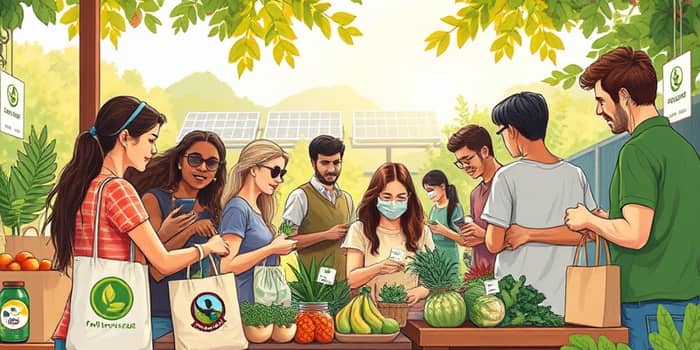
Every purchase we make carries a weight beyond its price tag. As consumers become more aware of the environmental and social impacts of their choices, a new paradigm emerges—one that bridges personal values with daily spending. This movement, often called voting with their wallets, empowers individuals to support brands and products that align with their core beliefs.
A conscious consumer prioritizes ethical sourcing, environmental stewardship, and social responsibility when deciding what to buy. It’s a mindset that evaluates the journey of a product—from raw materials to production, distribution, and disposal—and seeks to minimize harm while maximizing positive impact.
This approach encompasses more than ecological considerations; it also includes physical, mental, and environmental well-being. By choosing products that respect people and planet, conscious consumers cultivate a lifestyle rooted in intention and responsibility.
Beyond numbers, conscious consumerism is a reflection of modern values—rooted in a collective desire to heal planetary wounds and foster social equity. When individuals pause to consider the origins of cotton in a shirt or the journey of coffee beans from farm to cup, they participate in a narrative that transcends commerce.
The rise of the health-conscious consumer is not a fleeting trend but a robust economic force. Between 2025 and 2030, the health-oriented market is projected to grow from USD 26.1 billion to USD 33.7 billion. The broader wellness sector, already a $6.8 trillion industry in 2024, is expected to reach USD 7.32 trillion in 2025.
Such growth underscores the power of collective choices. When millions opt for sustainable products, they reshape entire industries and drive innovation toward greener alternatives.
Local businesses, startups, and social enterprises are springing up to meet this demand, creating jobs in sustainable agriculture, green technology, and ethical manufacturing. This expanding wellness ecosystem not only drives revenue but builds resilient communities.
One of the most compelling indicators of conscious consumerism is the readiness to spend a premium on sustainable goods. Currently, 66% of global consumers express willingness to pay more for products that uphold environmental and social standards, up from 55% in 2014.
Generational perspectives reveal nuanced commitment levels:
This data highlights that Millennials lead adoption, closely followed by Baby Boomers and Gen X.
Awareness alone does not drive change; action does. Recent surveys show significant behavior shifts:
These shifts reflect a collective drive to transform conscientious intentions into daily routines, ensuring that ethical considerations become second nature.
Every small shift—refilling water bottles instead of buying plastic, choosing secondhand clothing, or selecting biodegradable packaging—contributes to a ripple effect of sustainable practices.
Nutrition and sustainability often go hand in hand. Across age groups, active efforts to eat healthily are on the rise: in Europe, 65% of those aged 60–64 and 55% of 20–29-year-olds report prioritizing nutritious diets. In the UK, both Gen Z and Millennials hover around 58–59% for healthy eating engagement.
By choosing whole, locally produced foods, consumers support regional farmers, reduce carbon footprints, and nourish their bodies—all integral components of conscious living.
Community-supported agriculture and farmers markets have surged in popularity, offering fresh produce directly from growers. These models reduce food miles, support biodiversity, and cultivate a sense of belonging—an essential ingredient for lasting dietary change.
Trust is the currency of ethical commerce. Today, 92% of consumers are more likely to support brands with genuine environmental or social consciousness.
Yet the threat of greenwashing remains. According to studies, consumers expect substantive evidence rather than marketing spin.
To maintain credibility, brands must embrace:
When brands demonstrate deepening consumer trust through transparency, they cultivate loyalty that withstands market fluctuations.
Brands seeking to connect with conscious consumers should consider the following strategic pillars:
These approaches ensure that brands not only speak the language of conscious consumers but also participate in tangible change.
As sustainability moves from trend to expectation, the next frontier lies in the circular economy—embracing take-back programs, repairable goods, and upcycled materials.
Experts predict that initiatives fostering reuse and regeneration will drive the next wave of growth.
Meanwhile, top brands like Amazon, Starbucks, and Walmart have risen to the challenge, earning recognition in Good Company polls for their visible commitment to ethical practices.
Enabled by digital platforms, consumers can now join repair cafes, share economy networks, and local swap events, extending the life cycle of products and reinforcing the ethos of reuse, repair, and recycle.
For consumers, the opportunity is clear: every purchase is a statement of intent. By choosing with purpose, individuals can wield remarkable influence, steering markets toward a more equitable and sustainable future.
Design your spending with purpose—each choice can nurture communities, protect ecosystems, and sustain well-being for generations to come.
References