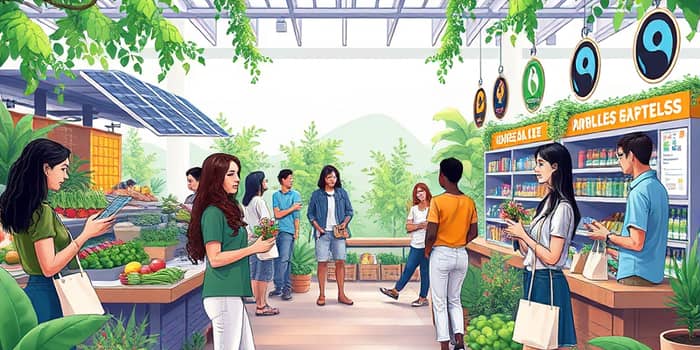
In an era of global challenges and digital connectivity, a quiet revolution is transforming how we shop and live.
More than ever, people are choosing to align their purchases with their personal values, creating a powerful wave of change in the marketplace.
This movement, driven by a desire for environmental stewardship and ethical sourcing, is reshaping industries and inspiring hope for a better world.
Conscious consumerism isn't just a trend; it's a fundamental shift towards intentionality, where every dollar spent becomes a vote for the kind of future we want to build.
It empowers individuals to support causes they care about, from climate action to social justice, through their daily choices.
At its heart, conscious consumerism prioritizes purchases that reflect core beliefs and principles.
It involves moving away from impulsive buying and towards thoughtful, values-driven decisions that consider the broader impact.
Key aspects include a focus on social responsibility and worker rights, ensuring that products are made fairly and ethically.
Consumers today are increasingly aware of issues like animal welfare and community empowerment, demanding transparency from brands.
This mindset encourages people to "vote with their wallets," supporting companies that demonstrate integrity and sustainability.
It's closely tied to related trends, such as health-conscious buying and the overlap between wellness and environmental care.
Statistics reveal a growing willingness among consumers to pay premiums for products that align with their values.
This shift is not just niche; it's becoming mainstream, with significant implications for businesses worldwide.
In the United States, 64% of Americans would pay more for brands that share their values, with this number soaring to 79% for Gen Z.
Globally, 58% of buyers are willing to invest in ethically sourced or sustainable products, highlighting a broad-based demand.
However, challenges remain, as 60.9% cite price as a barrier to sustainable buying, pointing to a need for affordable options.
Different age groups show varying levels of engagement with conscious consumerism, with younger generations leading the charge.
This table summarizes their willingness to pay more for sustainability, based on recent data.
Gen Z, in particular, exhibits a paradox: they are cutting overall spending but expecting more value and transparency from brands.
Millennials are the strongest premium payers, often driving market trends with their purchasing power.
Baby Boomers also show significant interest, with 22% valuing brands more than they did five years ago.
Conscious consumers are actively changing their behaviors to support social and environmental causes.
Their decisions are influenced by a variety of factors, from brand practices to personal experiences.
Brand loyalty is shifting, with 88% of U.S. consumers purchasing from value-aligned brands and 84% recommending them based on shared values.
Trust is a key driver, as 92% are more likely to trust brands that are environmentally and socially conscious.
Regional variations exist, such as the UK prioritizing ethics, France focusing on price, and the U.S. valuing variety.
Conscious consumerism spans diverse demographics, with significant implications for market segments.
Younger cohorts are at the forefront, but trends are inclusive, affecting all age groups and backgrounds.
Market projections show explosive growth in areas related to wellness and sustainability.
This fusion of health and sustainability is reshaping innovation and consumer expectations.
As we move into 2025, conscious consumerism is evolving towards more intentional and curated experiences.
Consumers are resisting mindless buys influenced by algorithms, opting instead for thoughtful purchases.
They are using budgets and apps to seek authentic, values-driven products that align with their lifestyles.
This has led to a rise in subscriptions and invite-only platforms that foster a sense of belonging and community.
Brand loyalty has declined by 25%, but loyalty program usage has increased, showing a complex relationship.
Price sensitivity drives switching amid high costs, but consumers are redefining value to include ethical practices and sustainability.
For example, 80% of U.S. Gen Z have shopped at wholesalers, seeking better value without compromising on principles.
Trust is bolstered by verifiable data, such as certifications and blockchain tracing, to combat greenwashing.
To connect with conscious consumers, brands must adopt transparent and authentic approaches.
Engaging this audience requires a commitment to values and a willingness to innovate.
Brands should prioritize depth and quality over mass accessibility, creating expert-driven experiences.
Adapting regionally is key—focus on ethics in the UK, price in France, and variety in the U.S.
By evolving for intentionality, companies can build lasting relationships with conscious consumers.
The rise of conscious consumerism presents both opportunities and challenges for businesses and society.
Economic slowdowns can amplify values focus, as seen with the growing spending power of multicultural consumers.
Contradictions exist, such as price sensitivity alongside a willingness to pay premiums for sustainability.
Brands that ignore this shift risk losing relevance to more transparent and ethical competitors.
The wellness-sustainability fusion is driving new innovations in health and environmental care.
To succeed, it's crucial to address barriers like high costs while emphasizing long-term benefits and impact.
Consumers are increasingly expecting all marketing to include an environmental focus, with 66% viewing it as essential.
This movement is not just about shopping; it's about building a more equitable and sustainable world through everyday choices.
By embracing conscious consumerism, we can all contribute to positive change, one purchase at a time.
References