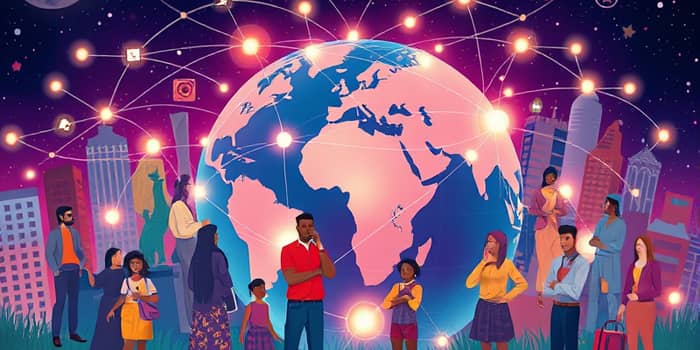
In 2025, approximately 6 billion people worldwide enjoy internet access, yet 2.2 billion remain offline. This persistent gap shapes education, economic opportunity, and social connection. As digital technologies transform every facet of our lives—from remote learning to telemedicine—the disparity between connected and disconnected communities becomes more than an abstract statistic. It is a call to action for governments, private sector actors, and civil society to work together in crafting inclusive solutions that ensure no one is left behind.
The rise in global internet users, up by over 240 million in a single year, marks an impressive surge in digital inclusion. Countries like China and India contribute large shares to this growth, reflecting substantial investments in infrastructure and mobile technology. Yet the picture is uneven. While high-income nations boast 94% online penetration, low-income regions languish at just 23%. Rural communities, accounting for nearly half of the offline population, wrestle with unreliable service and inadequate infrastructure.
This unequal landscape is further stratified by gender and age. Men are more likely than women to access the internet, with a 7% relative gap translating to some 240 million additional male users. Youth aged 15–24 enjoy higher connectivity, at around 82%, but older populations and vulnerable groups fall behind. These divides are not mere numbers; they represent barriers to information, skills, and economic participation.
Bridging the digital divide requires more than laying cables. Stakeholders must address a complex web of obstacles that prevent universal meaningful connectivity:
Compounding these barriers is the uneven rollout of emerging technologies. While 5G subscriptions near 3 billion, coverage remains skewed toward affluent urban centers. Most low-income areas still rely on slower 3G or 4G networks, ill-suited for data-intensive applications like AI-driven services.
Digital inclusion is not a luxury—it is the backbone of modern society. When communities cannot connect:
The widespread economic implications are dramatic: countries with higher internet adoption see accelerated GDP growth, innovation clusters, and more resilient supply chains. Conversely, offline populations face entrenched inequities, undermining global development goals.
These figures underscore a simple truth: the stakes of digital exclusion reach far beyond convenience. They touch human potential and the capacity of nations to thrive in an increasingly interconnected world.
To close the gap, stakeholders must pursue multi-dimensional strategies that blend technology, policy, and community empowerment. Key areas of action include:
A comprehensive global initiative, estimated at USD 2.6–2.8 trillion investment, is within reach if we align resources across sectors. Initiatives like the ITU Facts and Figures report and the World Bank’s Digital Progress and Trends Report provide roadmaps, highlighting success stories from Kenya’s community networks to India’s rural broadband rollout.
Policy makers can channel funding to low-income and rural areas, while the private sector can pilot low-cost devices and flexible data plans. Civil society organizations play a vital role in digital literacy campaigns and advocating for inclusive regulations. When these efforts converge, transformative power of connectivity unfolds, unlocking new educational, economic, and social horizons.
The digital divide is not static. Each year brings technological advances and the promise of new connectivity breakthroughs. Yet without coordinated effort, the most vulnerable will remain on the wrong side of progress. We must embrace a shared vision: a world where every individual—regardless of geography, income, or gender—can harness the full spectrum of digital opportunities.
This vision demands bold leadership, sustained investment, and community-driven initiatives. It requires us to listen to offline voices, understand local needs, and innovate with empathy. By fostering collaboration across borders and sectors, we can turn the challenge of digital exclusion into an opportunity for global solidarity.
Together, we have the tools and knowledge to build an equitable digital future. Let us commit to bridging divides, empowering every person with connectivity, and ensuring that the benefits of the digital age are shared by all.
References