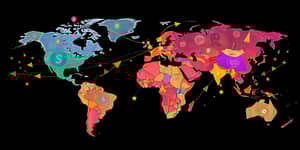
In an era defined by digital interaction, access to the internet has become the key to education, healthcare, and economic growth. Yet, despite remarkable progress, billions remain excluded from the benefits of an interconnected world. This article examines the current state of global connectivity, the multifaceted nature of the divide, its impact on opportunity, and the strategies needed to bridge the gap.
By mid–2025, the number of internet users worldwide has reached between 5.56 and 6 billion, representing roughly 68–75% of the global population. Meanwhile, an estimated 2.2–2.63 billion people remain offline, constituting 25–33% of humanity. Growth in new users has slowed, as reaching the remaining unconnected populations proves increasingly challenging and expensive.
Although broadband network coverage extends to most inhabited areas, approximately 2.6 billion people do not use the internet. For many, barriers such as cost, lack of devices, and insufficient digital skills prevent adoption despite the presence of signal. This disparity highlights that access on a map does not always translate to quality and meaningful connection in people’s lives.
The digital divide is not a single chasm but a series of overlapping gaps that determine who benefits from online resources.
Even where 5G towers dot the skyline, fast lanes are reserved for rich countries while low-income nations rely on slower 3G and patchy 4G. By 2025, 5G networks cover 55% of the world’s population overall, but only 4% in low-income countries compared to 84% in high-income nations.
Affordability remains a critical barrier. Although median data prices have declined, many low- and middle-income countries still exceed the benchmark of 1 GB costing less than 2% of monthly income. For those at the bottom of the income ladder, even basic data plans and entry-level smartphones are out of reach. As a result, device sharing is common, limiting privacy and usage, with many relying on outdated, low-spec and underpowered devices that cannot support modern applications.
Digital skills further compound the divide. While most users can perform basic tasks such as messaging and simple searches, advanced capabilities—online safety, problem-solving, and content creation—lag far behind. The 2.6 billion unconnected face not only infrastructure and cost hurdles but also a lack of awareness about the internet’s relevance to their lives.
Structural inequalities overlay these technical divides. Rural communities often suffer from weaker infrastructure and higher costs. Women in many regions remain significantly less likely to own mobile phones or access online services. People with disabilities face barriers due to limited accessibility features and scarce local-language content.
The contrast between digital leaders like Switzerland and Singapore and countries such as India and Peru underscores how geography, wealth, and risk exposure shape connectivity and resilience.
Digital inclusion extends far beyond connecting devices; it transforms lives and unlocks potential across multiple domains.
Education now hinges on online platforms for interactive learning, homework submission, and remote instruction. Students without reliable internet or suitable devices struggle to keep pace, exacerbating educational inequalities. Quality connectivity allows learners to access vast resources, collaborate globally, and develop critical digital skills.
Employment opportunities increasingly require digital proficiency. Remote work and gig platforms offer flexibility and income possibilities, especially for those in regions without local job markets. However, outdated, low-spec and underpowered devices or limited bandwidth hinder participation in online interviews, virtual training, and remote projects.
Healthcare delivery benefits immensely from telemedicine, health information systems, and mobile apps that monitor vital signs. In underserved areas, connectivity can mean the difference between timely treatment and life-threatening delays. Yet many clinics and patients lack the infrastructure or skills to leverage these tools effectively.
Civic life and governance are becoming digitized through e-government portals, online voting consultations, and digital activism. When citizens can access public services, pay taxes, or report community issues online, transparency and participation rise. Those excluded from these channels are left voiceless.
Addressing the digital divide requires coordinated efforts across sectors, from policy and infrastructure to education and finance. The investments needed to connect the remaining unserved populations are substantial but yield high returns in social and economic development.
Global initiatives like the ITU’s Broadband Commission advocate for policies that drive competition, reduce regulatory barriers, and foster innovation in network deployment. Meanwhile, philanthropic funds and development banks are channeling billions of dollars into connectivity projects in Africa, South Asia, and Latin America.
Estimates suggest that universal, meaningful connectivity will require an annual investment of up to USD 50–70 billion over the next decade. Despite the scale, such funding pales in comparison to the potential benefits: increased GDP growth, improved health outcomes, enhanced educational attainment, and strengthened social cohesion.
By prioritizing affordable data and devices, empowering communities with digital skills, and ensuring networks reach the most remote areas, stakeholders can drive inclusion. Governments, private companies, NGOs, and local leaders must collaborate to craft solutions that address each layer of the divide.
Closing the gap is not merely a technical challenge but a moral imperative. Only by bridging digital opportunity gaps can we unlock the full potential of every individual, regardless of their location or income. Collective action today will transform lives and communities worldwide, forging a more equitable and prosperous future for all.
References