In today's interconnected world, the concept of work is undergoing a profound transformation.
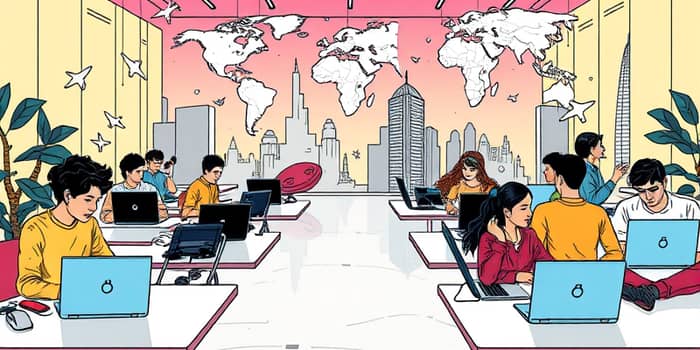
The digital nomad lifestyle, once a niche pursuit, is now a global phenomenon with immense economic impact.
This shift empowers individuals to blend work with travel, creating a new paradigm for talent mobility.
As we explore this movement, it's clear that digital nomadism is here to stay, reshaping economies and lives.
The statistics reveal a story of rapid growth and adaptation.
An estimated 40-45 million digital nomads exist worldwide, with projections exceeding 60 million by 2030.
Their collective spending power reaches a staggering $787 billion annually, highlighting unprecedented economic influence.
This article will inspire you with insights and provide practical tips to navigate this dynamic world.
Digital nomadism has exploded in popularity over recent years, driven by technological advancements.
In the U.S. alone, 18.5 million Americans identify as digital nomads, representing 12% of the workforce.
This marks a 153% increase since 2019, showcasing a rapid integration into mainstream work.
The growth is not just statistical; it reflects deeper shifts in work culture.
This surge represents a fundamental shift in employment norms.
More people are embracing the freedom to work from anywhere, leveraging digital tools.
The economic value of this community is transformative, boosting local economies globally.
The demographics of digital nomads are diverse and continuously evolving.
Traditional nomads, often employed by companies, now outnumber independents, reflecting corporate adaptation.
Baby Boomers have contributed to a decline in independent nomadism, influenced by financial pressures.
Job types among digital nomads vary widely, offering opportunities for many.
This diversity shows that anyone with digital skills can join this movement.
Understanding these profiles helps in navigating the nomad landscape effectively.
Talent mobility is experiencing significant shifts on a global scale, influenced by various factors.
There's an 8.5% decline in international movement of highly skilled workers through August 2025.
This is the first drop since 2020, with 220,000 fewer relocations, indicating changing geopolitical dynamics.
Geopolitics and economic headwinds are key drivers, reshaping where talent flows.
Shifts in mobility patterns are creating new opportunities and challenges.
This dynamic landscape requires adaptability and foresight for success.
Digital nomads must stay informed about global trends to make smart decisions.
While the lifestyle offers freedom, it comes with its own set of challenges.
Tax and healthcare complexity can be daunting for nomads, requiring careful planning.
Insurance gaps and rising costs are common concerns that need addressing.
To thrive, digital nomads need practical strategies to overcome these hurdles.
Embracing these strategies can turn challenges into opportunities for growth.
With preparation, the nomad journey can be rewarding, sustainable, and fulfilling.
Looking ahead, digital nomadism is set to become even more mainstream by 2026.
Hybrid-nomads with home bases are emerging as a new trend, blending stability with mobility.
The Global South, including countries like Colombia and Kenya, is rising in popularity for affordability.
This evolution promises unprecedented freedom and economic empowerment for many.
As technology advances, barriers to remote work continue to fall, opening doors.
To prepare for this future, focus on developing in-demand skills like AI proficiency.
Digital literacy and continuous learning are essential to stay competitive globally.
Digital nomadism is not just a trend; it's a transformative movement redefining work-life balance.
It offers a blueprint for a more flexible, fulfilling, and connected existence.
By understanding the dynamics and preparing wisely, anyone can join this revolution.
The journey starts with a single step towards embracing global mobility and innovation.
References