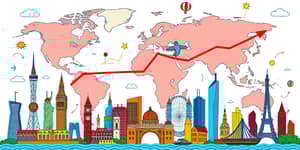
In an era of unprecedented interconnectedness, the world economy can be understood as a single, massive balance sheet. This comprehensive snapshot captures what the global community owns, owes, and the residual value held by nations, corporations, and households. By examining these aggregated figures, we gain insight into overall economic resilience and latent vulnerabilities, guiding policy decisions and strategic planning on every scale.
Just as a corporate balance sheet reveals a company’s financial health at a point in time, the global balance sheet aggregates assets, liabilities, and equity across continents. It measures total GDP equivalents, national debts, reserves, and net international investment positions. Beyond dry numbers, this perspective tells a story of growth, risk, and the delicate dance between leverage and solvency.
Before diving into macro aggregates, it helps to revisit the fundamental equation that structures every balance sheet: Assets = Liabilities + Equity. On a global scale:
Governments record foreign reserves and national debts, corporations report long-term investments and bond issues, and households log mortgages and personal loans. When aggregated, these components reveal patterns of capital accumulation, debt cycles, and distributional shifts.
Just as investors rely on ratios to assess individual firms, policymakers use global metrics to gauge stability. The following table summarizes the most critical indicators:
These ratios are complementary. A high equity-to-assets ratio can buffer downturns, while an elevated debt-to-GDP warns of potential sovereign defaults. Tracking their evolution uncovers systemic imbalances before crises erupt.
Beyond headline figures, certain patterns raise red flags:
During the 2020s, many economies saw public and corporate debt swell to record highs. When interest rates rose, servicing costs strained budgets, illustrating how gearing can amplify shocks. A global balance sheet view spotlights these pressures, beyond isolated country data.
Understanding the global balance sheet is more than academic; it empowers action. Whether you’re a policy advisor, business leader, or informed citizen, these steps can guide your engagement:
Regular reviews of these metrics help anticipate financial stress and identify opportunities. For instance, a country with ample foreign reserves and low external debt may withstand currency swings, while another heavily reliant on short-term funding could face rollover risks.
The concept scales down to personal and corporate finance. Just as nations track their balance sheets, you can:
This exercise fosters financial discipline and highlights leverage risks. A balanced personal sheet—with adequate liquidity reserves and manageable debt—mirrors the healthiest economies.
Global asset composition is evolving. Intangible assets—like intellectual property and digital platforms—now dominate corporate balance sheets. Climate liabilities, such as carbon-related future costs, are emerging as significant non-current obligations. Tracking these shifts provides early insight into the next wave of economic transformation.
Meanwhile, rising interest rates and geopolitical tensions can stress cross-border financing. Entities with prudent debt structures and strong equity positions will navigate disruptions more smoothly. By following the global balance sheet narrative, we anticipate challenges and adapt strategies proactively.
The global balance sheet offers a panoramic view of economic health. It synthesizes data from governments, corporations, and households into a unified framework, revealing strengths, weaknesses, and trends that individual reports miss. Armed with key ratios and a clear methodology, stakeholders can make informed decisions, mitigate risks, and seize opportunities.
Whether you’re charting policy or managing personal finances, the lessons are clear: maintain balanced leverage ratios, build strong equity cushions, and stay attuned to shifts in asset quality. By weaving the global perspective into your analysis, you connect the dots between local actions and worldwide impact, stepping confidently toward a more resilient economic future.
References