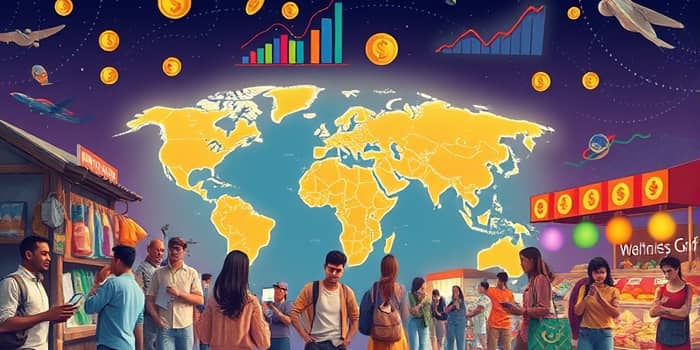
The modern marketplace is defined by the choices and challenges of billions of individuals around the globe. In 2025, consumer spending surpasses all previous benchmarks, reflecting shifting priorities, emerging demographics, and digital transformations. This article examines the key factors shaping expenditure patterns, offering actionable insights to businesses, policymakers, and individuals looking to navigate a complex economic landscape.
By 2025, aggregate consumer spending has climbed to over 60 trillion dollars worldwide, marking a 2.3 percent increase from last year. This upward trajectory spans both established and emerging economies, driven by expanding incomes and credit availability. Despite this growth, nearly half of global consumers express anxiety about economic stability, and more than 60 percent identify inflation as a primary concern.
Understanding this duality of optimism and caution is critical for stakeholders aiming to align offerings with real needs. While spending continues unabated, the undercurrent of financial unease underscores the importance of value, trust, and resilience in product and service design.
Inflationary pressures have prompted innovation in value propositions and pricing models. Brands that succeed in demonstrating transparent cost structures and genuine value are building stronger customer loyalty. Meanwhile, consumer resilience is evident in the willingness to maintain discretionary spending, even under economic strain.
Generational cohorts now dictate distinct spending dynamics. Gen X leads with 15.2 trillion dollars in annual outlays, emphasizing convenience and advanced digital tools. Meanwhile, Millennials and Gen Z represent the fastest-growing segments, propelled by a combination of technological fluency and social values. Older cohorts, including Baby Boomers, are gradually ceding spending share to younger, more digitally native groups.
Notably, Millennials and Gen Z are willing to pay more for eco-friendly products, with nearly 60 percent expressing readiness to invest in sustainable options. Over the next decade, these cohorts are set to add trillions to the global economy, reshaping market priorities around ethics, authenticity, and digital engagement.
To capture these groups, businesses should deploy interactive campaigns, leverage social platforms, and invest in mobile-first solutions. Crafting narratives that align with purpose-driven brand identities can turn casual buyers into loyal advocates.
The United States remains the largest consumer market by far, with spending nearing 19 trillion dollars. China follows with 7 trillion, reflecting robust urban demand. Emerging markets such as India and Brazil are rapidly closing gaps, driven by a rising middle class and expanding credit systems.
Spending as a proportion of GDP varies considerably. In developing economies, necessities like food and housing claim a larger share, while advanced markets funnel more resources into leisure, travel, and digital subscriptions. Recognizing these regional distinctions enables tailored strategies that respect local priorities and growth drivers.
Per capita expenditure also highlights stark contrasts: Western markets often spend twice as much on services and technology, while emerging markets allocate more to basic goods. These insights inform pricing, product assortment, and loyalty program design.
Digital transformation continues to rewrite spending rules. Over 90 percent of consumers in major markets routinely shop online, and grocery delivery services have seen weekly usage rates exceed 40 percent in the US and Europe. Brands optimizing digital-first shopping experiences and frictionless checkout processes capture higher loyalty and wallet share.
Meanwhile, discretionary categories have diverged. Home fitness and garden furnishings have seen declines, while electronics, travel, and specialty foods enjoy renewed interest. Navigating these trade-offs requires agile product development and dynamic marketing approaches.
Over 100 million individuals are projected to enter the global consumer class this year, even as inflation and geopolitical pressures temper growth. These new entrants typically accelerate from basic needs to discretionary spending, prioritizing electronics, travel, and lifestyle upgrades once staples are secured.
Brands targeting these segments should emphasize tailored brand interactions that reflect cultural nuances and practical aspirations. Localized product assortments, flexible financing options, and educational marketing about quality and durability can help convert first-time buyers into loyal patrons.
Consumer sentiment and action are increasingly decoupled. While optimism about personal finances edges upward—reflected in a slight rise of the global financial well-being index—many remain cautious, researching purchases more thoroughly and prioritizing savings. Nearly half of consumers report active cost-cutting measures, even as a sizable minority indulges in occasional nonessential splurges.
Looking ahead, the next wave of growth will hinge on blending technological innovation with genuine social responsibility. Companies that can harness data to anticipate needs, while demonstrating commitment to sustainability and inclusion, are poised to thrive. Implementing agile supply chains, refining loyalty ecosystems, and embracing emerging markets will unlock value for both businesses and consumers worldwide.
In a world where spending power is more widespread—and expectations more complex—understanding the nuanced patterns of consumer behavior is not just beneficial, but essential. By aligning strategies with these insights, stakeholders can navigate uncertainty, foster trust, and catalyze sustainable growth in the years to come.
References