The mid-20th century ushered in a seismic transformation of global agriculture. While Norman Borlaug’s high-yield varieties saved millions from starvation, the environmental toll exposed the need for a new paradigm. Today’s challenge lies in financing a sustainable future that builds on past gains without repeating costly mistakes.
From the 1940s through the 1980s, developing nations witnessed a dramatic surge in cereal outputs. High-yielding crop varieties, hybrid seeds, synthetic fertilizers, pesticides, and expanded irrigation fueled a 160% global grain production increase. Mexico and India emerged as poster children for success, achieving unprecedented self-sufficiency in staple grains.
These gains eradicated localized famines, boosted rural incomes, and drove down infant mortality. Yet the Revolution’s reliance on fossil-fuel–derived inputs led to soil degradation, water pollution, biodiversity loss, and increased greenhouse gas emissions from practices like crop residue burning.
The original Green Revolution achieved scale but sacrificed long-term resilience. Monocultures replaced diverse landraces, eroding genetic diversity and making systems vulnerable to pests and climate shocks. Excessive agrochemical use contaminated water tables and degraded soils, threatening the very productivity it sought to secure.
Understanding these pitfalls is crucial. We must avoid repeating the pattern of short-term yield at the expense of ecological health. Instead, we need a framework that values social equity, environmental stewardship, and economic viability equally.
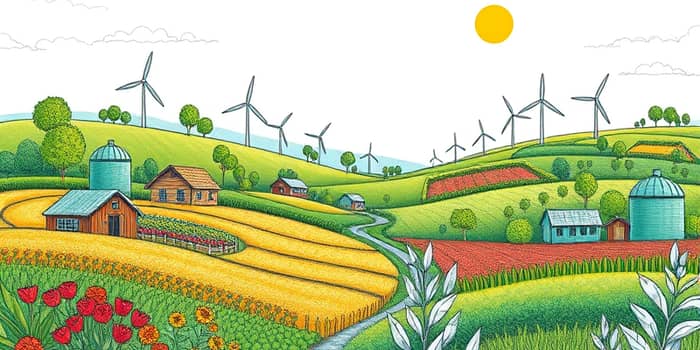
Enter the second wave of transformation: an agriculture-led movement that embraces regenerative practices, circular economies, and greenhouse gas neutrality. Often referred to as the “Evergreen Revolution,” this model, championed by M.S. Swaminathan, envisions holistic balance of environmental health and productivity.
Transformative change demands robust financing mechanisms. Investors, policymakers, farmers, and consumers must align incentives around sustainability goals. Key drivers include:
Major corporations are already reallocating budgets: over one-third of Fortune 100 firms pledged to sustainable operations by 2025, signaling billions in potential investments. Embedding environmental metrics in corporate reporting transforms sustainability from a compliance exercise into a competitive advantage.
Real-world examples illuminate the path forward. In Costa Rica, collaboration between government, academia, and farmers slashed chemical inputs by 40% while boosting yields through agroecological methods. In India, regional cooperatives finance farmer-led seed banks and biofertilizer production, enhancing seed sovereignty and soil health.
The Evergreen Revolution concept emphasizes interdisciplinary collaboration among key stakeholders. When research institutions, financial bodies, and rural communities co-create solutions, the resulting systems are adaptive, equitable, and financially sustainable.
The next decade will define our agricultural legacy. By integrating circular economy principles, transparent reporting, and climate-smart technologies, we can cultivate landscapes that feed growing populations while preserving planetary health. Realizing this vision hinges on scalable financing models that reward long-term resilience over short-term yield.
As we peer into the future, the call is clear: forge alliances, innovate financing, and prioritize ecological well-being. Only then can we harness the true potential of a Green Revolution that endures for generations to come.
References