In today’s fast-paced markets, traders face a constant battle between hard data and gut instinct. While algorithms can process mountains of information in milliseconds, human traders bring creativity, empathy and adaptability to the table. Striking the right balance between these forces can unlock truly transformative results.
This article explores how a hybrid approach to trading can harness the unique strengths of both AI and human intuition, mitigating each side’s weaknesses. Through practical methods, real-world examples and a look at emerging trends, you’ll discover actionable insights to elevate your own strategy.
Human traders excel when ambiguity reigns. Market-moving news, geopolitical shocks and black swan events defy routine patterns, demanding creative responses. Beyond raw data, human experts interpret sentiment, build client relationships and craft narratives that resonate.
However, human traders also wrestle with emotional biases. Fear, greed, FOMO and loss aversion can trigger impulsive moves like panic selling or holding losing positions too long. Fatigue and overconfidence further compound mistakes during volatile sessions.
Artificial intelligence shines in data-rich environments. Advanced algorithms can scour news feeds, social media sentiment and historical price movements to identify patterns invisible to the naked eye.
Despite these advantages, AI struggles with unprecedented or highly contextual events. Models trained on historical data can falter when markets behave in novel ways, and they lack the creative spark to innovate entirely new strategies. Over-reliance can also produce herd-like behavior and amplify volatility.
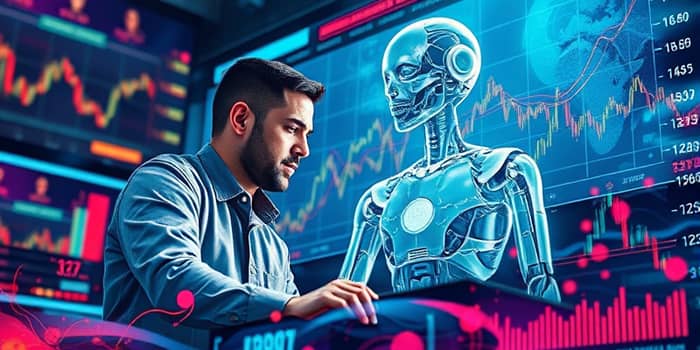
The optimal path lies in combining human judgment with algorithmic rigor. In a hybrid framework, AI handles routine data processing and order execution, while humans oversee strategy, interpret edge cases and inject creativity.
By structuring teams and workflows around this division of labor, traders can achieve objective volatility analysis without succumbing to panic, execute consistent plans during news events and spot creative market opportunities beyond algorithmic reach.
Leading institutions and retail platforms alike have embraced hybrid models to enhance returns and mitigate risk. Below are a few noteworthy examples:
• Goldman Sachs deploys AI models to scan vast datasets, while senior traders step in during volatility to adjust strategy and manage client communications. This blend led to more resilient portfolios during sudden market swings.
• QuantConnect’s community-driven platform lets algorithm architects build and backtest strategies, then hands final execution and adaptive tweaks to human operators for live markets.
• RiskParity funds leverage algorithms for dynamic risk allocation, hitting volatility targets precisely, while portfolio managers bring sector rotation insights to capitalize on emerging trends.
• Retail traders on emerging platforms like QuantSutra use AI-generated entry signals as a baseline, then refine positions using personal experience and discretionary judgment.
As we move toward 2025 and beyond, the trader’s role will evolve toward oversight, creativity and client relationship management. Algorithmic systems will increasingly power routine tasks, freeing humans to focus on strategic differentiation and innovation.
Emerging domains illustrate this shift:
Data-Rich Environments: Supply chain optimization and ad allocation will be fully automated, driven by AI.
Transitional Areas: Product line decisions and tech investment choices will require blended oversight.
Judgment-Rich Fields: Brand vision, new market entry and ethical frameworks will remain the province of human leadership.
In cryptocurrency and FX trading, AI excels at pattern signals, but experienced traders still interpret broader economic developments and regulatory landscapes. Simulations consistently show that hybrid approaches yield robust and adaptive systems that outperform purely human or purely machine strategies.
Ultimately, the path forward is clear: embrace collaboration, leverage each side’s strengths and continuously refine the human-AI partnership. By doing so, traders of all scales can navigate uncertainty with confidence, creativity and unparalleled precision.
References