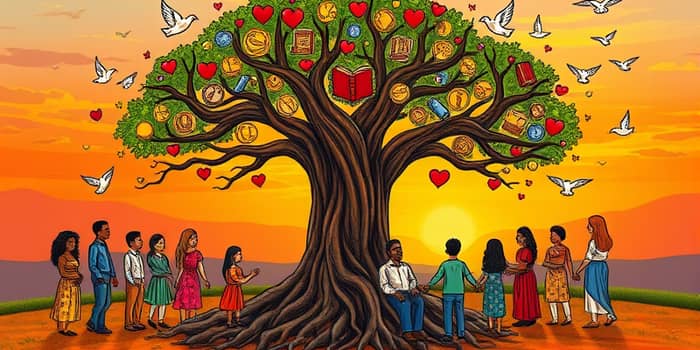
In an era of shifting wealth and accelerating change, heirs stand at a unique crossroads where shared family values and mission must guide financial and personal choices. More than a passive windfall, inheritance offers an invitation to craft a future that uplifts both family and community. This article explores how intentional inheritors embrace stewardship, articulate purpose, and integrate assets into a meaningful life.
Before embarking on legacy planning, it’s crucial to understand three interlocking concepts. Each term illuminates a distinct aspect of wealth transfer and long-term vision.
Today’s generational shift—often dubbed the “great wealth transfer”—will move trillions from baby boomers to Gen X and Millennials. Yet studies often cited in family wealth research warn that 70% of affluent families lose their wealth by the second generation and 90% by the third. This attrition rarely stems from market forces alone, but from poor communication, lack of heir preparation, and misaligned values.
Heirs face anxiety, imposter syndrome, and the burden of expectation. By adopting an art of stewardship, intentional inheritors transform those challenges into opportunities for growth and service.
Legacy isn’t only financial. Four pillars of multi-dimensional wealth offer a holistic framework for impact:
Becoming an intentional inheritor occurs within a family ecosystem designed for open dialogue, shared mission, and collaborative governance. Regular family meetings decode the financial picture, explain investment decisions, and invite every generation to voice questions or concerns.
Drafting a family mission statement transforms abstract values into a decision-making filter for generations. Whether it’s “ensuring every member’s access to education” or “committing 10% of income to community service,” clear goals guide choices around business sales, philanthropy, and lifestyle.
Governance structures—family charters, councils, advisory boards—treat the clan as an enterprise. Defined roles and conflict-resolution processes preserve unity and empower younger members to observe, participate, and lead.
Philanthropy serves as a training ground. Family giving circles, annual grant meetings, and donor-advised funds enable heirs to practice due diligence, articulate priorities, and collaborate on real resources. These experiences ground abstract values in tangible action.
Mentorship and role-design further bolster readiness. Senior members share both victories and setbacks, while youth may assume titles like “legacy archivist” or “innovation lead,” participating in committees before earning full decision rights.
Technical tools gain meaning when viewed through a values lens. A will not only names beneficiaries and guardians but embodies a family’s commitment to future generations. Trusts—revocable for flexibility or irrevocable for asset protection—align timing and conditions of distributions with individual readiness.
Beneficiary designations on retirement and insurance accounts bypass probate, ensuring seamless transfers. Business succession agreements and tax strategies—lifetime gifting, charitable vehicles, dynasty trusts—become vehicles for stewardship rather than mere avoidance of liabilities.
Ultimately, intentional inheritors craft their journey by merging these structures with a deep sense of purpose. They view every document, meeting, and gift as a brushstroke in a larger tapestry of connection, responsibility, and inspiration.
More than a collection of assets, true legacy is a living tapestry woven from values, stories, relationships, and resources. By embracing meaningful and aligned with purpose planning, heirs transform passive receipt into active creation. They become the architects of family culture, the stewards of collective wisdom, and the champions of future generations.
As wealth moves faster than conversations, intentional inheritors stand ready to bridge the gap—ensuring that every dollar, every lesson, and every tradition carries forward a vision of integrity, service, and hope. In the words of one seasoned advisor, “Wealth that forgets its purpose soon forgets itself.” Will you take up the mantle and join the next generation of intentional inheritors?
References