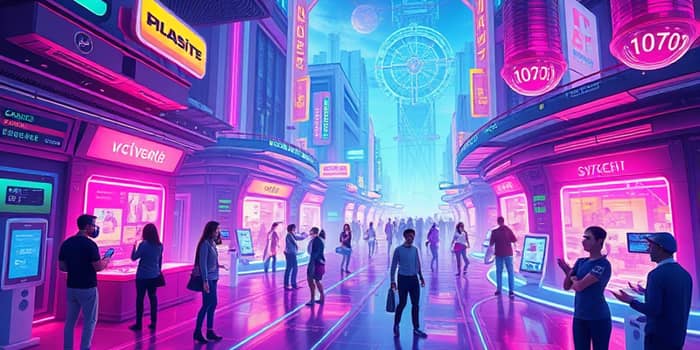
Step into a world where digital and physical realities converge, creating new economic landscapes that redefine how we live, work, and play. The explosive growth projections hint at a future where virtual interactions drive trillions in value, reshaping global markets forever.
This digital revolution is not just about technology; it's about people connecting, creating, and trading in immersive spaces. A paradigm shift in digital interaction is unfolding, enabling unprecedented ownership and monetization of virtual assets that blur traditional boundaries.
From early adopters to global enterprises, the metaverse offers a canvas for innovation, with potential to enhance education, healthcare, and social engagement. Early movers and visionary brands are already pioneering this space, setting the stage for a more inclusive and dynamic economy.
Current estimates showcase the metaverse's rapid expansion, with market sizes soaring into the billions and projected to reach trillions by 2030. Multi-trillion-dollar ecosystem potential is driven by advancements in hardware, software, and virtual economies, making it one of the fastest-growing sectors globally.
Regional analyses highlight North America's dominance, while Asia-Pacific emerges as a hotspot for innovation and adoption. Below is a table summarizing key regional forecasts:
This growth is supported by diverse revenue streams, from virtual real estate to digital advertising, creating a resilient economic framework.
The metaverse's journey began as a niche concept but has accelerated into mainstream adoption through key technological milestones. Key periods of advancement from 2020 to 2025 laid the groundwork, transitioning from experimental phases to commercial viability.
By 2026-2030, experts predict a shift towards performance-driven models, with super-immersive hardware and Web3 infrastructure becoming standard. Commercial adoption era is marked by increased user engagement, with forecasts suggesting that 25% of people will spend over an hour daily in virtual environments for various activities.
This evolution reflects a broader trend towards digital integration, where virtual experiences complement physical life, enhancing productivity and social connectivity.
At the heart of the metaverse economy are innovative components that enable seamless transactions and ownership. Persistent virtual worlds allow users to maintain digital identities across platforms, boosting interaction and economic activity through interoperability.
Virtual assets form the backbone of this economy, with diverse types driving value creation:
These elements foster a native economy where digital trade flourishes, supported by blockchain technology for security and transparency.
The metaverse is revolutionizing multiple sectors, offering practical applications that enhance user experiences and drive revenue. Immersive experiences in retail allow brands to create hybrid shopping environments, blending physical and digital sales for greater customer engagement.
Key areas of impact include:
Each sector benefits from the metaverse's ability to simulate real-world scenarios, offering new ways to connect and innovate.
Businesses and creators can tap into various monetization models to generate income in this digital realm. Creator economics via NFTs empowers artists and developers to sell directly to consumers, cutting out intermediaries and earning ongoing royalties.
Effective strategies include:
These models diversify revenue sources, making the metaverse a lucrative space for entrepreneurs and established brands alike.
Underpinning the metaverse's growth are cutting-edge technologies that create immersive and secure environments. Extended reality and AI integration enhance user engagement through realistic simulations and adaptive content, while blockchain ensures trust in transactions.
Key enablers include:
These technologies work in tandem to build a robust infrastructure, supporting everything from social gatherings to complex business operations.
Despite its potential, the metaverse faces obstacles that must be addressed for sustainable growth. Global regulatory frameworks are needed to manage virtual taxation, consumer protection, and intellectual property rights, ensuring a fair and safe economic environment.
Adoption dependencies include the speed of technological advancements and public acceptance, which can vary by region. Digital services tax models may emerge to govern cross-border transactions, balancing innovation with accountability.
Overcoming these challenges requires collaboration among policymakers, tech developers, and users, fostering an ecosystem that prioritizes inclusivity and ethical standards.
For individuals and organizations, the metaverse offers a wealth of opportunities to innovate and thrive. New revenue streams beyond physical limits can be unlocked through virtual branding and exclusive digital product lines, attracting diverse audiences.
Strategies for success involve:
By staying agile and forward-thinking, stakeholders can position themselves at the forefront of this digital transformation.
The metaverse economy represents a bold leap into a future where digital and physical realities coexist, offering transformative benefits for society. Innovation in commerce and work will continue to evolve, driven by user creativity and technological progress.
As we navigate this exciting landscape, embracing collaboration and ethical practices will be key to unlocking its full potential. Embracing the virtual horizon means not just participating in change, but actively shaping it for a more connected and prosperous world.
References