For decades, the Middle East has been defined by its vast oil reserves, but a seismic shift is underway.
Economies across the region, especially in the Gulf Cooperation Council (GCC), are embracing rapid diversification away from oil dependency.
This metamorphosis is driven by visionary national plans and global pressures, aiming for sustainable growth.
Projections suggest regional GDP could surpass $4.57 trillion by 2035, marking a new era of prosperity.
Key indicators reveal both challenges and opportunities in this transition.
Oil prices are expected to remain low, with projections around $58 per barrel in 2026.
This pressures fiscal balances, pushing nations toward renewables and tech investments.
GDP growth forecasts show a positive trajectory for the region.
Inflation is dropping, offering relief for countries like Egypt and Jordan.
Debt levels are rising, but reforms are attracting capital markets for long-term stability.
Countries are implementing bold plans to reduce reliance on oil revenues.
These strategies focus on output, trade, and government revenue diversification.
Incentives and regulatory improvements are key to attracting foreign investment.
Regional integration efforts aim to boost intra-MENA trade beyond commodities.
The transformation spans multiple high-growth sectors, reshaping economies.
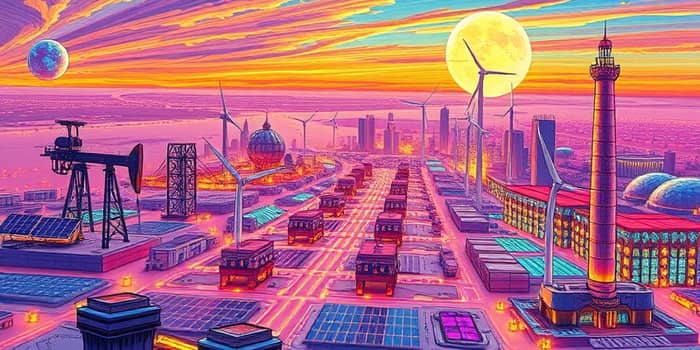
Governments are investing heavily in technology and clean energy solutions.
These shifts are creating new value chains and boosting productivity regionally.
Despite progress, significant obstacles threaten sustainable diversification.
Oil dependency remains a vulnerability to global price swings.
Human capital development is crucial for post-2030 growth and resilience.
The metamorphosis opens doors for innovation-led economic expansion.
Breakthroughs in AI and clean energy can drive a productivity boom.
G20 support and regional agreements accelerate this positive trajectory.
Each nation adapts diversification to its unique strengths and challenges.
GCC leaders like the UAE and Saudi Arabia advance through non-oil trade.
Contextual determinants ensure tailored approaches for maximum impact.
The Middle East's metamorphosis is a testament to resilience and vision.
By embracing AI, renewables, and strategic reforms, the region is charting a new course.
This journey beyond oil-rich economies promises sustainable prosperity and global relevance.
With continued innovation and collaboration, the future shines bright for all.
References