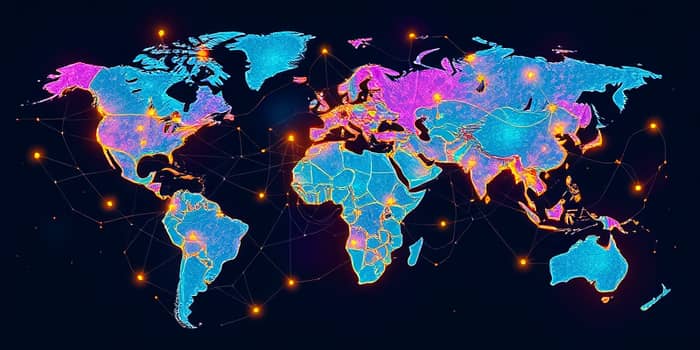
Innovation has become the compass guiding economic growth, societal progress, and technological breakthroughs. Across continents, geographical hotspots of creative energy are emerging, where businesses, research centers, and governments converge to spark change.
In this article, we’ll explore the essence of global innovation clusters, examine leading examples, and provide actionable insights for individuals and organizations ready to harness these dynamic ecosystems.
Innovation clusters are dense networks of interconnected players—from startups to universities—co-located to foster collaboration, rapid idea exchange, and resource sharing. They build on economic theories of agglomeration economies and manifest in specialized forms:
Since the formal definition of Clusters of Innovation (COI) in 2015, these regions have evolved into global hubs where breakthrough technologies and startups flourish at an accelerated pace. When multiple clusters form tight alliances—such as Silicon Valley’s ties with Taiwan or Israel—they become Super-COIs, acting as singular, powerful entities.
Data from the 2025 Global Innovation Index underscores the dominance of a handful of regions. The top clusters account for roughly 70% of worldwide patent filings and venture capital activity. Leading the pack are:
These mega-hubs benefit from dense talent pools and substantial R&D investment. Following them are Beijing and Seoul, with each region posting record numbers of patent applications and scientific publications.
Beyond the top five, notable intensities per capita emerge in smaller but influential centers like Cambridge and Oxford in the UK, and Boston–Cambridge in the US, proving that size isn’t the only determinant of innovation prowess.
Launched as the successor to Superclusters, Canada’s GIC program represents a bold commitment of nearly $3 billion over a decade. It aims to de-risk industry investment, accelerate commercialization, and boost long-term competitiveness through targeted collaboration among industry leaders, SMEs, researchers, and Indigenous communities.
The program’s measured economic impact illustrates its potency:
Key themes span AI-powered supply chains (Scale AI), digital ecosystems (Digital Technology Supercluster), and SME scaling with an emphasis on inclusive growth (NGen). By 2035, projections anticipate up to $16 billion in GDP contributions and over 150,000 jobs, reflecting the cluster model’s transformational capacity.
The journey of innovation clusters traces back to 19th-century industrial districts, where proximity enabled knowledge spillovers and craftsmanship. Globalization amplified these effects, birthing high-tech corridors around world-class universities and research parks.
Looking ahead, we see several emerging trends poised to reshape the innovation landscape:
Modern cluster initiatives prioritize not just economic metrics but also workforce equity and social capital. Canada’s NGen program, for instance, invests in Indigenous and under-represented talent pools, ensuring innovation benefits are widely shared.
By embedding diversity and social responsibility into cluster strategies, regions can build stronger ecosystems that foster creativity, resilience, and long-term sustainability. Governments play a vital role by providing foundational funding, regulatory support, and incentives aligning public and private objectives.
Whether you’re an entrepreneur, investor, or policymaker, engaging with innovation clusters offers unparalleled opportunities. Here are actionable steps to leverage these dynamic environments:
By embedding yourself in these vibrant networks, you gain access to accelerated learning cycles, enhanced funding avenues, and real-world commercialization pathways.
Innovation clusters stand at the forefront of the next industrial revolution, fusing talent, technology, and strategic partnerships to unlock exponential growth. From mega-hubs in China and the US to agile regional centers in Europe and Canada, these ecosystems offer a blueprint for sustainable prosperity.
Embrace the cluster model, contribute to collaborative ventures, and chart your own path within these fertile grounds of creativity. The next big leap in your field may well begin in a shared workspace surrounded by fellow innovators, research labs, and the hum of venture-backed startups.
Together, we can harness the collective power of global innovation clusters to solve pressing challenges, create new markets, and build a future defined by inclusive, transformative progress.
References