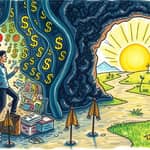
In today's global economy, where disparities often widen and growth stalls, the Nordic Model offers a compelling blueprint for achieving both prosperity and equality.
This economic system, practiced in countries like Sweden, Norway, Denmark, Finland, and Iceland, seamlessly blends free-market capitalism with a comprehensive welfare state to deliver high living standards and low income gaps.
By learning from its principles, nations worldwide can find inspiration and practical strategies to foster economic stability and social harmony.
The Nordic Model is not just a theoretical concept; it is a lived reality that has transformed Scandinavian societies.
It combines dynamic market forces with robust public services, creating an environment where innovation thrives and citizens are well-supported.
Key to this balance is high trust in government and collaborative problem-solving, which underpins democratic processes and economic decisions.
This model has evolved since the late 19th century, adapting to challenges while maintaining its core values of equity and opportunity.
The strength of the Nordic Model lies in its foundational pillars, which work together to sustain economic stability.
These pillars ensure that growth benefits everyone, not just a select few.
These elements create a safety net that encourages participation and reduces conflicts, leading to a more cohesive society.
Beyond the pillars, specific mechanisms enable the Nordic Model to function efficiently and adaptively.
These mechanisms foster resilience in the face of economic shifts and global pressures.
Together, these mechanisms ensure that economic growth is inclusive and sustainable over the long term.
The Nordic countries consistently rank among the world's wealthiest, with impressive economic indicators that highlight their success.
High GDP per capita and low inequality are hallmarks of this model, proving that prosperity does not have to come at the cost of fairness.
Below is a table showing GDP growth forecasts for Nordic countries and comparisons, illustrating their stable economic trajectory.
These figures demonstrate resilience, with growth projections showing steady recovery and adaptation to global trends.
The Nordic Model's roots stretch back to the late 19th century, when swift industrialization prompted social reforms.
Over time, it has evolved to emphasize welfare through high taxation and public investment, balancing market dynamism with social equity.
This historical journey highlights how sustained commitment to these principles can lead to long-term prosperity.
Understanding this history provides valuable insights for other nations seeking similar stability.
Despite global uncertainties, the Nordic countries have maintained stable growth, though they face contemporary challenges.
These include labor market issues, productivity concerns, and demographic pressures that test the model's sustainability.
Addressing these challenges involves optimism about tech gains and tax willingness to sustain the model.
The Nordic Model offers actionable lessons that can be adapted to various economic contexts worldwide.
By focusing on key strategies, countries can enhance stability and reduce inequality.
These lessons are not about copying the model exactly, but about applying its core principles thoughtfully.
High trust in institutions and collaborative approaches can transform economic policies into tools for collective benefit.
The Nordic Model stands as a testament to what is possible when societies prioritize both economic vigor and social justice.
It shows that with dynamic markets and compassionate welfare systems, nations can thrive without sacrificing fairness.
As we look to the future, let this model inspire us to build economies that are resilient, inclusive, and hopeful for all.
References