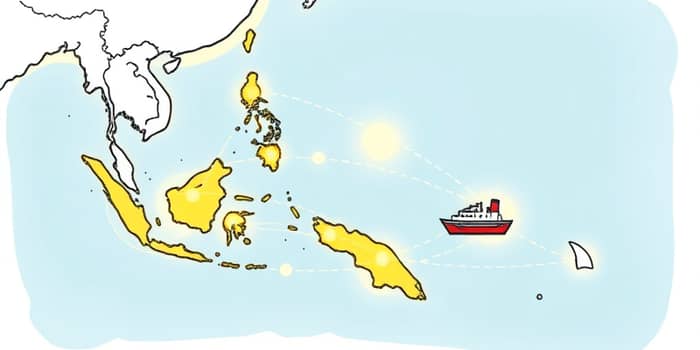
The Pacific Rim, often hailed as Asia's economic powerhouse, is a dynamic region bordering the Pacific Ocean, home to a mosaic of advanced and emerging economies.
This vast area contributes nearly 40% of global GDP, driving worldwide growth through its immense potential and innovative spirit.
From the bustling factories of China to the tech hubs of South Korea, rapid industrialization and exports have catapulted the region to the forefront of the global stage.
Embracing diversity from North America to Oceania, the Pacific Rim represents a beacon of opportunity and transformation.
Imagine a world where ancient traditions seamlessly blend with cutting-edge technology, creating a unique fusion of heritage and progress.
This is the heart of global economic dynamism, where every sunrise brings new chances for collaboration and growth.
Stories of resilience and ambition echo across nations, inspiring millions to dream bigger and achieve more.
The Pacific Rim encompasses countries across Asia, Oceania, and the Americas, creating an interconnected economic zone.
Key nations include a diverse array of cultures and economies, all united by the vast Pacific Ocean.
This region is not just a geographic entity; it is a living testament to human ingenuity and cooperation.
This tapestry of nations fuels a collaborative spirit that drives regional and global prosperity.
Decades ago, many Pacific Rim nations grappled with poverty and underdevelopment, facing immense challenges.
Today, they have undergone unprecedented economic metamorphosis, transforming into engines of growth.
China's rise is a prime example, leveraging its vast population and strategic policies to become a global leader.
South Korea and Taiwan emerged as global technology leaders, showcasing the power of innovation and education.
This journey from struggle to success inspires hope and demonstrates the region's unwavering resilience.
It reminds us that with determination and vision, any economy can rewrite its destiny.
The Pacific Rim's growth is propelled by several key factors that create a fertile ground for advancement.
A large and youthful population provides a vast consumer base and skilled workforce, fueling demand and innovation.
Abundant natural resources and improving infrastructure support sustainable development across sectors.
Emerging markets like Indonesia and Vietnam are experiencing explosive growth rates, attracting global investors.
Their rising middle classes are driving consumption, making them hubs for retail and services.
Sectors such as technology, healthcare, and manufacturing are thriving, offering numerous opportunities for expansion.
Here is a snapshot of key economic metrics that highlight the region's significance:
These figures underscore the region's pivotal role in shaping the global economic landscape.
They serve as a reminder of the immense potential and opportunities waiting to be tapped.
Trade pacts have been instrumental in boosting economic integration and fostering cooperation.
These agreements are more than just documents; they are bridges to prosperity and peace.
They facilitate the free flow of goods, services, and ideas, enriching all involved nations.
These frameworks create resilient and interconnected markets, helping to mitigate global uncertainties.
They encourage collaboration that transcends borders, building a more stable and prosperous future.
For investors, the Pacific Rim offers high returns through diversification and strategic planning.
Access to growing consumer markets and multinational operations enhances potential gains significantly.
Embracing a long-term outlook helps navigate currency fluctuations and market risks effectively.
Key sectors to watch include areas poised for exponential growth and innovation.
Investing here means being part of a dynamic and evolving landscape that shapes global trends.
It requires patience, research, and a willingness to adapt to local cultures and regulations.
Despite opportunities, the region faces significant hurdles that demand attention and strategy.
U.S.-China tensions create political and trade frictions, affecting supply chains and investments.
Tariffs and protectionist policies can disrupt economic stability and growth prospects.
Cultural differences and regulatory complexities pose challenges for businesses entering new markets.
Addressing these issues requires diplomacy, adaptive strategies, and a commitment to sustainable practices.
It is a call to action for stakeholders to collaborate on solutions that benefit all.
Looking ahead, the Pacific Rim is poised for continued transformation and leadership.
By 2040, tourism could become an economic backbone for many nations, boosting local economies.
Improved internet connectivity will boost productivity and integrate global value chains more deeply.
Labor mobility and regional integration, such as ASEAN's goals, will shape the future economic landscape.
To seize these opportunities, stakeholders must take proactive steps and embrace innovation.
The Pacific Rim's journey is a testament to human ingenuity and the power of collective effort.
As it evolves, this region will undoubtedly play a central role in shaping our global future, inspiring generations to come.
Let us embrace this momentum and work together to unlock even greater possibilities.
References