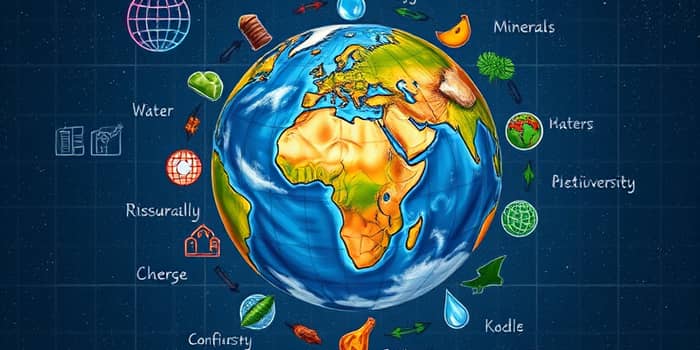
As humanity approaches a critical juncture, our collective consumption patterns exceed the planet’s capacity to regenerate essential resources. The question at the heart of this challenge is how to reconcile global growth aspirations with the finite limits of Earth’s ecosystems.
In this article, we explore the intricate web of environmental pressures—from energy transitions and mineral dependencies to water scarcity, biodiversity collapse, and governance fractures—and propose practical pathways toward a more equitable and sustainable future.
Humanity is currently operating at 1.48 times Earth’s annual regenerative capacity. At this pace, our collective resource draw for the year will be exhausted by May 11th, 2026, leaving insufficient bandwidth for wild species and natural cycles to recover.
The disparity between nations is stark. While some countries hit their overshoot day as early as February, others stretch their budgets well into late autumn. This imbalance reflects differing consumption patterns, economic structures, and policy choices.
This table highlights how resource consumption varies dramatically. High-income nations often demand multiple Earths’ worth of resources, while developing economies sometimes manage to stay within planetary boundaries.
The shift from fossil fuels to renewables is urgent, yet it brings a paradox. Rising electricity demand—projected to grow at least 2.8% annually through 2030—drives rapid expansion of solar, wind, and battery storage.
However, surging demand vs renewable constraints reveals a complex reality: supply chain bottlenecks, mineral shortages, and geopolitical instability slow capacity growth. At the same time, many countries boost oil and gas output to stabilize markets in the short term, undermining long-term climate goals.
Without robust governance and fair-trade frameworks, the energy transition could replicate the worst aspects of the fossil era under a green guise.
Water scarcity emerges as a defining pressure point for the twenty-first century. From glacier retreat in mountain ranges to erratic rainfall, freshwater systems are under siege.
Groundwater reserves face dangerous depletion in agricultural heartlands like the American Midwest and South Asia, with recovery timelines stretching centuries. Shared river basins such as the Nile and Indus become diplomatic flashpoints, while coastal megacities brace for displacement due to rising seas.
Addressing water insecurity requires integrated watershed management, investment in efficient irrigation, and transnational cooperation built on trust and data sharing.
Species extinction rates far exceed historical baselines, threatening the ecological systems that support food security, water cycles, and carbon sequestration.
Marine mammals, pollinators, and countless other organisms edge toward critical tipping points due to habitat loss, pollution, and climate change. Deforestation hotspots in the Amazon, Congo Basin, and Southeast Asia continue to expand as agricultural and infrastructure projects slice through primary forests.
Species extinction rates far exceed our capacity to protect the intricate networks of life, and while international goals aim to safeguard 30% of terrestrial and marine areas by 2030, funding and implementation remain inconsistent.
Environmental threats operate at a planetary scale, yet responses are filtered through national politics and strategic rivalry. Major powers increasingly view clean technology supply chains, mineral access, and industrial policy as competitive levers rather than collective goods.
Multilateral institutions face declining trust as compliance and funding skew toward geopolitical allies rather than regions in greatest need. This fragmentation undermines coherent global action on shared challenges.
Transformative solutions demand a shift from zero-sum competition to collaborative stewardship. By aligning economic incentives with ecological boundaries, we can chart a path toward sustainable prosperity.
The resource race will only intensify as populations rise, technologies evolve, and climate impacts accelerate. Yet within this challenge lies an opportunity to redefine growth on regenerative terms.
Key strategies include:
By embracing a holistic vision—where economic activity enhances rather than depletes natural capital—we can secure a resilient future for all species, including our own.
The clock is ticking, but the window for action remains open. In the resource race, collaboration, innovation, and unwavering commitment to planetary boundaries will determine whether we thrive or falter.
Together, we can transform scarcity into abundance and chart a course toward truly sustainable global growth.
References