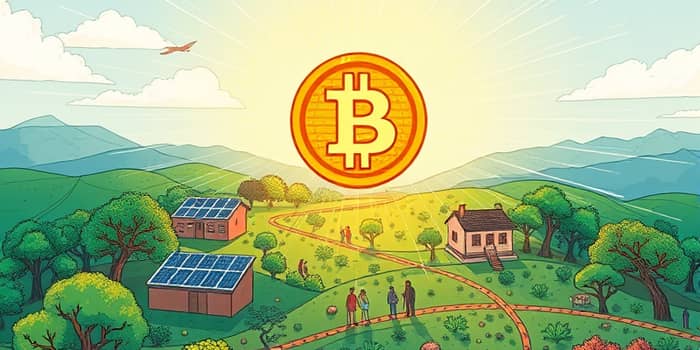
In a world where traditional investments often overlook pressing global issues, a quiet revolution is unfolding.
Imagine a financial tool that not only grows your wealth but also directly contributes to solving climate change and social inequality.
This is the promise of blockchain-based digital tokens, emerging as a beacon of hope for impact-driven investors.
By converting verified positive outcomes into programmable assets, these tokens are reshaping how we think about value and investment.
They offer a tangible way to align profit with purpose, making every dollar count toward a better world.
At their core, impact tokens are digital representations of social and environmental benefits.
Built on blockchain technology, they tokenize non-financial value like carbon credits or community development metrics.
This process uses smart contracts to ensure transparency and security in transactions.
Key features include immutability for trust, decentralization for consensus, and programmability for automation.
These tokens are designed to fund projects aligned with the UN Sustainable Development Goals, creating a new economy of good.
Impact investing has long aimed to blend financial returns with measurable benefits.
By 2018, it was valued at over USD 502 billion, yet it faced significant barriers to growth.
Limited exit options and poor impact measurement stifled its potential.
Blockchain entered this space around 2018, with early examples like SolarCoin automating solar power verification.
A review of more than 200 projects shows that most digitize existing marketplaces, bringing efficiency to fragmented systems.
Initial Coin Offerings (ICOs) fueled a proliferation of tokens, though they also brought risks of hype and fraud.
Impact tokens address five major barriers in traditional impact investing, unlocking new opportunities.
From over 200 projects, four core benefits have emerged.
Impact tokens are being deployed in diverse fields, from energy to education.
They turn abstract goals into measurable, tradable units that can be tracked along supply chains.
These applications demonstrate how tokenized non-financial assets can drive real change.
The power of impact tokens lies in the underlying technology that enables their functionality.
This technological stack ensures that impact is not just claimed but proven.
Despite their potential, impact tokens face hurdles that must be addressed for widespread adoption.
To assess viability, the World Economic Forum proposes key criteria.
Looking ahead, impact tokens hold immense promise for scaling investments in sustainability.
They could significantly reduce the financing gaps for the UN Sustainable Development Goals.
By cutting costs and providing verified data, they enable more efficient resource allocation.
Emerging trends include oracle diversification for solving social problems and the rise of decentralized economies.
As we move forward, investing in social change becomes not just possible but profitable.
Impact tokens empower individuals to be part of a global movement for good.
They remind us that finance can be a force for healing our planet and communities.
By embracing this innovation, we step into a future where every investment leaves a positive mark.
References