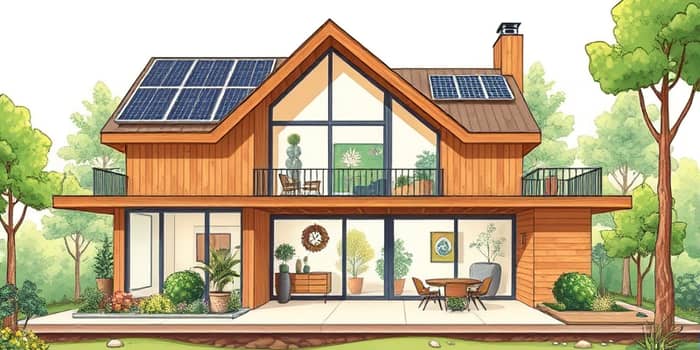
In an era where buildings consume nearly two-fifths of national energy, architects are embracing a new mandate: design not only for style but for savings and well-being. By marrying financial foresight with human-centric features, today’s designs ensure comfort and resilience for decades.
Buildings account for 40% of US energy use, driving a shift from gimmicks to measurable performance. The “strategic saver” mindset prioritizes net-zero, low-carbon lifecycles and year-round comfort, turning every square foot into an investment rather than a cost.
Through data-driven approaches and emerging 2026 standards, the industry is reducing operational emissions while targeting embodied carbon reductions of 20-50% of high-performance building emissions over a 50-year span. This synthesis of efficiency and comfort is reshaping the concept of a home or workspace into a living asset.
Net-zero buildings produce as much energy as they consume, now promoted by AIA initiatives and stricter codes. The fabric-first approach demands insulation and airtightness before mechanical systems, ensuring predictable performance.
These strategies result in lower running costs and resilient performance when energy prices fluctuate. Improved indoor air quality and consistent thermal comfort translate into healthier, more productive occupants.
As operational emissions decline, lifecycle carbon from manufacturing, transport, and installation becomes a primary concern. Architects now use Environmental Product Declarations (EPDs) to compare options and select low-carbon alternatives like mass timber, recycled steel, and low-carbon concrete.
By cutting 20-50% of embodied carbon and extending replacement intervals from 10–15 years to several decades, these choices translate into lasting savings and reduced environmental impact.
Off-site modular construction offers tight schedules, quality control, and minimal onsite waste. Projects like floating hospital barges leverage prefab modules, cutting both time and carbon.
Adaptive reuse breathes new life into existing structures—transforming warehouses into offices or schools—while preserving cultural heritage and reducing embodied emissions. With the US generating 600 million tons of waste annually, circular design practices such as disassemblable connections and on-site sorting systems are essential.
Faster delivery and cost predictability create economic benefits, while maintaining a tangible link to a building’s past fosters occupant pride and well-being.
Wellness-driven features—abundant daylight, indoor greenery, organic textures, and seamless indoor-outdoor transitions—are no longer luxuries but strategic investments in occupant health and satisfaction.
Biophilic elements reduce stress and boost productivity, while durable furnishings with 100-year lifespans minimize replacement costs. The result is a healthier environment that rewards both well-being and budgets.
Rising threats from floods, wildfires, and heat waves demand designs that endure. Elevated foundations, reflective roofing, fire-resistant cladding, and passive cooling strategies deliver protection without excessive maintenance.
Retrofit-friendly layouts incorporate accessible plumbing and wiring pathways along with panelized walls for easy upgrades. As one architect put it: “The most sustainable building is the one that’s still standing in a hundred years.”
By aligning with AIA 2030 and RIBA 2030 goals—where nearly 50% of AEC professionals plan to adopt performance analysis tools—clients gain peace of mind and reduced lifecycle costs.
Generative design platforms ingest site parameters, budget constraints, and climate data to propose optimized massing, daylighting, and energy profiles. These tools empower architects to make data-backed decisions from the earliest sketches.
Holistic performance analysis—tracking energy, water, and biodiversity metrics—ensures every design choice is measured against sustainability targets. This rigorous approach transforms subjective ideals into quantifiable returns.
By integrating net-zero standards, low-carbon materials, modular construction, biophilic principles, and advanced analysis tools, architects become strategic savers—reducing costs while enhancing comfort. This holistic approach ensures buildings remain resilient, efficient, and beloved for generations.
As sustainability becomes ingrained “business as usual,” clients and communities will benefit from spaces that not only withstand the test of time but actively save money and nurture well-being. The future of design is clear: when strategy and comfort converge, every building becomes an investment in tomorrow.
References