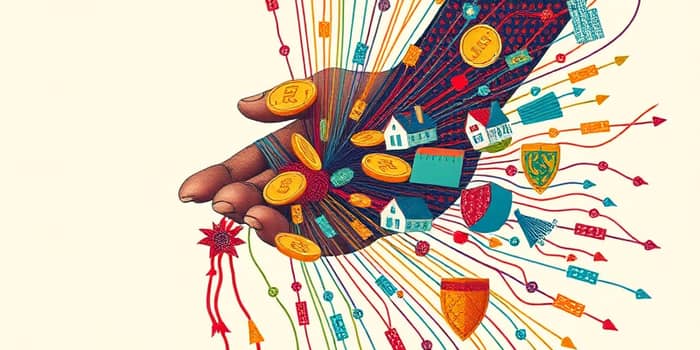
Imagine your financial life as a grand tapestry, where every decision is a thread woven together to create a masterpiece of wealth and security.
This interconnected approach transforms isolated actions into a cohesive strategy for lasting prosperity.
By embracing the role of a wealth weaver, you can craft a future that supports your dreams and legacy.
This journey begins with understanding that each financial choice impacts the whole, from saving to investing and beyond.
Wealth accumulation is more than just saving money; it is a disciplined process of building assets over time.
It starts with establishing a solid cash flow foundation to fuel your financial goals.
This involves saving consistently, leveraging compounding interest, and investing in appreciating assets like real estate or stocks.
Ultimately, it extends to estate planning to secure your legacy for future generations.
Key pillars support this process, creating a balanced approach to growth.
By mastering these elements, you lay the groundwork for a resilient financial weave.
To interconnect your decisions effectively, adopt strategies that blend saving, investing, and planning.
Cash flow management is the first step, providing the threads needed for other financial actions.
Map your income and expenses meticulously to identify savings opportunities and reduce wasteful spending.
Automate transfers to savings and debt payments to build consistency without effort.
Diversification spreads risk and enhances returns by investing across various asset classes.
These strategies interlock to create a robust framework for wealth growth.
This table illustrates how each strategy supports and enhances the others in your financial weave.
The financial landscape in 2026 presents unique challenges and opportunities that require proactive adjustments.
Persistent inflation and fluctuating interest rates demand strategies that preserve purchasing power.
Geopolitical factors and labor shifts add complexity, making it crucial to stay informed and agile.
Tax and policy changes effective in 2026 necessitate a review of withholding and retirement plans.
Annual planning steps can help you navigate these trends with confidence.
By anticipating these factors, you can weave a financial plan that withstands economic shifts.
Wealth weaving extends beyond personal gain to create a legacy that benefits future generations.
Goal setting is essential, with clear short-term and long-term objectives that align family interests.
The family bank strategy uses whole life insurance cash value for loans on education or ventures.
This approach not only provides financial support but also teaches stewardship and financial literacy.
Principles for success include starting early, fostering accountability, and educating loved ones on finances.
These actions weave a tapestry of knowledge and assets that endure through time.
Leveraging tools can streamline your wealth weaving process and provide valuable insights.
Wealth accumulation calculators help project compounding growth, keeping you motivated on your journey.
Statistics from sources like the Consumer Expenditure Survey reveal spending patterns to inform budgeting.
Surveys indicate that 84% of Americans have financial resolutions for 2026, emphasizing the importance of planning.
Portfolio optimization tools, such as ET Money Genius, auto-allocate assets based on your goals.
These resources empower you to make informed decisions and adjust your weave as needed.
Every financial plan faces risks that can unravel progress if not addressed proactively.
Inflation erodes savings over time, making it vital to counter with investments that outpace it.
Market volatility requires diversification and annual rebalancing to maintain stability in your portfolio.
Debt risks, especially from high-interest sources, can magnify losses and hinder wealth growth.
By prioritizing risk management, you ensure your financial tapestry remains strong and resilient.
Embracing these practices allows you to weave a financial future that is both secure and adaptable.
References