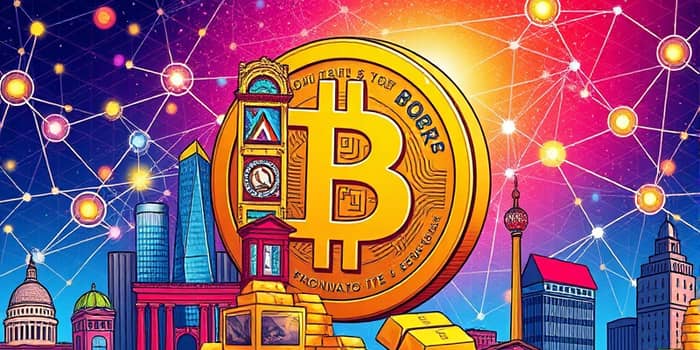
The financial landscape is undergoing a monumental transformation that promises to reshape how we own and invest.
Asset tokenization stands at the forefront, offering a bridge between traditional wealth and digital innovation.
By converting real-world assets into blockchain-based digital tokens, it unlocks unprecedented opportunities for liquidity and access.
Imagine a future where anyone can own a fraction of a luxury property or a masterpiece artwork.
This vision is becoming reality, driven by technology that democratizes high-value investments.
Tokenization is not just a trend; it's a revolution in asset management.
It empowers individuals and institutions alike to participate in markets once reserved for the elite.
The core idea is simple yet profound: digitize ownership to make it fluid and inclusive.
Asset tokenization is the process of converting ownership rights into digital tokens on a blockchain.
Each token represents a verifiable unit of value tied to assets like real estate or art.
This enables secure transfers via digital wallets and fractional ownership models.
It functions as a digital certificate, similar to titles but with enhanced flexibility.
Tokens can represent physical, financial, or intangible assets, broadening investment horizons.
The technology relies on blockchains like Ethereum or Solana for transparency and efficiency.
It tracks ownership immutably, reducing fraud and increasing trust in transactions.
This foundational shift is paving the way for a more open financial ecosystem.
Tokenizing an asset involves a structured approach to ensure legal and technical integrity.
It begins with identifying and preparing the asset for digital representation.
This process consolidates multiple financial functions into a single blockchain layer.
It reduces operational friction and enhances the overall efficiency of asset management.
By streamlining steps, tokenization makes assets more accessible and liquid.
Tokenization offers a myriad of advantages that address long-standing financial limitations.
It transforms illiquid assets into tradable units, unlocking permissionless liquidity for all.
Additionally, smart contracts automate compliance and dividends, enhancing efficiency.
Provenance tracking ensures assets like art have verifiable histories, boosting confidence.
These benefits collectively foster a more inclusive and dynamic investment environment.
Tokenization is revolutionizing diverse asset classes, making them liquid and accessible.
The table below highlights key examples and impacts across various sectors.
This transformation is making high-value assets part of everyday investment portfolios.
It encourages diversification and opens new avenues for wealth creation.
Concrete metrics illustrate the tangible impact of tokenization on global finance.
These numbers showcase how it is scaling and delivering real value.
These figures underscore the rapid adoption and scalability of tokenized assets.
They provide a clear roadmap for future growth and innovation in this space.
Despite its promise, tokenization faces obstacles that must be addressed for widespread adoption.
Understanding these challenges is crucial for investors and developers alike.
Overcoming these barriers will pave the way for a more robust tokenized ecosystem.
Collaboration between regulators, technologists, and financial institutions is key.
The future of tokenization is bright, with trends pointing toward exponential growth.
It is set to reshape finance in ways we are only beginning to imagine.
Tokenization is poised to bring trillions in real-world value on-chain, revolutionizing investment paradigms.
It empowers individuals to build wealth in ways previously unimaginable, fostering economic inclusion.
As technology evolves, the possibilities for tokenized assets will continue to expand, creating a more liquid and equitable world.
References